
Power Court Stadium Construction Progress: A Photo Timeline
Last updated: 10 August 2026
Power Court has changed beyond recognition. What was still largely an uncleared development site in 2024 is now unmistakably the future home of Luton Town Football Club, with tower cranes over the site and the concrete structure of the new stadium rising on several sides.
This photo timeline follows the construction of Luton Town’s 25,000-capacity Power Court stadium from the early earthworks through to the first foundations, columns and upper-level concrete. Each photograph was taken from a similar viewpoint, making it possible to see how quickly the site has evolved.
Power Court at a glance
From cleared land to a new stadium
Power Court is a former industrial site close to Luton railway station, St Mary’s Church and the town centre. Before the stadium could rise, contractors had to clear and remediate the land, reshape levels across the site, alter major drainage and utility infrastructure and divert the River Lea away from the stadium footprint.
Those enabling works account for much of the apparent progress during 2024 and 2025. For long periods the changes were below ground or involved moving large quantities of soil. By January 2026, however, piling for the stadium foundations was under way. Two tower cranes followed in April, and the first substantial above-ground concrete structure became visible during the summer.
Power Court progress during 2024
5 May 2024 – the site before the main earthworks
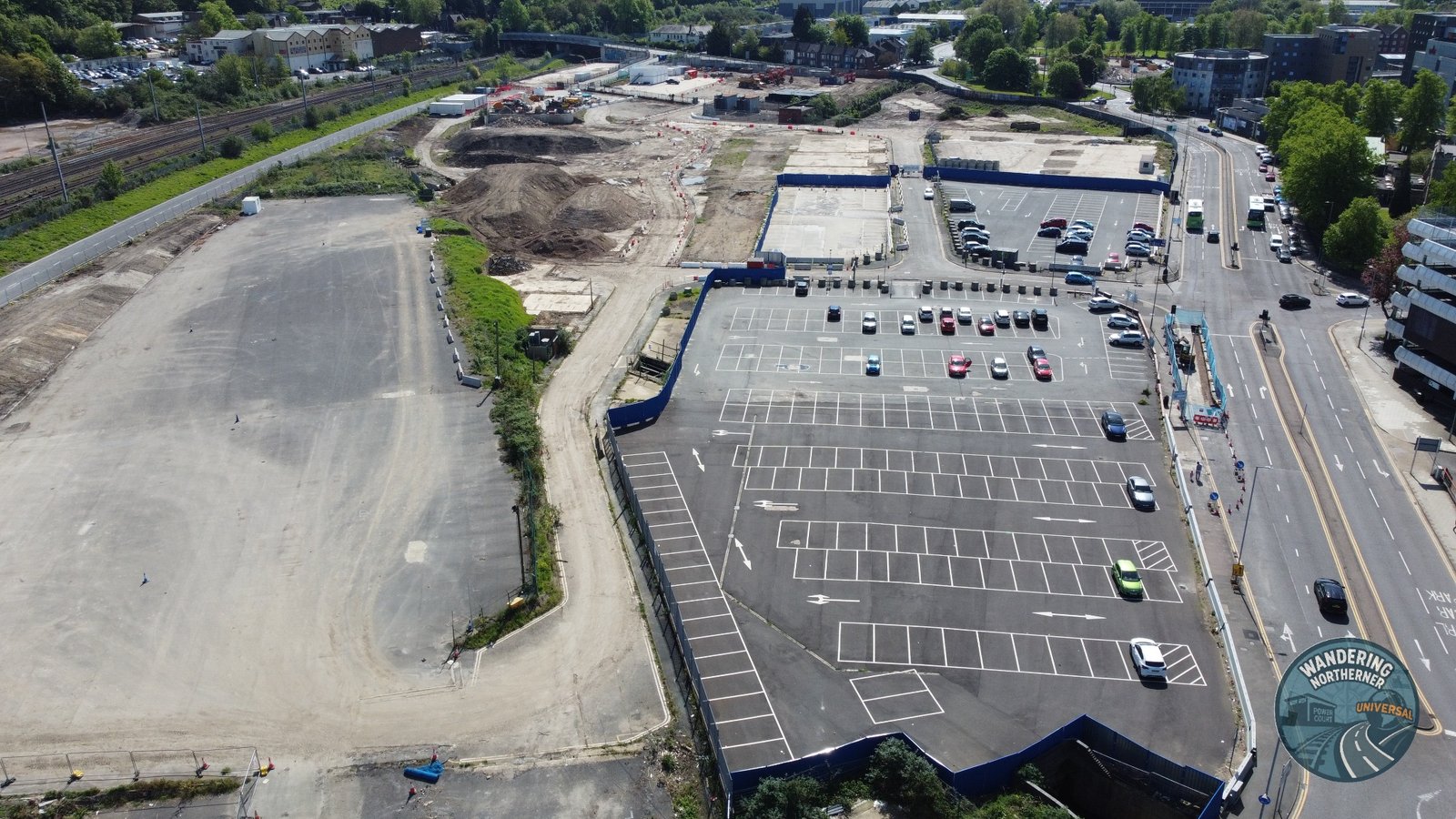
Power Court on 5 May 2024. Large areas of hardstanding and car parking still occupied the stadium site, while construction activity was concentrated towards the northern end of the site.
This photograph provides a useful starting point. Much of the future stadium footprint was still covered by former car parks and hardstanding, with the scale and shape of the new ground almost impossible to identify.
27 July 2024 – clearance and excavation accelerate
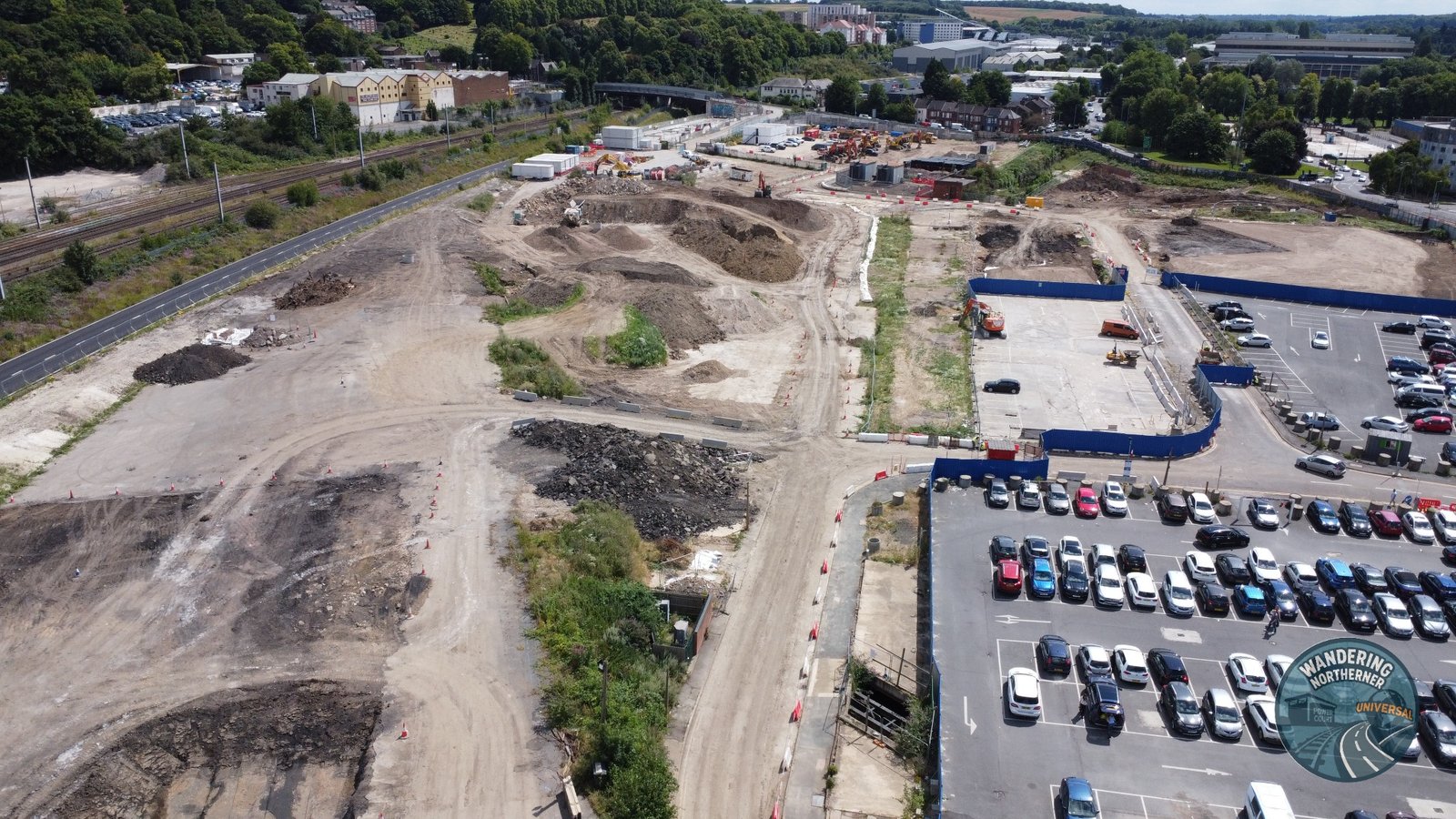
By 27 July 2024, more of the old surfaces had been removed and extensive excavation and ground preparation were taking place.
Within less than three months, the site had begun to open up. Excavators were removing old material, creating large stockpiles and preparing the land for the much greater programme of earthworks that would follow.
Power Court progress during 2025
1 February 2025 – a development platform emerges
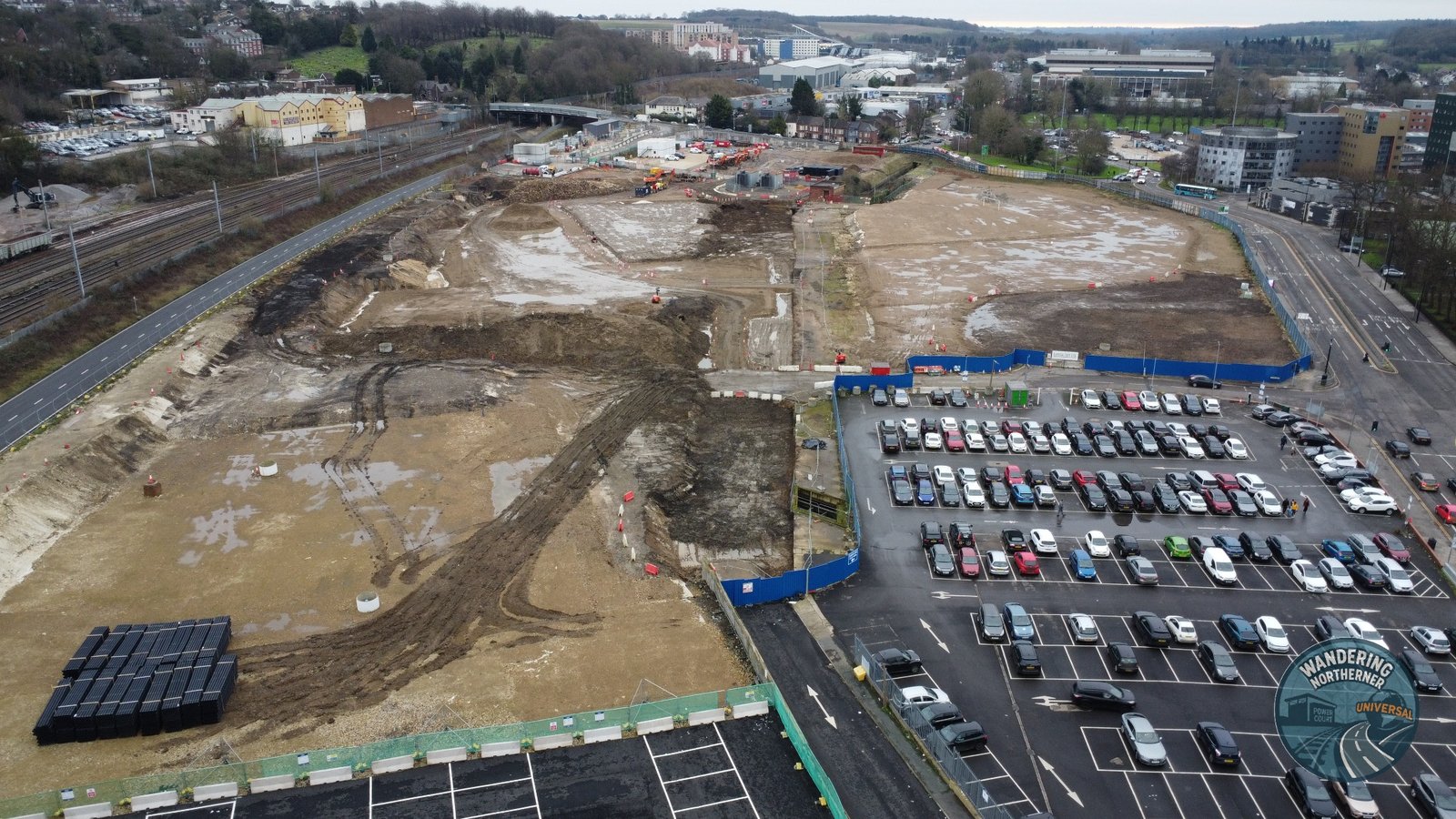
Power Court on 1 February 2025. The former car parks had largely disappeared and broad, level working areas were beginning to emerge.
By early 2025, the transformation was much easier to see. The site had been stripped back and reprofiled, with temporary routes allowing construction traffic to move around the excavations. The new substation is under construction in the top left corner.
17 April 2025 – large-scale levelling nears completion
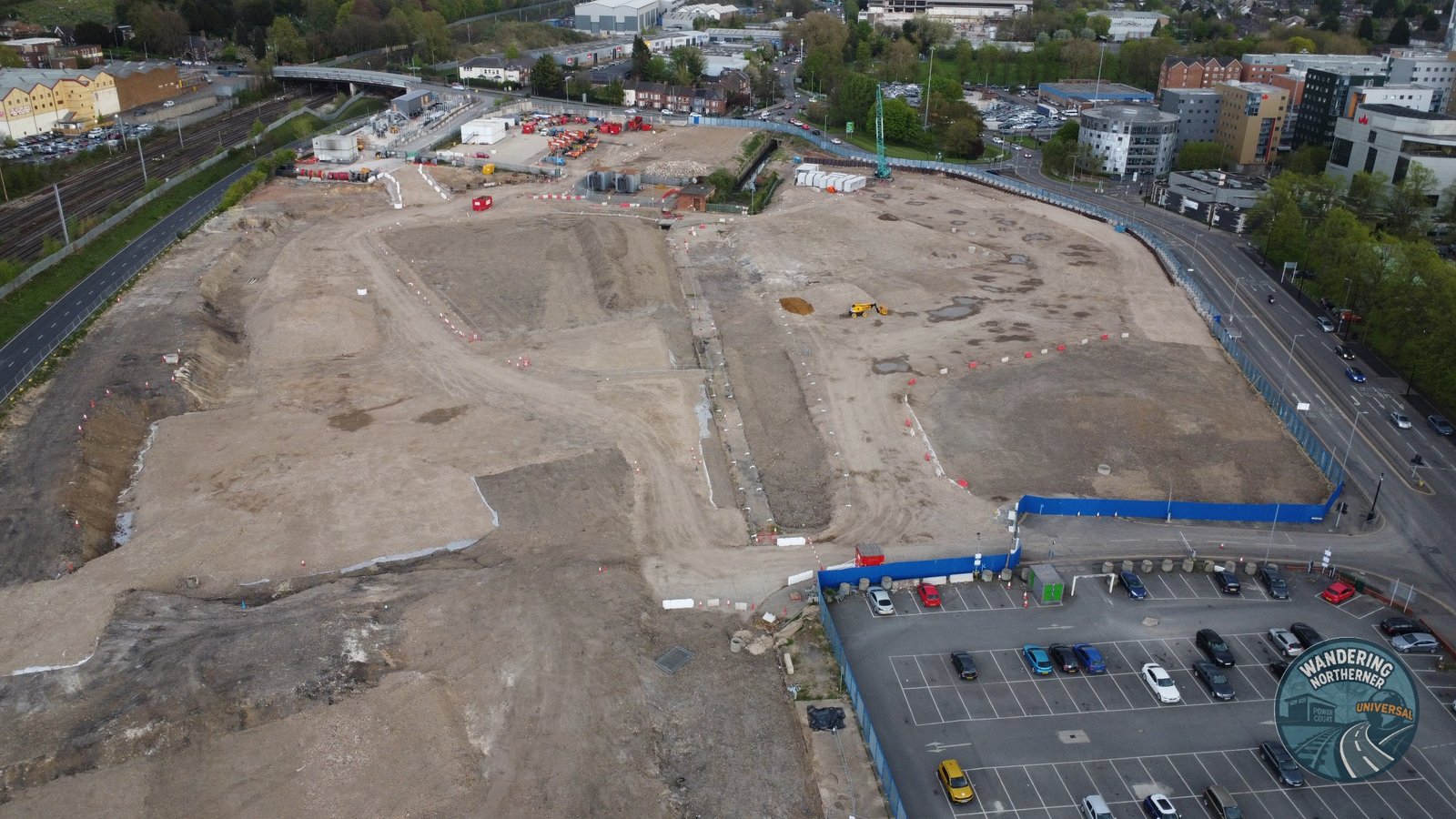
The site on 17 April 2025, after extensive levelling and remediation work across the future stadium area.
The spring photograph shows one of the clearest stages in the earthworks programme. Huge areas had been levelled, although major below-ground infrastructure still had to be completed before stadium construction could begin.
4 August 2025 – work focuses on the river and buried infrastructure
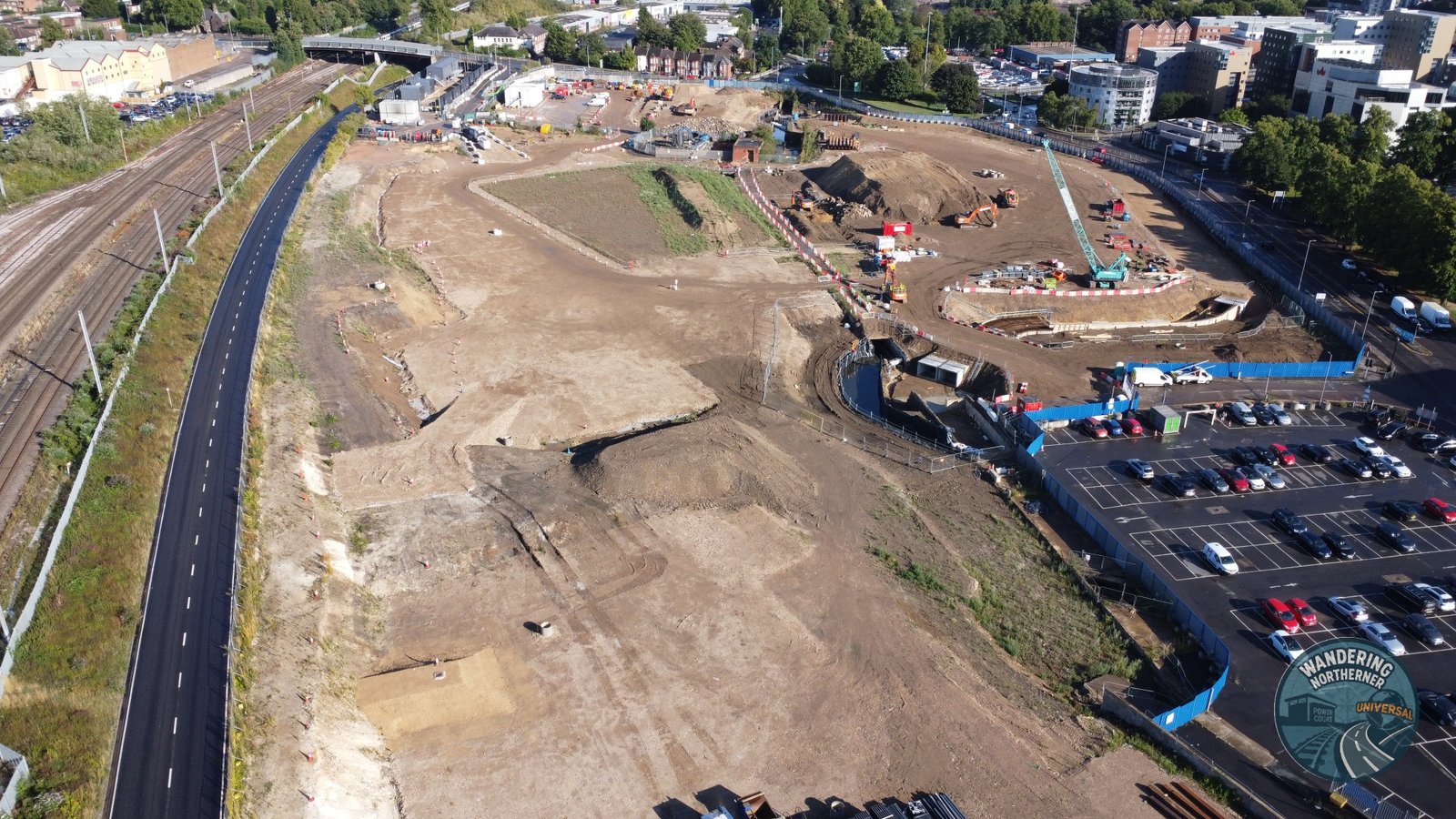
Excavation and major infrastructure works under way on 4 August 2025.
During the summer, activity concentrated around the route of the River Lea and the services crossing Power Court. These works were essential because the old river culvert and other buried infrastructure conflicted with the position of the new stadium.
19 September 2025 – new concrete channels take shape
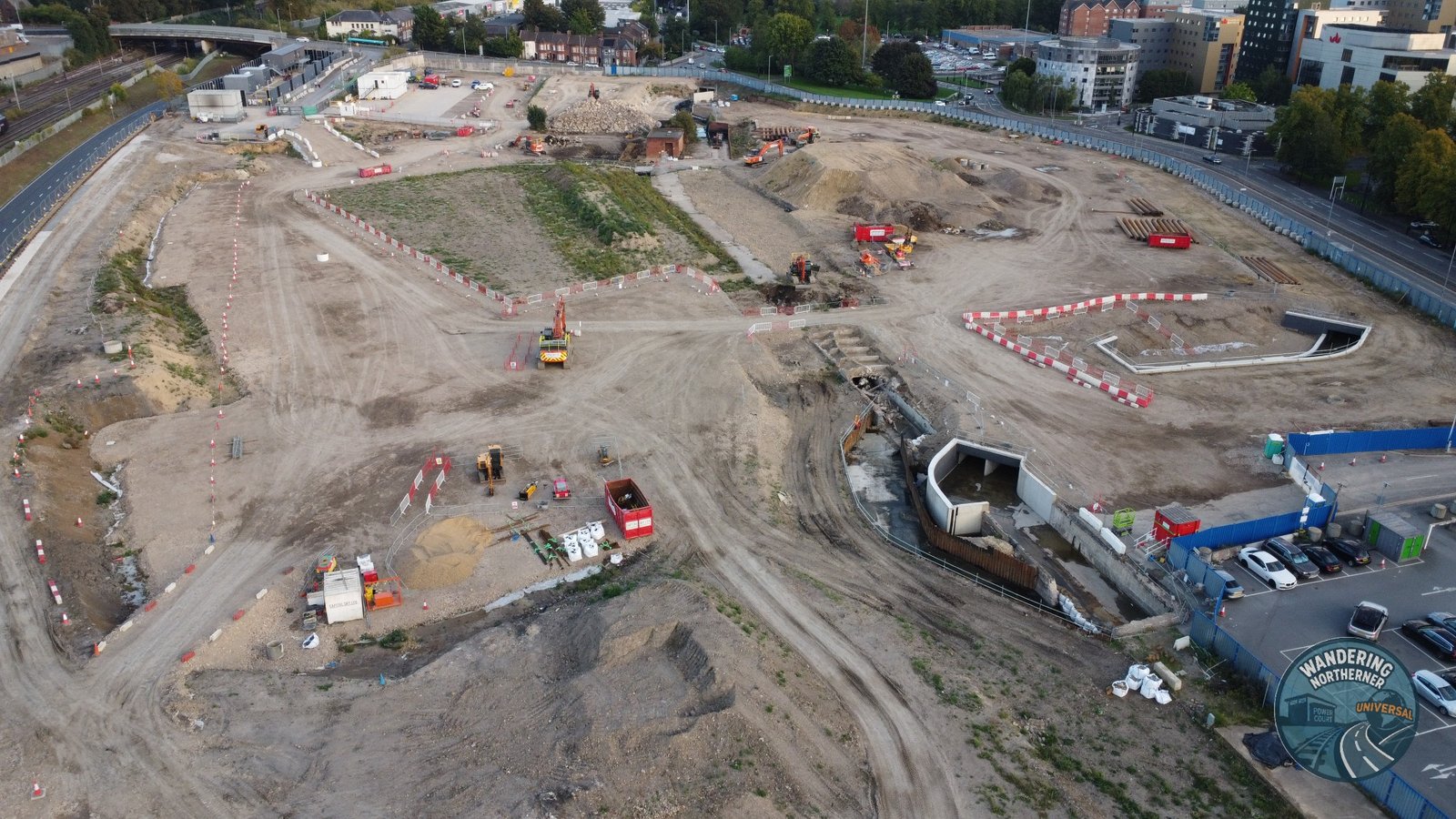
The newly opened culverts of the River Lea are clearly visible near the Church Street side of Power Court on 19 September 2025.
Completing the River Lea culvert works released the central stadium footprint for the next stage. The old and new electricity substations were both still standing at this stage.
13 November 2025 – the stadium area is cleared again
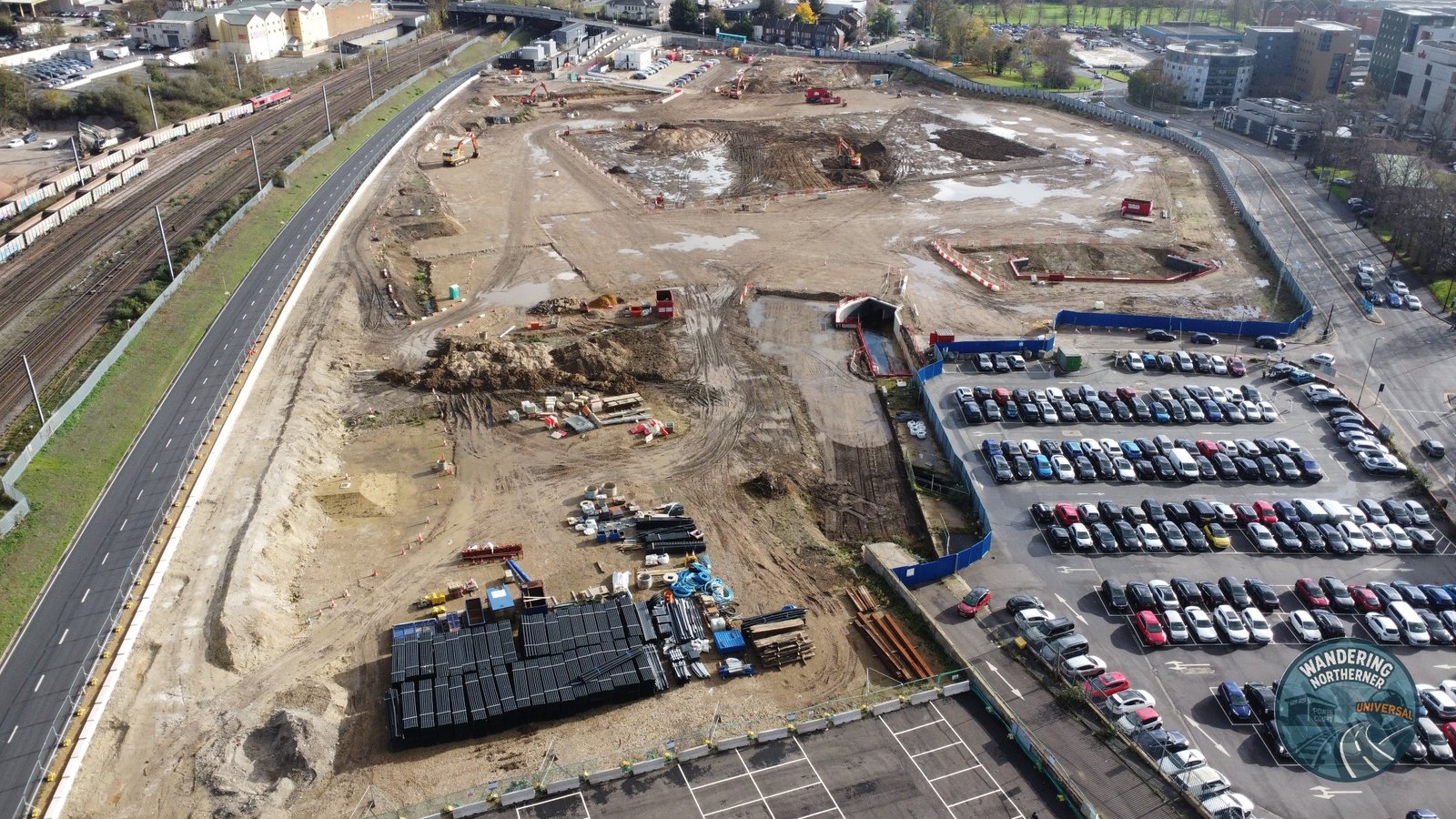
Power Court on 13 November 2025.
By November, the new substation was in use and the old substation removed.
14 December 2025 – preparations for the stadium foundations
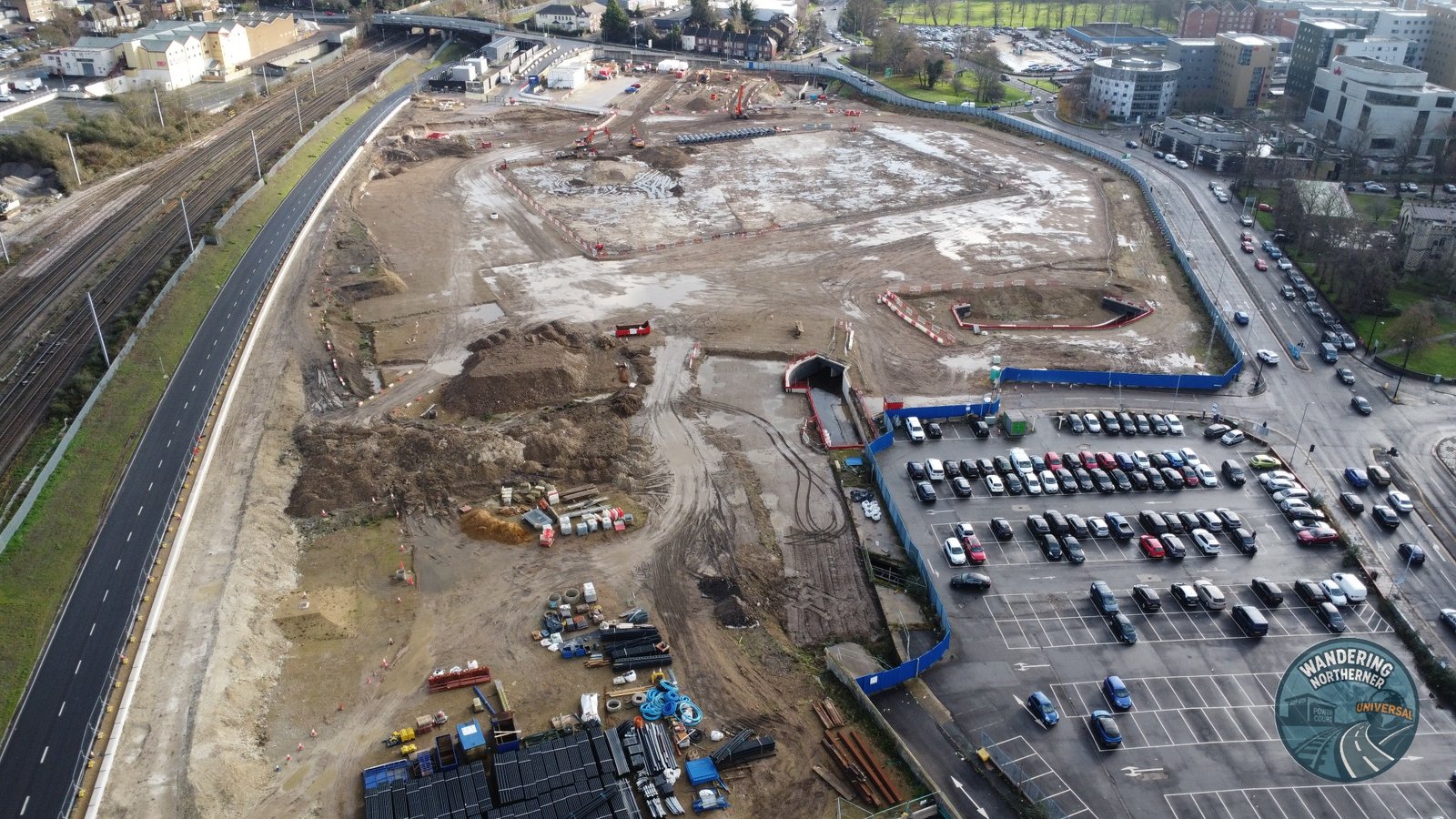
The site on 14 December 2025, shortly before piling began across the stadium footprint.
The final photograph of 2025 captures the transition between enabling works and stadium construction. Drainage components and foundation materials were stored on site as contractors prepared for the arrival of the piling equipment.
Power Court progress during 2026
31 January 2026 – piling under way
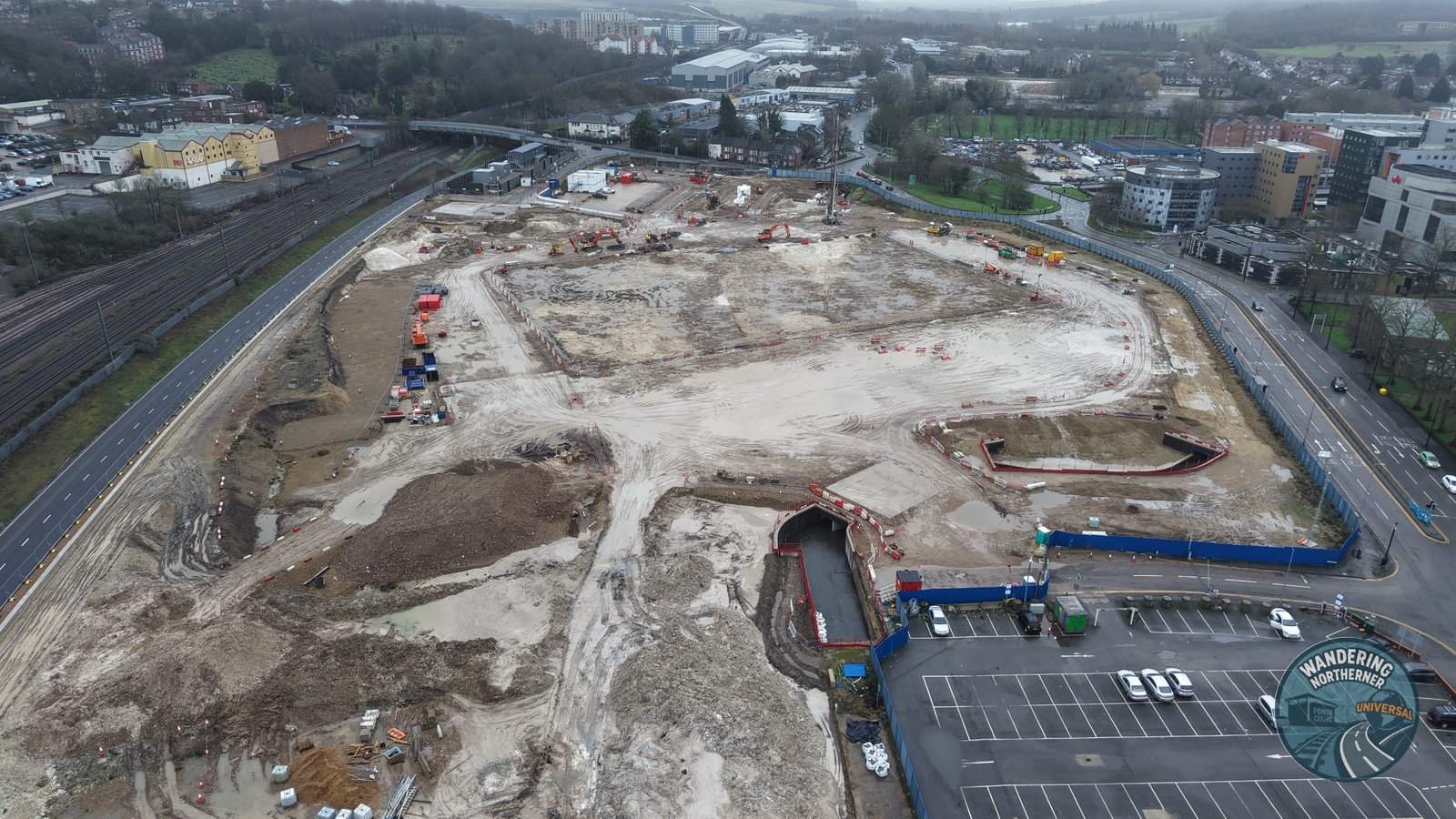
Foundation piling taking place at Power Court on 31 January 2026.
January marked the point at which the stadium itself began to take shape below ground. Piling rigs installed the deep foundations needed to carry the weight of the stands, while excavation and drainage work continued elsewhere on the site.
26 February 2026 – foundations spread across the footprint
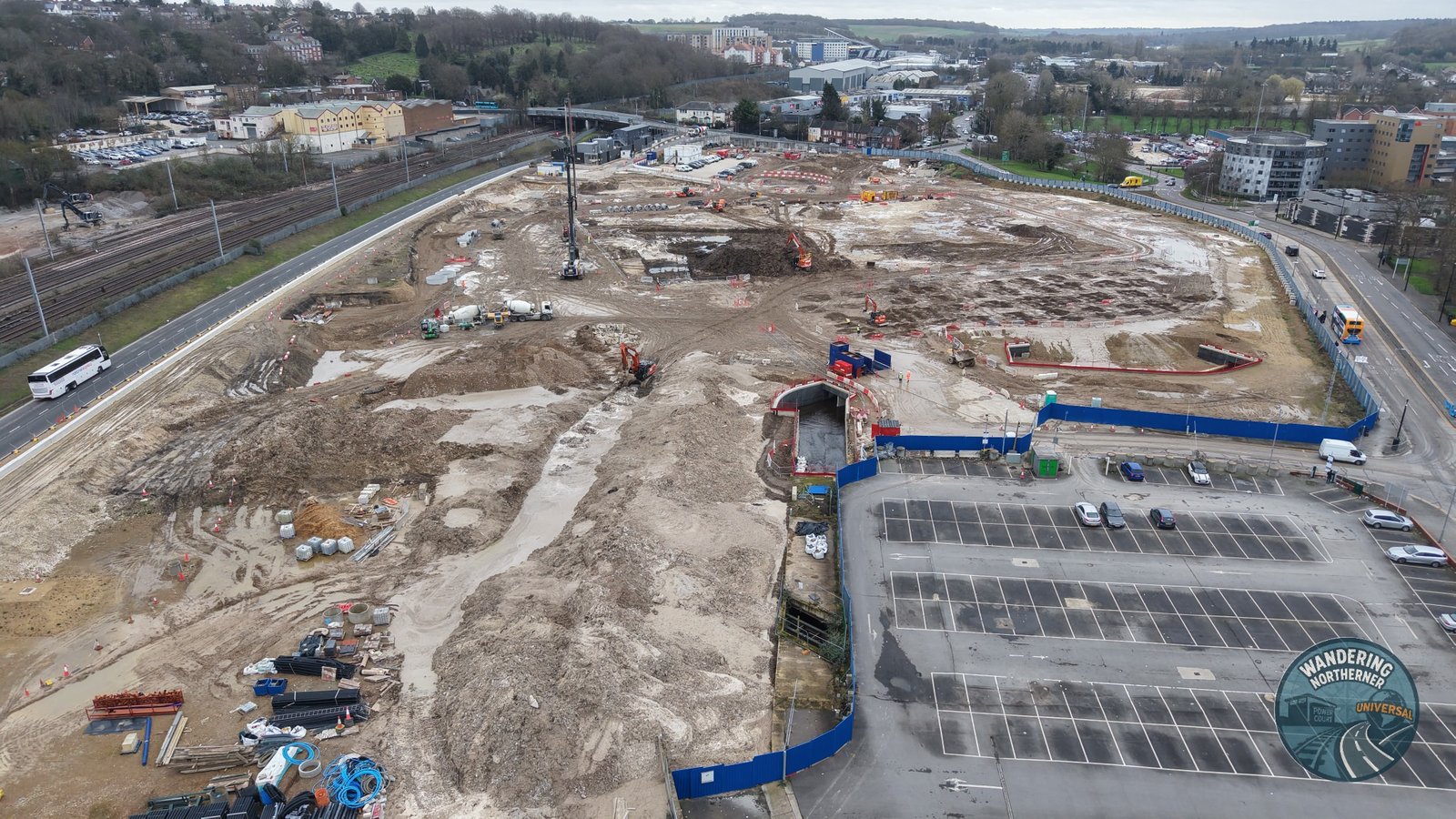
Power Court on 26 February 2026, with piling and excavation progressing across a widening area.
The number of working areas increased quickly during February. Excavated pile positions and prepared foundation zones began to reveal where the permanent structure would stand.
16 March 2026 – pile caps and ground beams appear
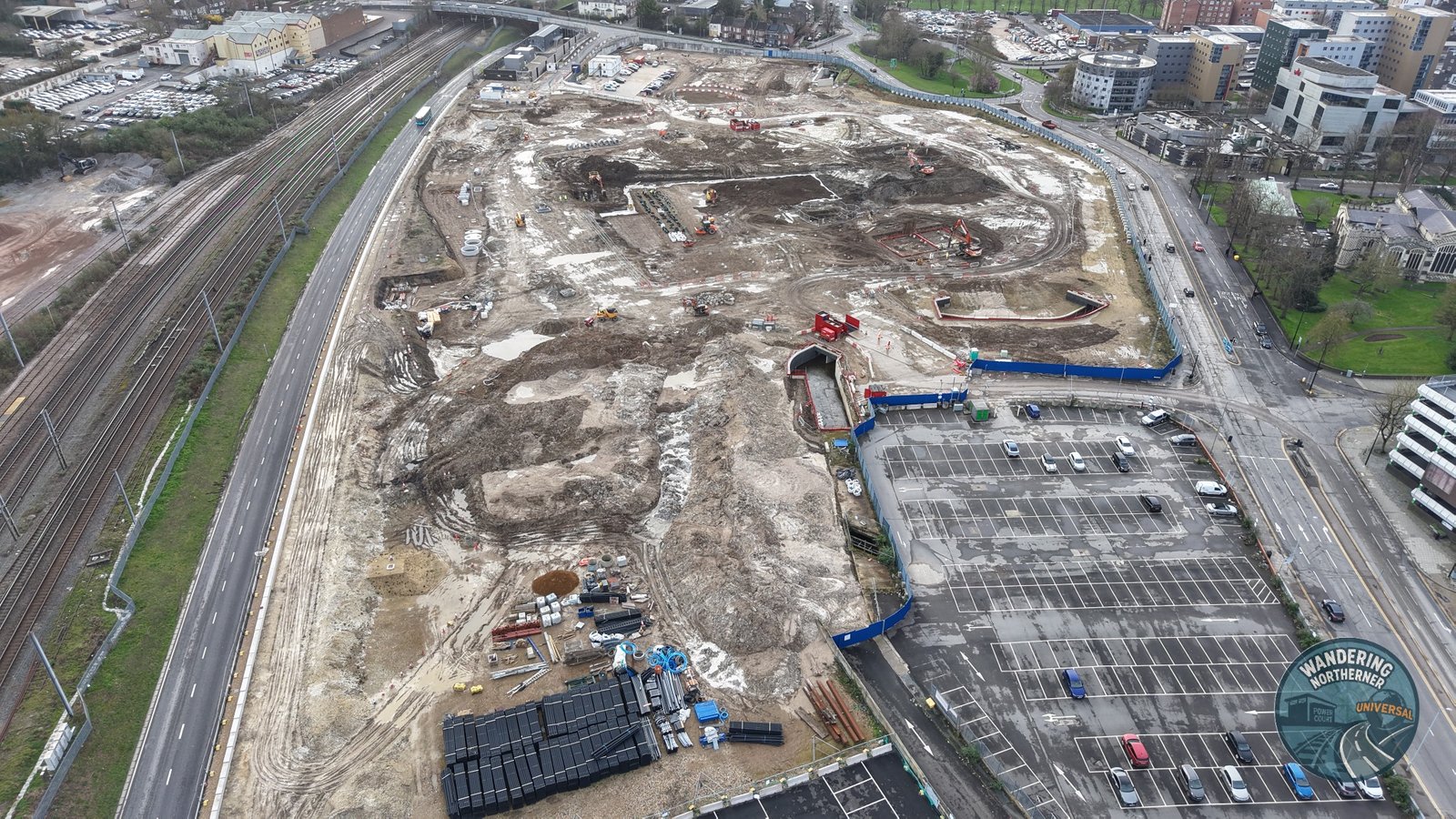
Foundation grids and the first substantial reinforced-concrete works visible on 16 March 2026.
By the middle of March, the piling rig had left the site and excavation of a basement area was underway.
19 April 2026 – tower cranes transform the skyline
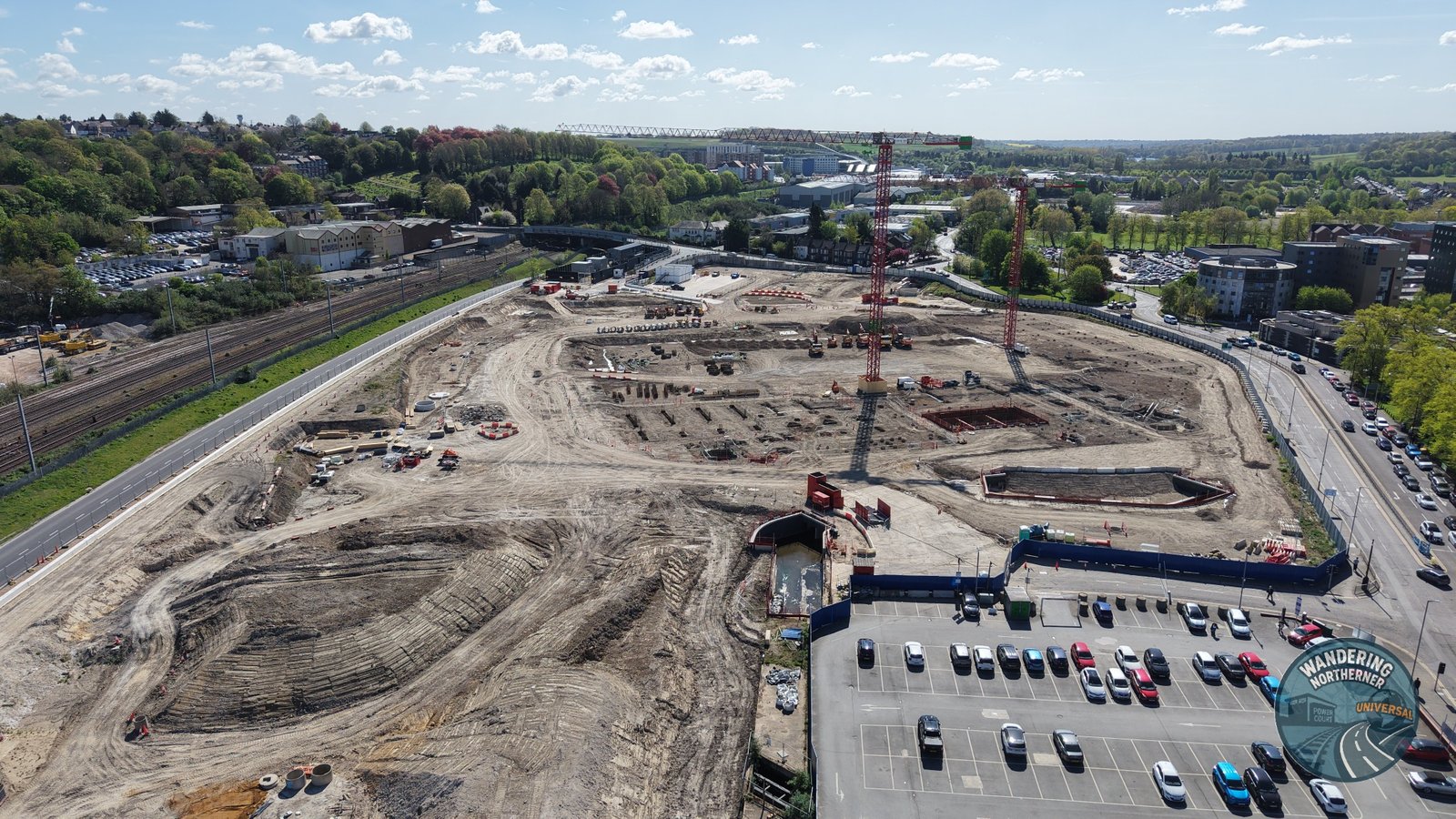
Two tower cranes standing over Power Court on 19 April 2026.
The arrival of the first two tower cranes was the most visible milestone so far. It signalled that work was moving beyond piling and ground engineering towards the construction of the stadium’s main concrete frame.
4 May 2026 – the structural grid expands
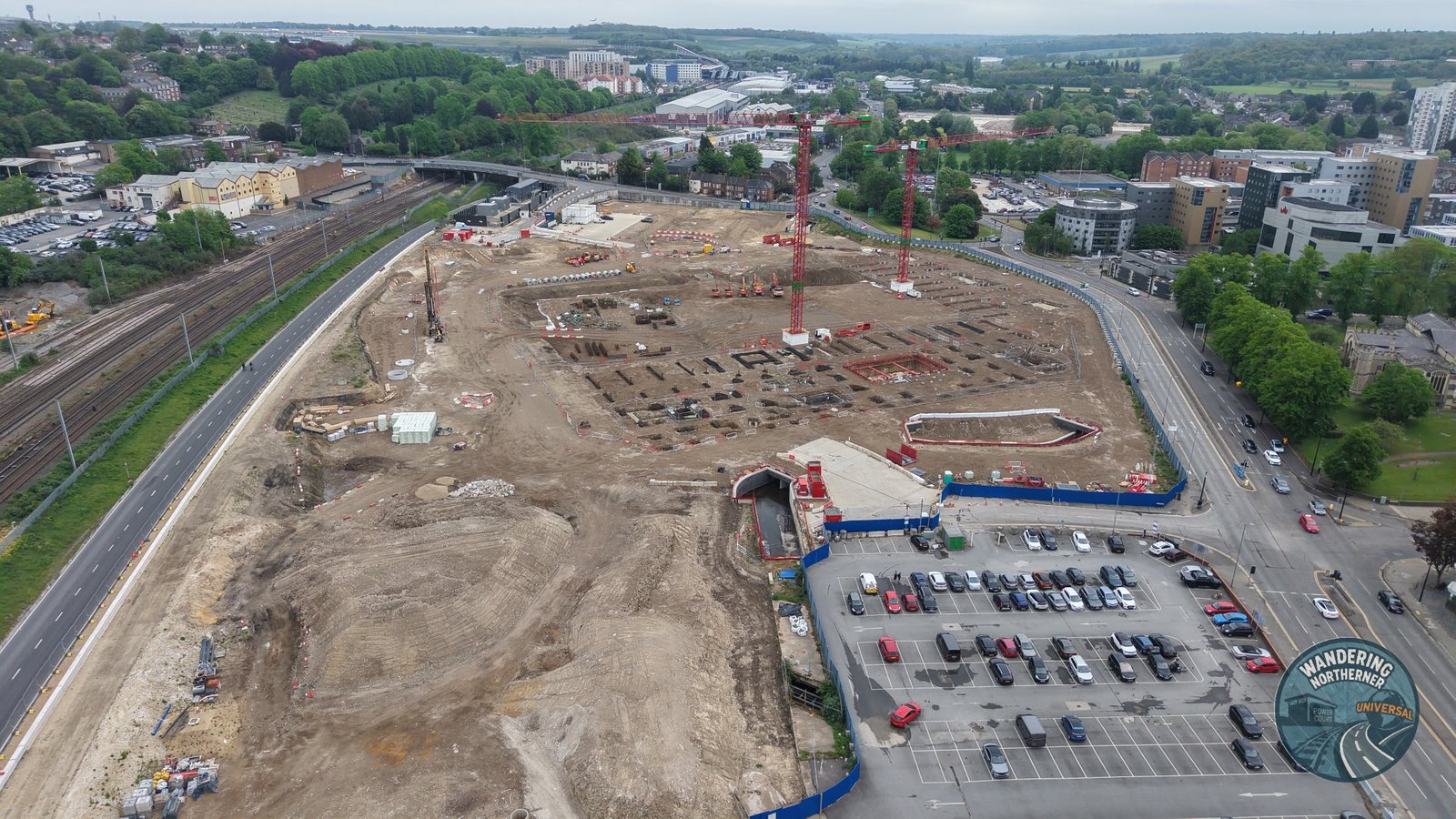
Power Court on 4 May 2026, with pile caps, ground beams and column bases covering a growing part of the site.
Only two weeks later, the density of foundations around the cranes had increased noticeably. The layout of the stands was starting to become legible from the air, even though most of the work remained close to ground level.
21 June 2026 – the first major structure rises
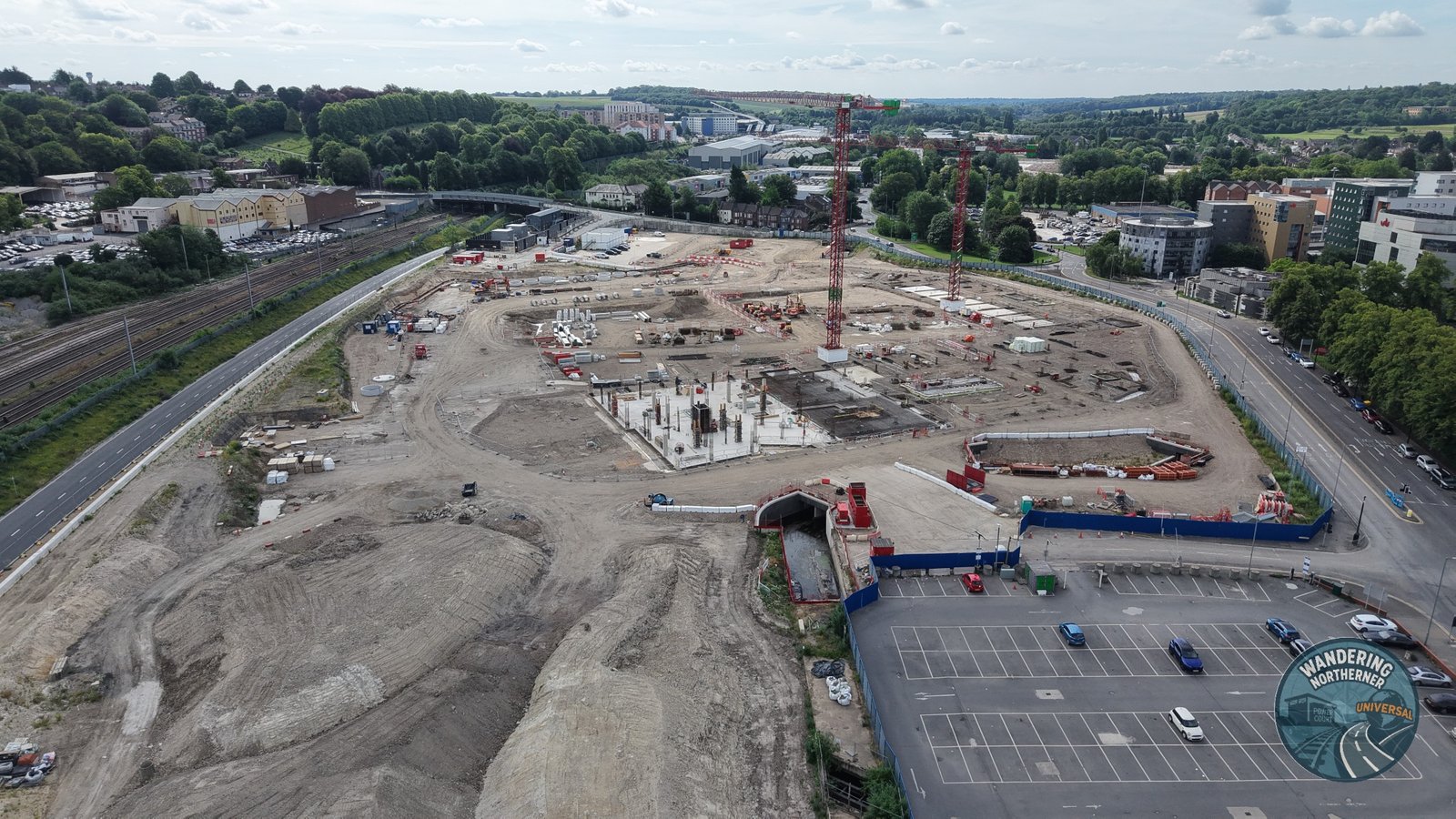
Concrete slabs and vertical columns rising above the foundations on 21 June 2026.
June brought the first sustained above-ground progress. A substantial concrete slab had been poured, with columns and walls rising from it, while foundation work continued along the other sides of the future pitch.
17 July 2026 – the lower level takes shape
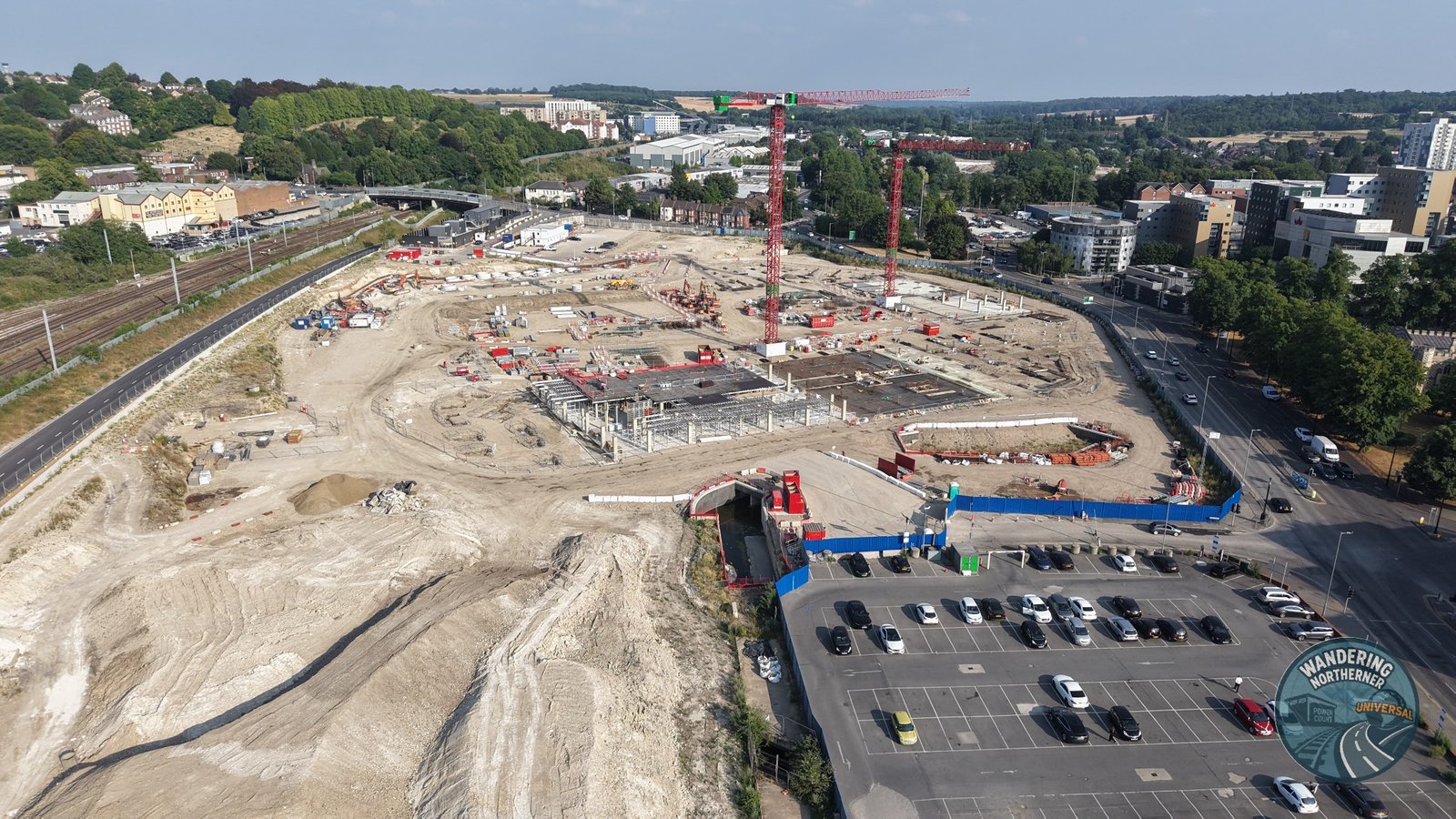
The developing lower level of the stadium on 17 July 2026.
By mid-July, the new stadium was no longer a collection of isolated foundations. The concrete frame had expanded into a continuous structure, with formwork, columns and new floor sections showing the height and depth of the lower levels.
9 August 2026 – three sides of the ground become visible
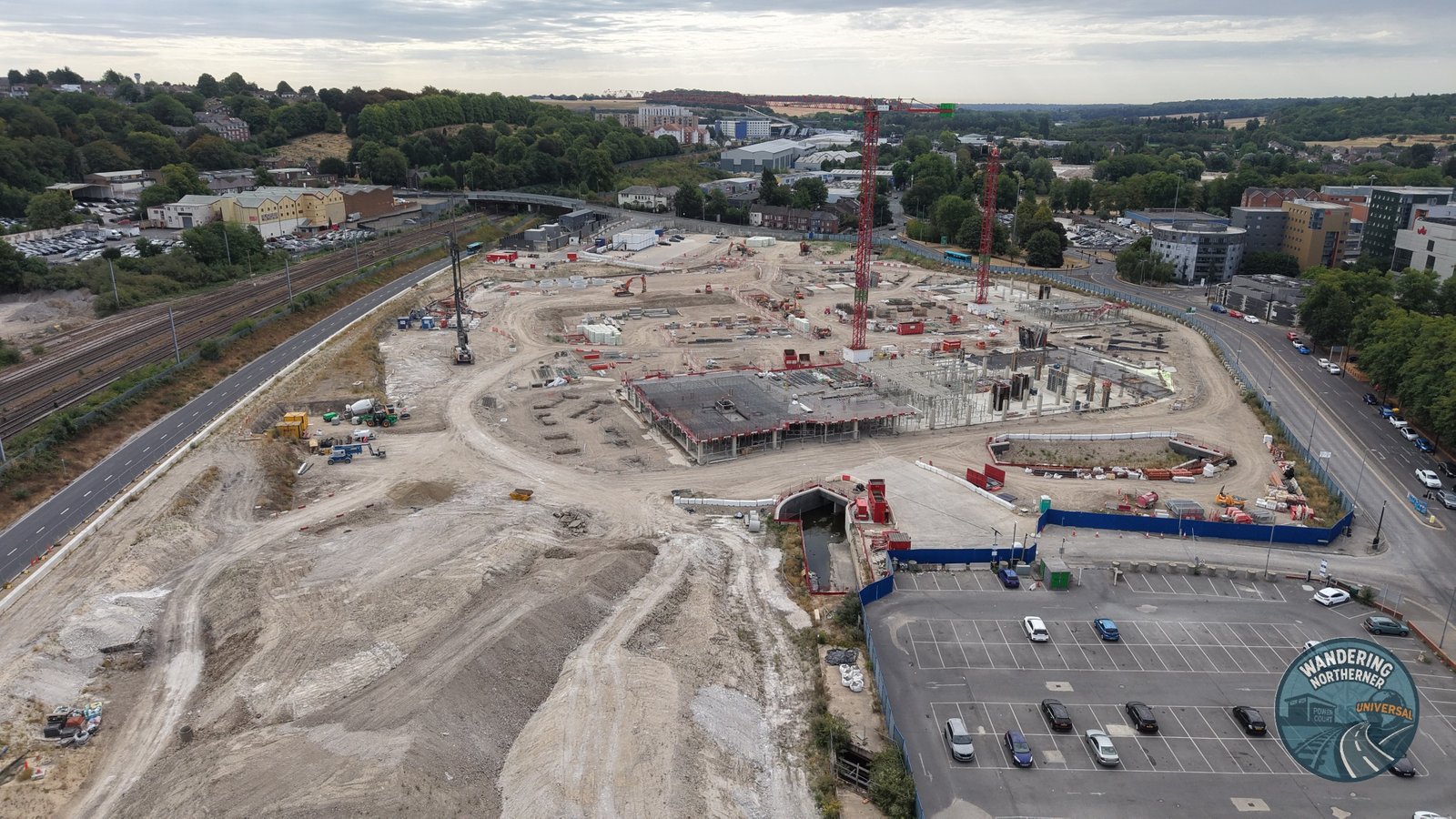
The latest aerial view, taken on 9 August 2026.
The August photograph shows rapid progress on several fronts. The largest concrete section has gained a broad upper slab, rows of columns and walls are rising nearby, and construction is now visible around three sides of the future pitch. The open central area makes the stadium bowl much easier to understand from above whilst the piling rig is back to work on the north and east stands.
What happens next at Power Court?
The next major visual change should come as the reinforced-concrete frame rises further around the pitch. New floor levels, concourses, stair cores and the structural supports for the seating terraces will gradually turn the separate construction areas into four recognisable stands.
The programme will then move towards the roof structure, external envelope, mechanical and electrical installation, hospitality areas, spectator facilities and the fitting out of the stadium. Work will also continue outside the ground on access, public spaces, landscaping and the reopened sections of the River Lea.
The club intends Power Court to host its first competitive match at the beginning of the 2028/29 season.
Follow the construction of Power Court
I photograph and film the Power Court site regularly, documenting the construction of Luton Town’s new stadium from the air and from public viewpoints around the site.
Follow Wandering Northerner on YouTube and Facebook for the latest Power Court construction videos, photographs and side-by-side comparisons.
You can also read my complete guide to the Luton Town Power Court stadium, including the history of the project, stadium plans, location and frequently asked questions.