
Black Cat Roundabout Construction Progress: A Photo Timeline
Last updated: 11 August 2026
The Black Cat Roundabout is being transformed from a heavily congested ground-level junction into one of the most complex road interchanges in the region. These dated aerial photographs follow its construction from the early foundations in October 2024 to the rapidly developing A421 flyover in August 2026.
The junction forms the western end of the A428 Black Cat to Caxton Gibbet improvement scheme. When complete, the A1, A421 and local roads will pass through the same location on three separate levels, allowing long-distance traffic to avoid the roundabout.
Black Cat construction at a glance
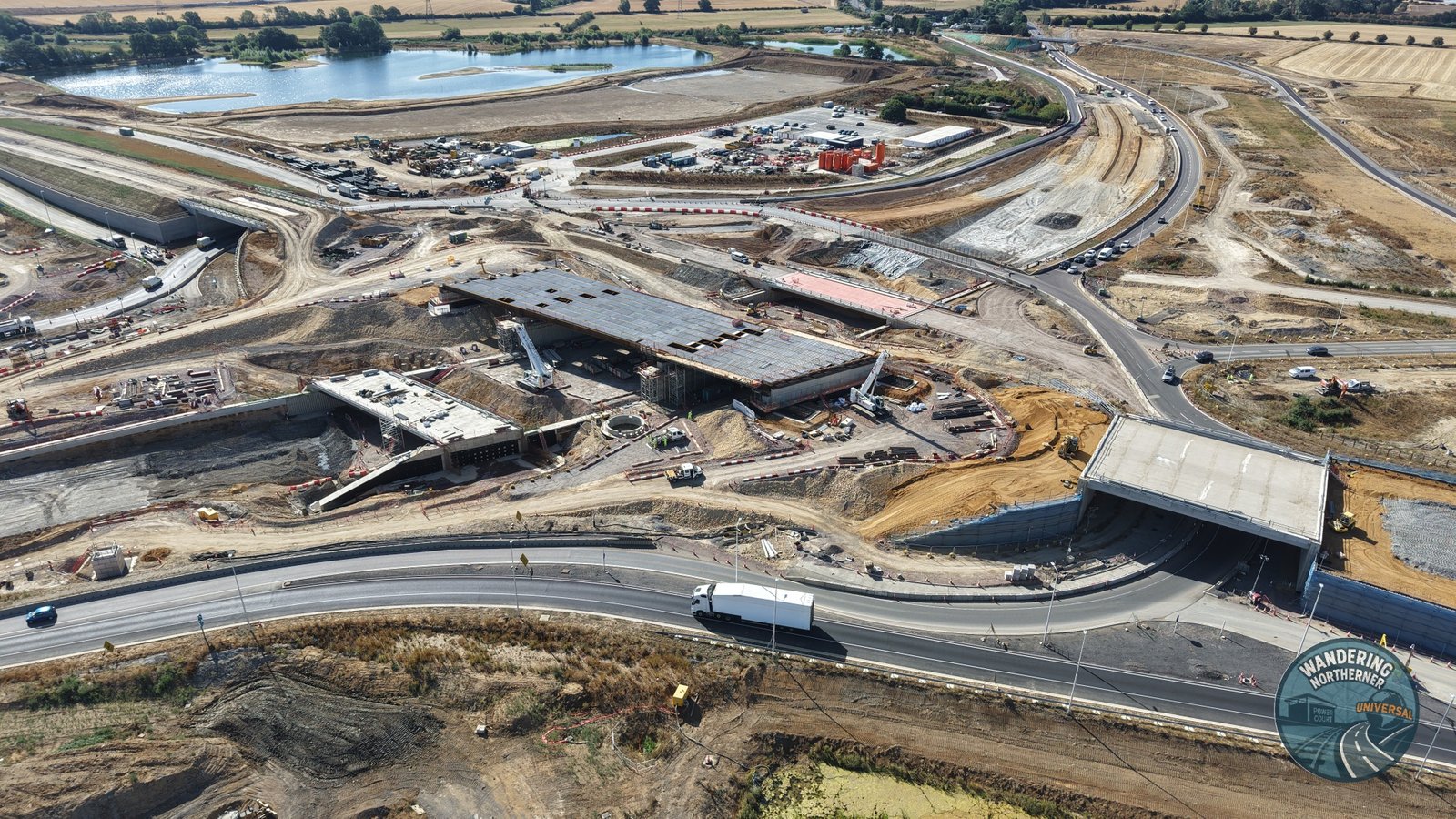
Black Cat junction on 8 August 2026. The central flyover deck now dominates the site, with the two outer bridge structures and new road alignments clearly visible around it.
How will the new Black Cat junction work?
The finished Black Cat junction will have three distinct levels:
- Lower level: the A1 will run through a new cutting beneath the junction.
- Upper level: the A421 will cross the junction on a new flyover.
- Ground level: the junction and local roads, including Bedford Road, will continue to connect the surrounding routes.
This arrangement is designed to remove through traffic from the roundabout. Drivers continuing on the A1 or travelling along the new dual carriageway will no longer have to stop at the junction, while local traffic will retain the connections it needs at ground level.
Although the overall project is still called the A428 Black Cat to Caxton Gibbet scheme, National Highways refers to the new dual carriageway and the flyover at Black Cat as the A421.
Black Cat Roundabout progress during 2024
12 October 2024 – foundations begin beside the existing roundabout
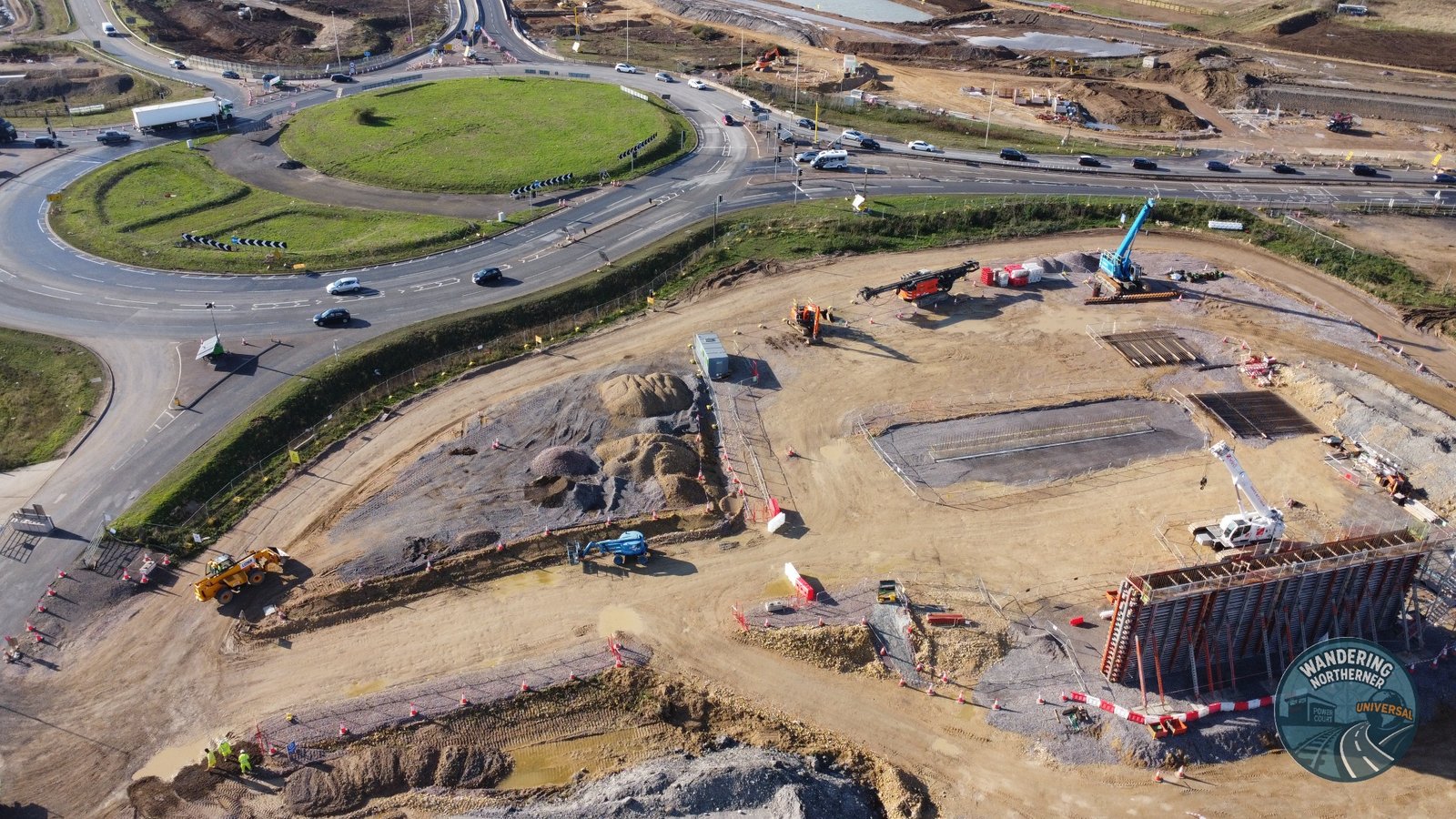
Early bridge foundations and a large concrete wall taking shape beside the operational Black Cat Roundabout on 12 October 2024. This photograph looks west along the A421 towards Bedford.
The existing roundabout remained almost completely intact at this stage. Around it, contractors had started constructing the first major foundations and retaining structures while keeping the A1 and A421 open to traffic.
The photograph is a useful baseline because the future three-level junction is not yet obvious. Most of the permanent flyover structures that now fill the site had still to be built.
Black Cat Roundabout progress during 2025
18 May 2025 – new roads and the Roxton Road bridge open up the site
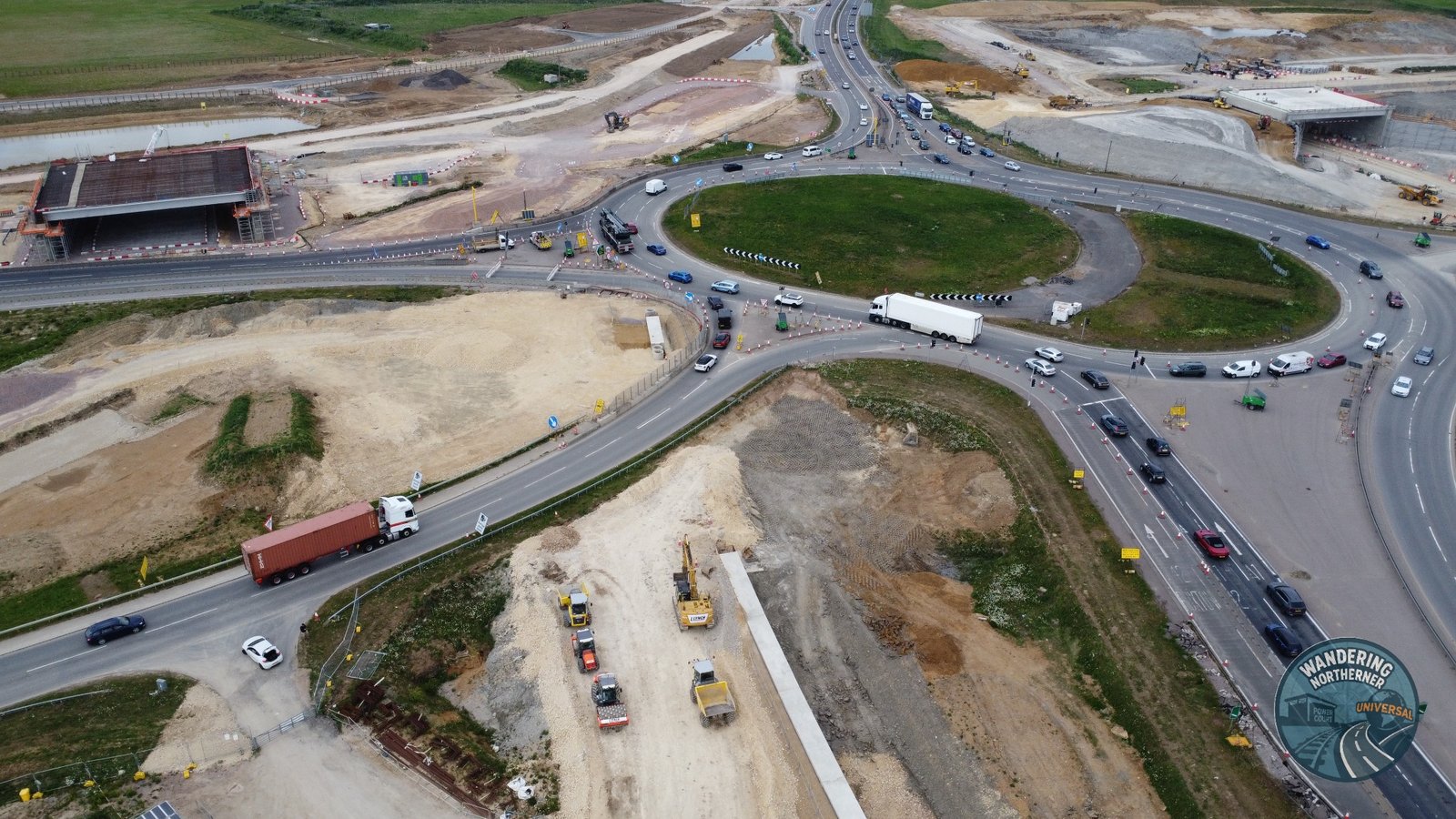
Looking north, the junction on 18 May 2025, with new surfaced roads, bridge structures and major earthworks surrounding the existing roundabout.
By May, the scale of the project was much clearer. The replacement Roxton Road bridge had opened earlier that month, while new link roads and slip-road alignments were taking shape around the live junction.
13 July 2025 – the new junction layout starts to emerge
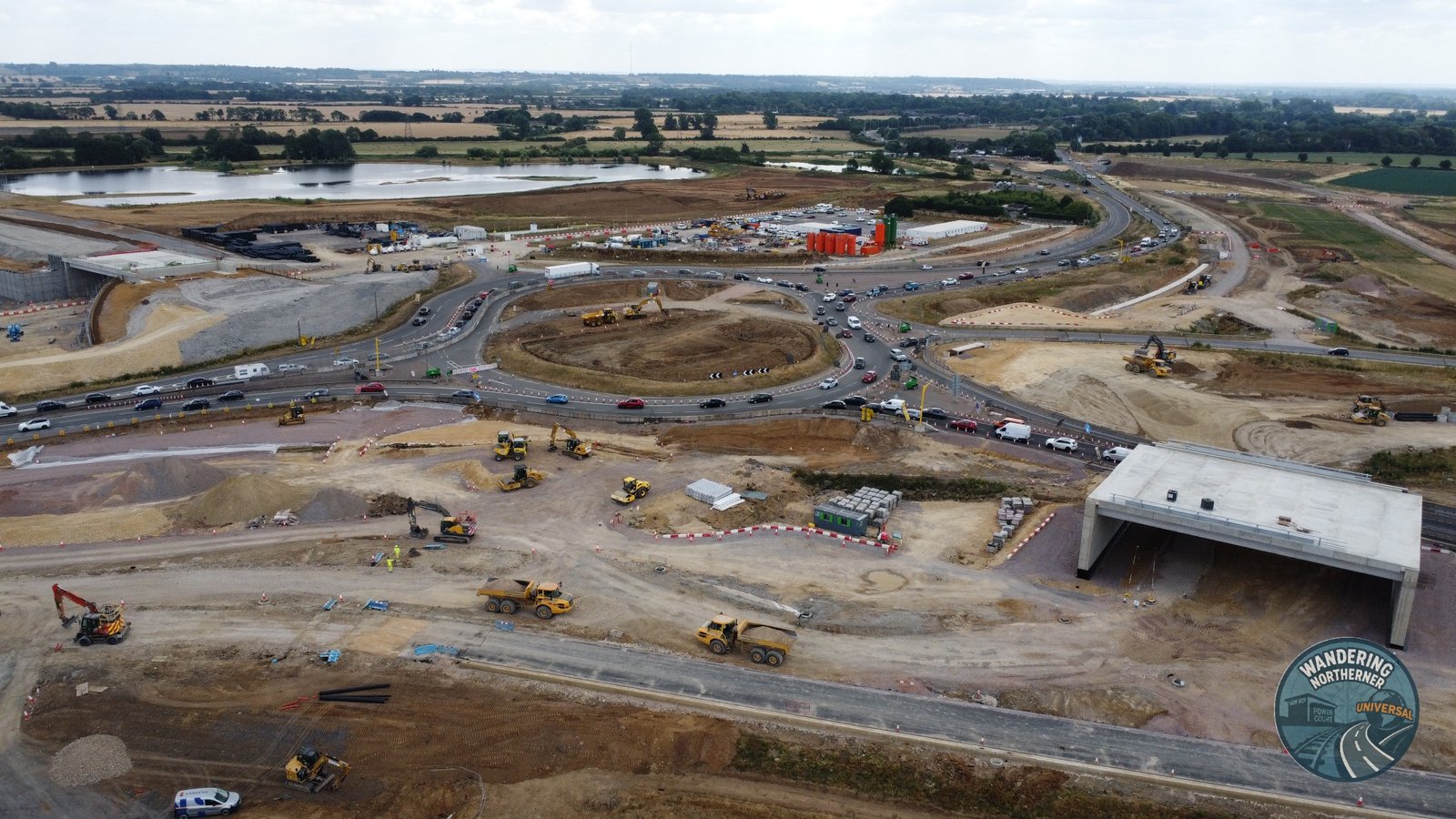
Extensive earthworks and new road alignments around Black Cat on 13 July 2025.
The original roundabout layout was no longer fully in use, with the northern section closed to through traffic.
19 July 2025 – a clearer view of the changing traffic routes
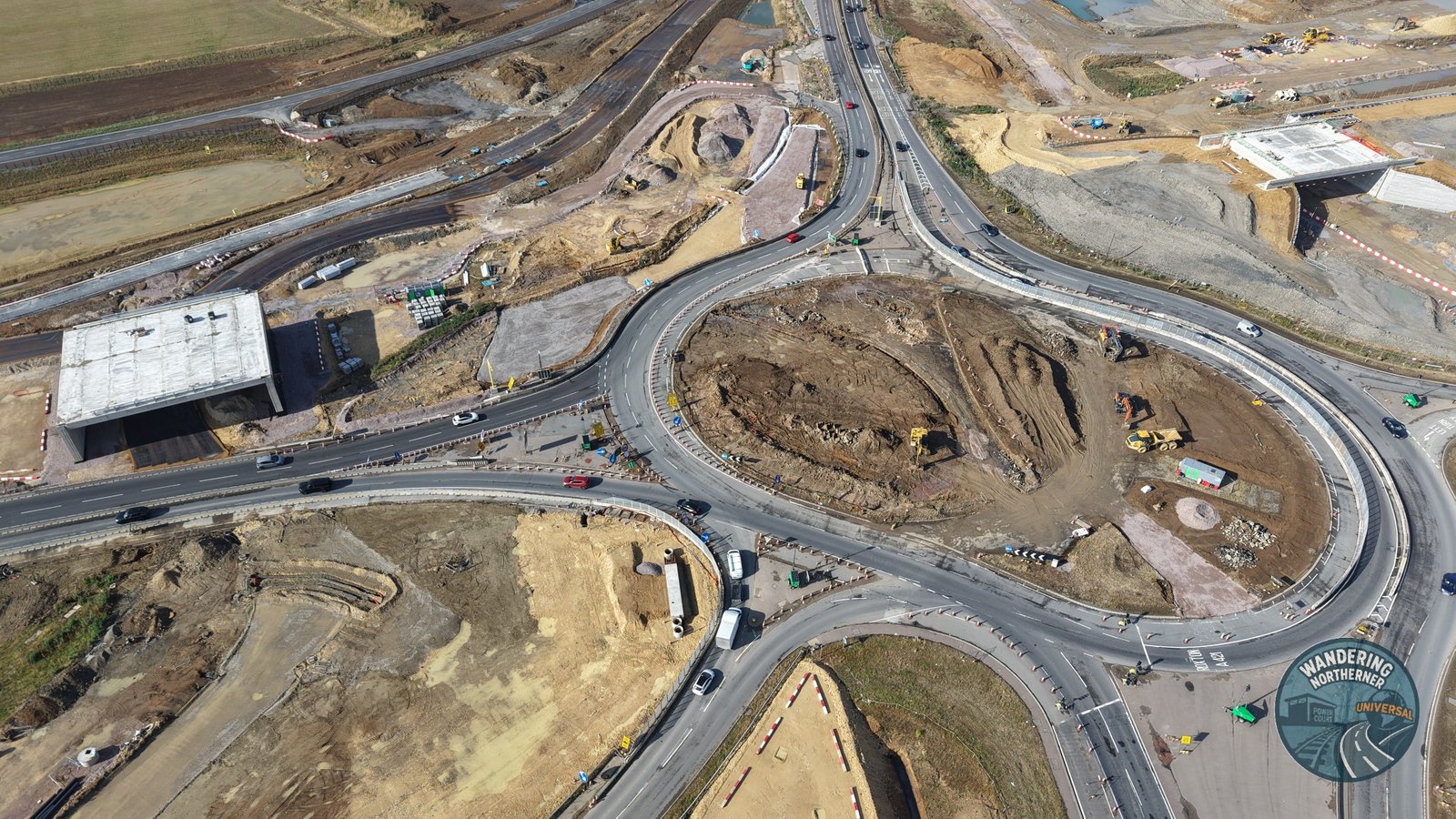
A wider view on 19 July 2025 showing the live roundabout, new bridge structures and the growing network of permanent and temporary roads.
Only six days later, additional surfacing and earthworks made the developing layout easier to follow. At this point, traffic could no longer pass over the northern section of the original roundabout while contractors released more of the central site for flyover construction.
17 August 2025 – the eastbound free-flow link is ready
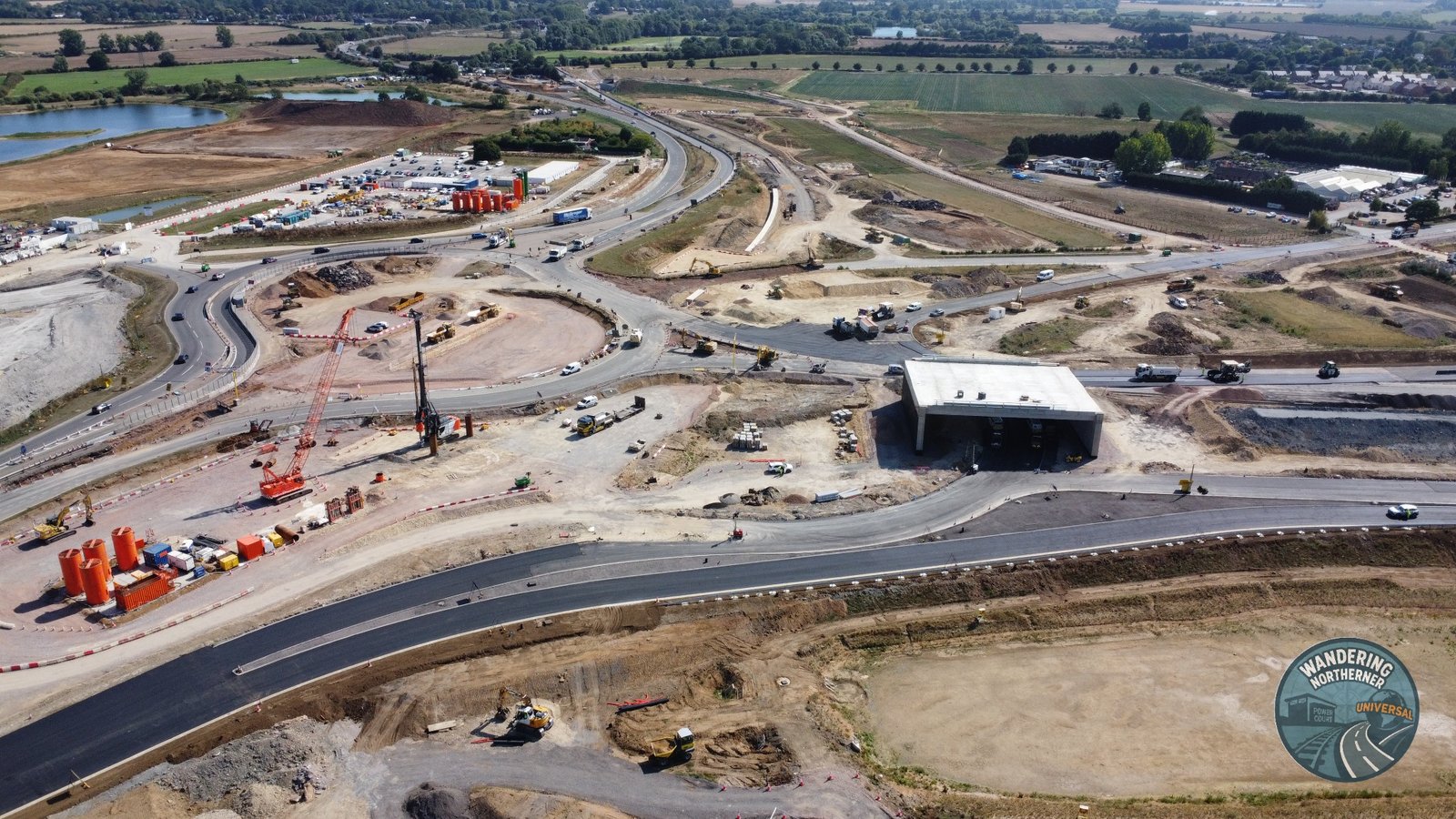
The new A421 eastbound to A1 northbound free-flow link photographed on 17 August 2025, one day before it opened to traffic.
On 18 August, National Highways opened the new free-flow connection from the A421 eastbound to the A1 northbound. This removed the need for those drivers to enter the Black Cat Roundabout. A new A421 westbound on-slip and the realigned Bedford Road also opened as part of the changes.
Moving traffic onto these new roads created more space for the next and most complex phase: constructing the central flyover and preparing to lower the A1.
20 September 2025 – piling begins across the centre
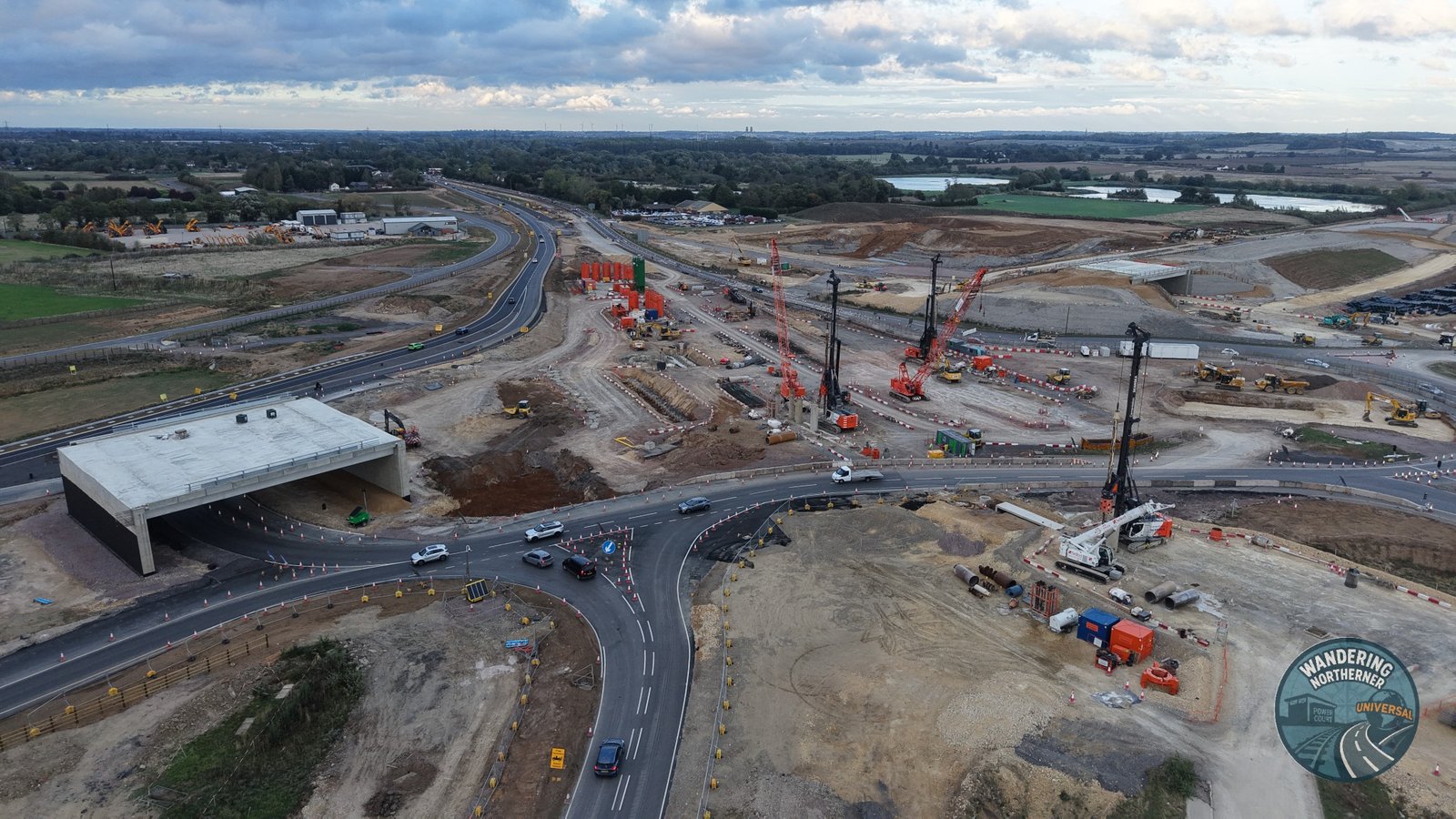
Multiple piling rigs working across the centre of Black Cat junction on 20 September 2025.
With the new traffic routes in use, work intensified across the former central area. Rows of piles were installed to support the bridge piers, abutments and retaining structures needed for the A421 flyover.
26 October 2025 – the future flyover alignment becomes visible
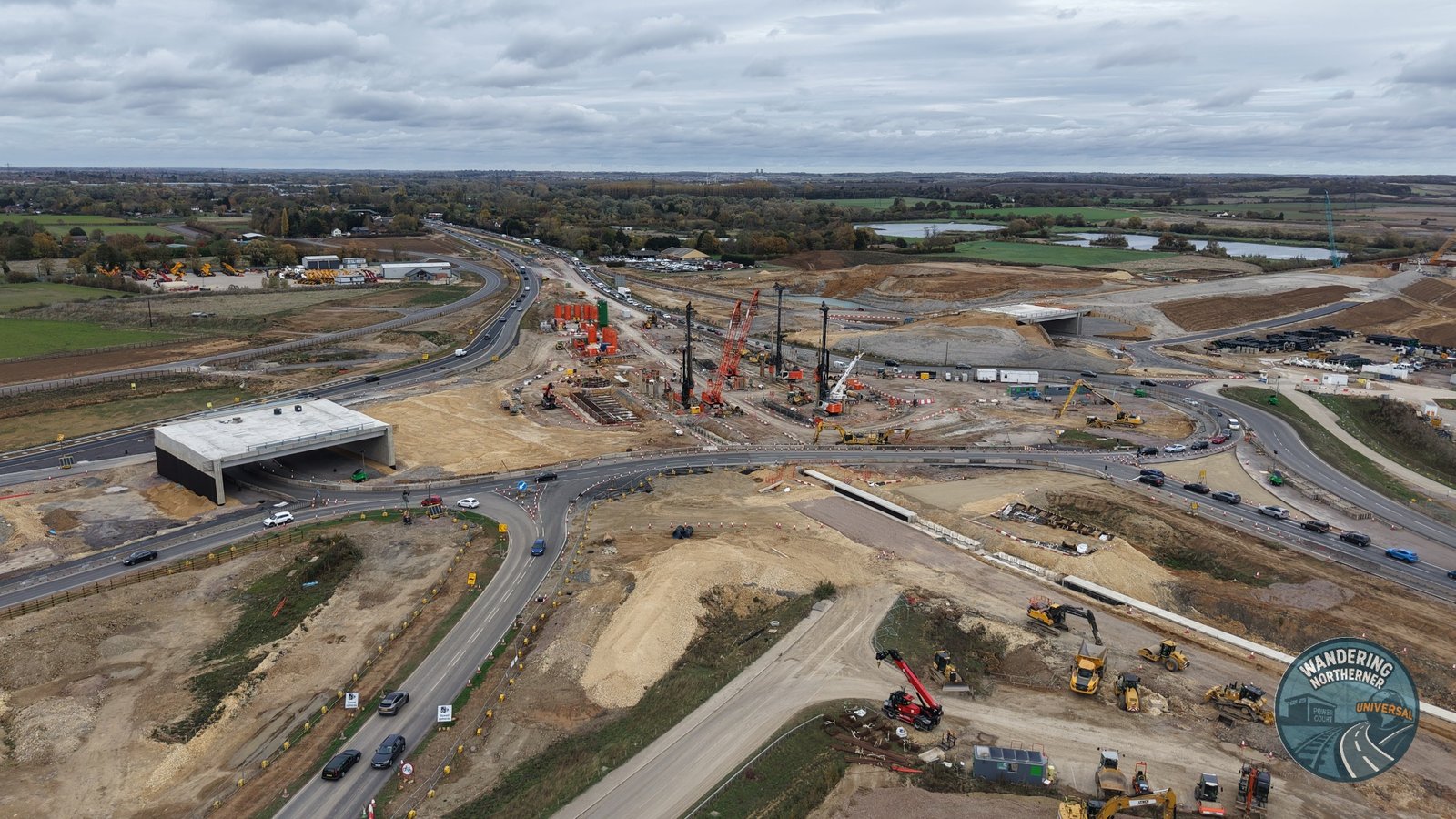
Foundation construction spreading across the future flyover alignment on 26 October 2025.
By late October, the project had reached its overall halfway point. At Black Cat, the number of piles, reinforced-concrete bases and temporary working areas made the line of the new flyover much easier to follow from the air.
16 November 2025 – multiple piling rigs work across the flyover
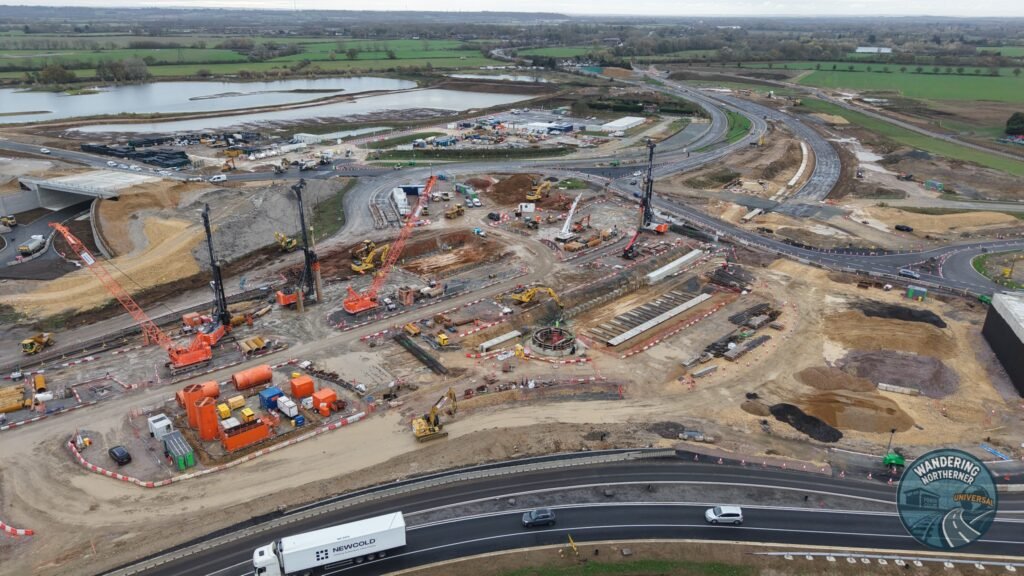
A line of piling rigs and cranes working across the future A421 flyover on 16 November 2025.
The November view captures the intensity of the foundation programme. Several piling operations were taking place simultaneously while the completed outer bridge structure remained in use beside the live traffic lanes.
23 November 2025 – bridge supports rise from the foundations
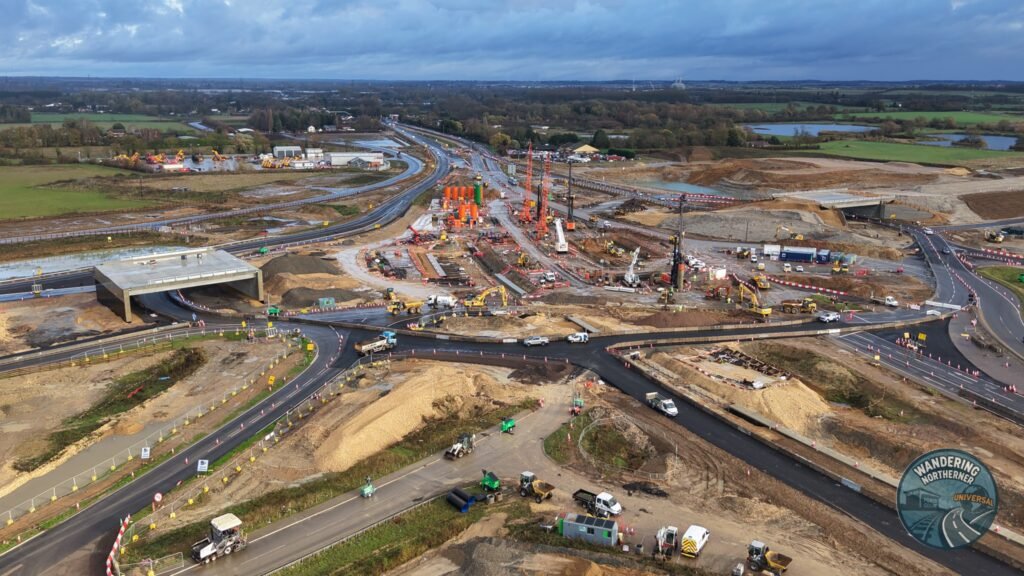
The work was beginning to move above ground. Large pile caps connected groups of foundations, while the first substantial walls and bridge-support structures rose between the new road alignments.
20 December 2025 – the central bridge foundations take shape
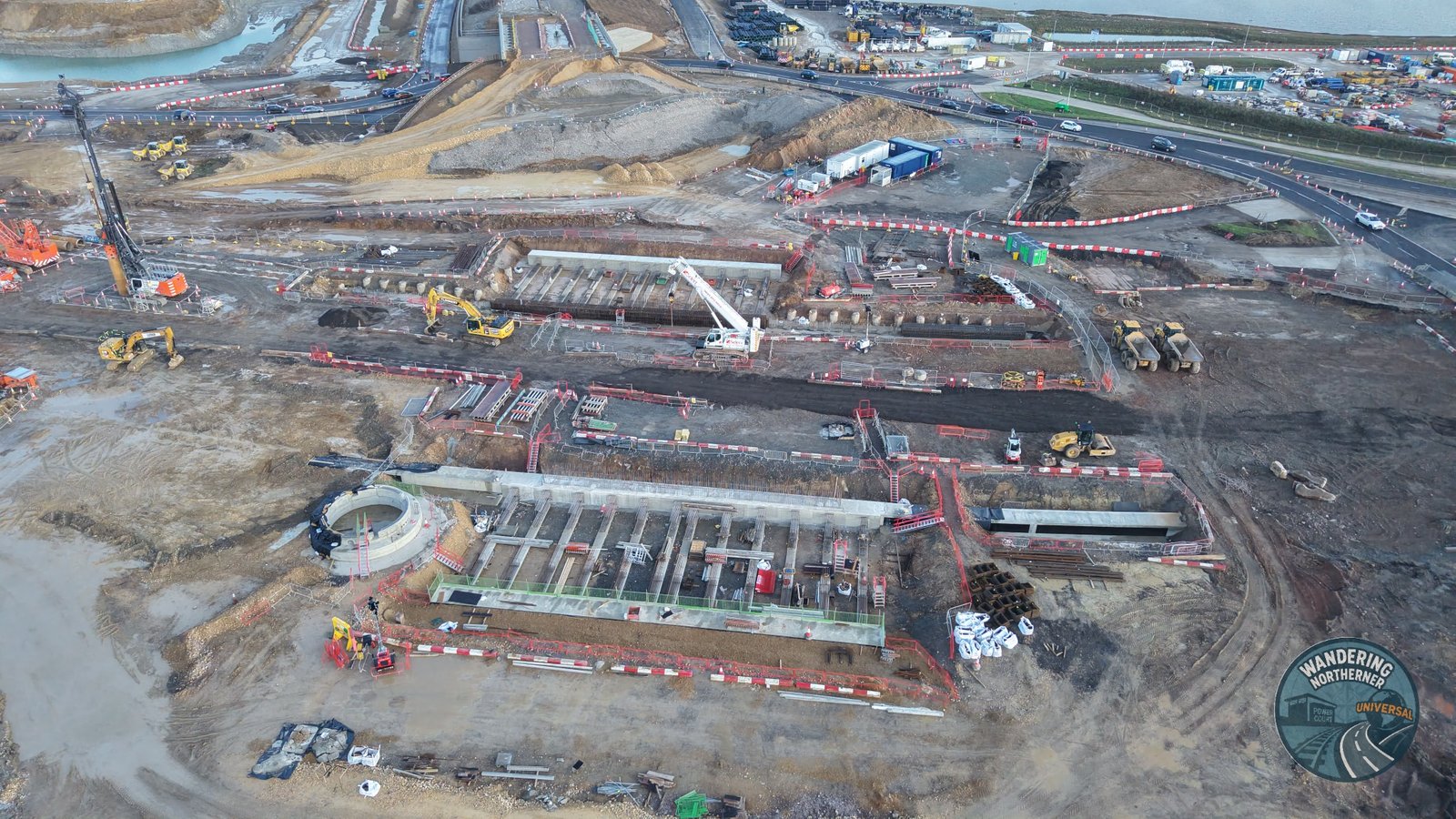
The developing central bridge foundations at Black Cat on 20 December 2025.
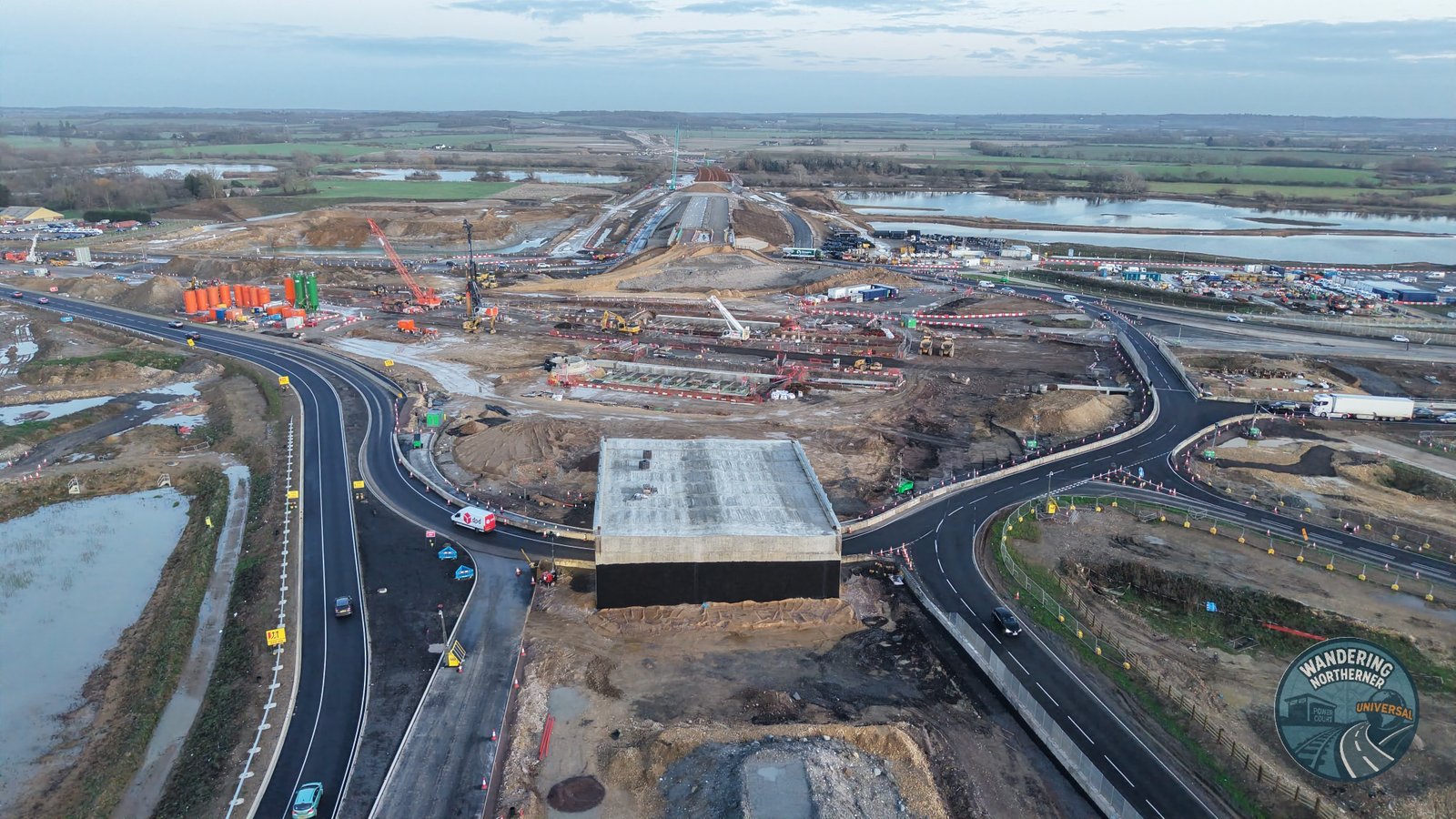
A wider view from 20 December 2025 showing the foundation works in relation to the roundabout, outer bridges and new road alignments.
By the end of 2025, the two outer bridge structures were established and construction had spread across the central section. The separate foundation zones would eventually support the three bridges forming the main A421 flyover.
Black Cat Roundabout progress during 2026
20 January 2026 – reinforced-concrete walls advance
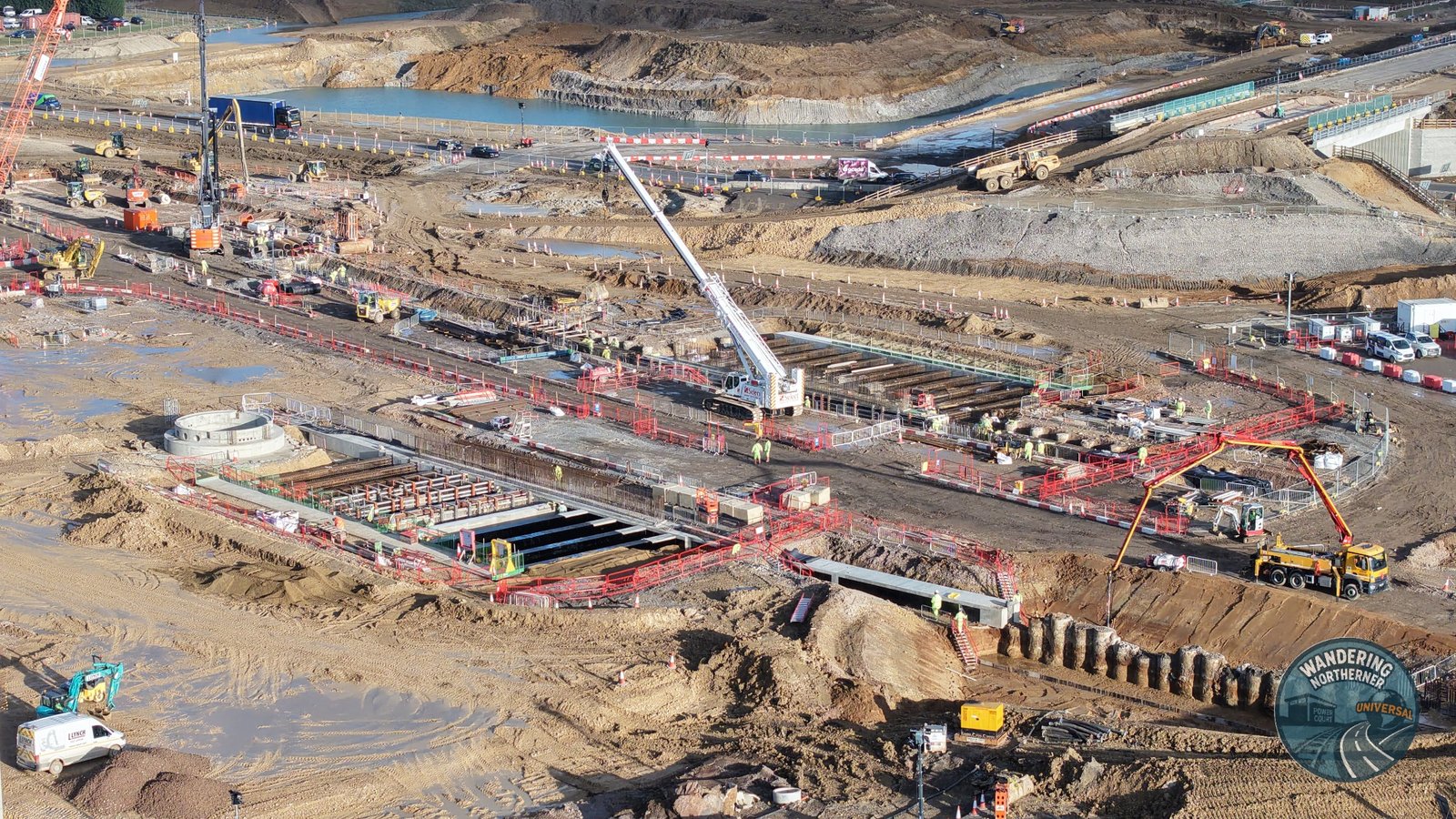
Reinforced-concrete walls, pile caps and bridge bases progressing on 20 January 2026.
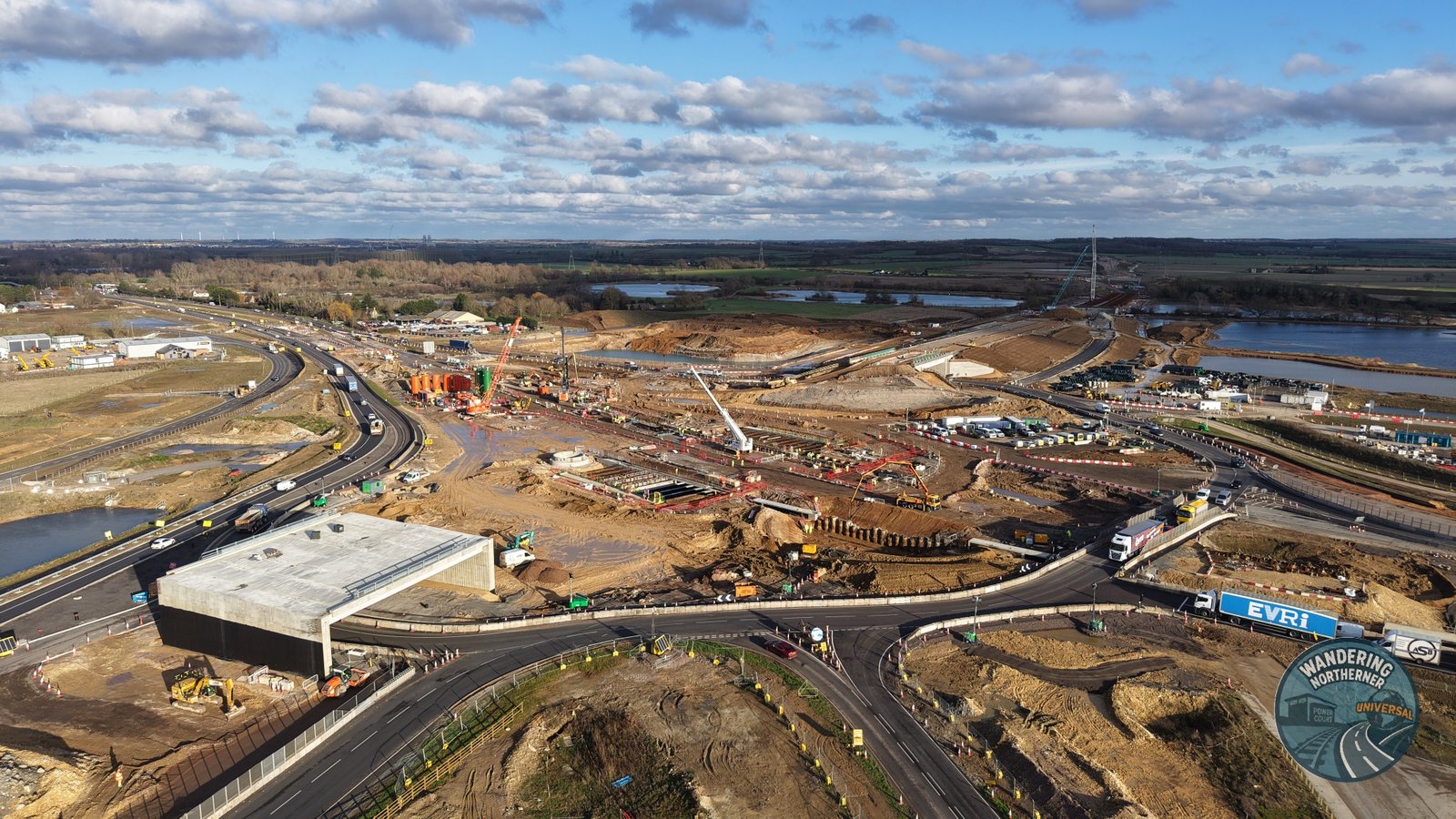
The wider junction on 20 January 2026, showing the central foundations between the two established outer bridge structures.
The first aerial update of 2026 shows how quickly the foundations were developing into permanent structures. Deep excavations, retaining walls and rows of reinforced concrete began to define the spaces through which the different levels of traffic will eventually pass.
8 February 2026 – the bridge-support grid expands
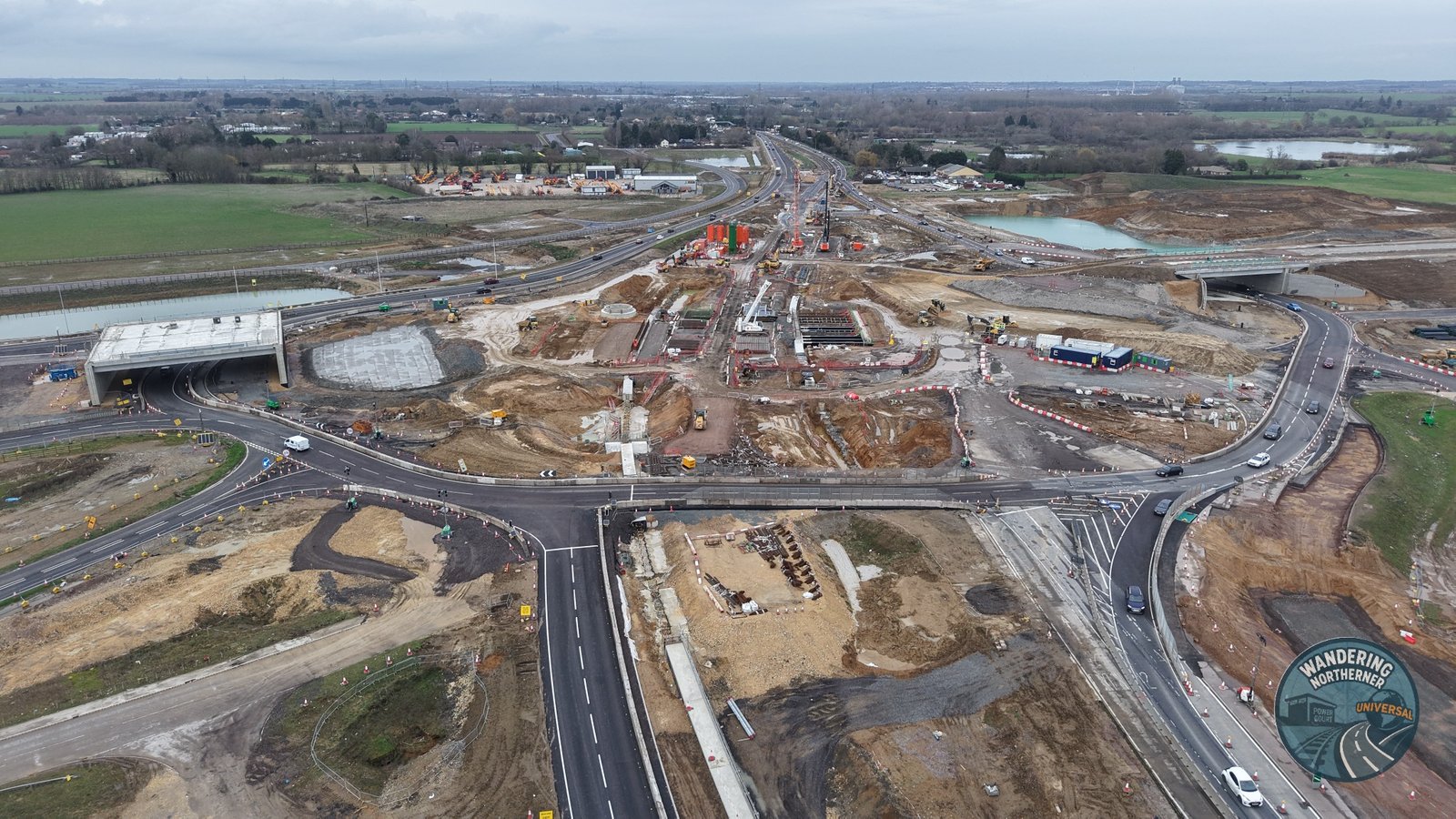
The widening grid of flyover supports and retaining walls on 8 February 2026.
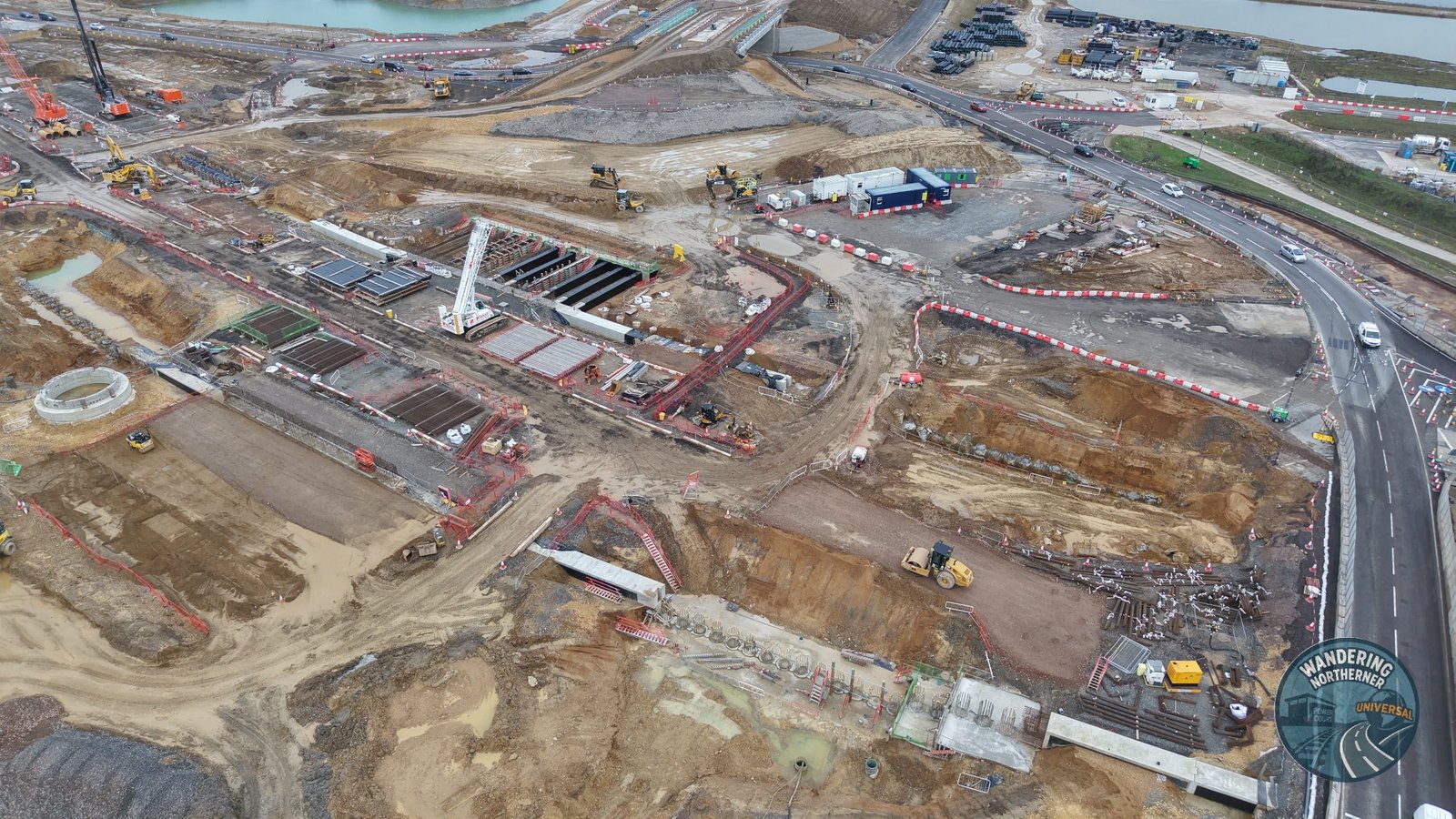
A closer overhead view of the reinforced-concrete bases, walls and excavations on 8 February 2026.
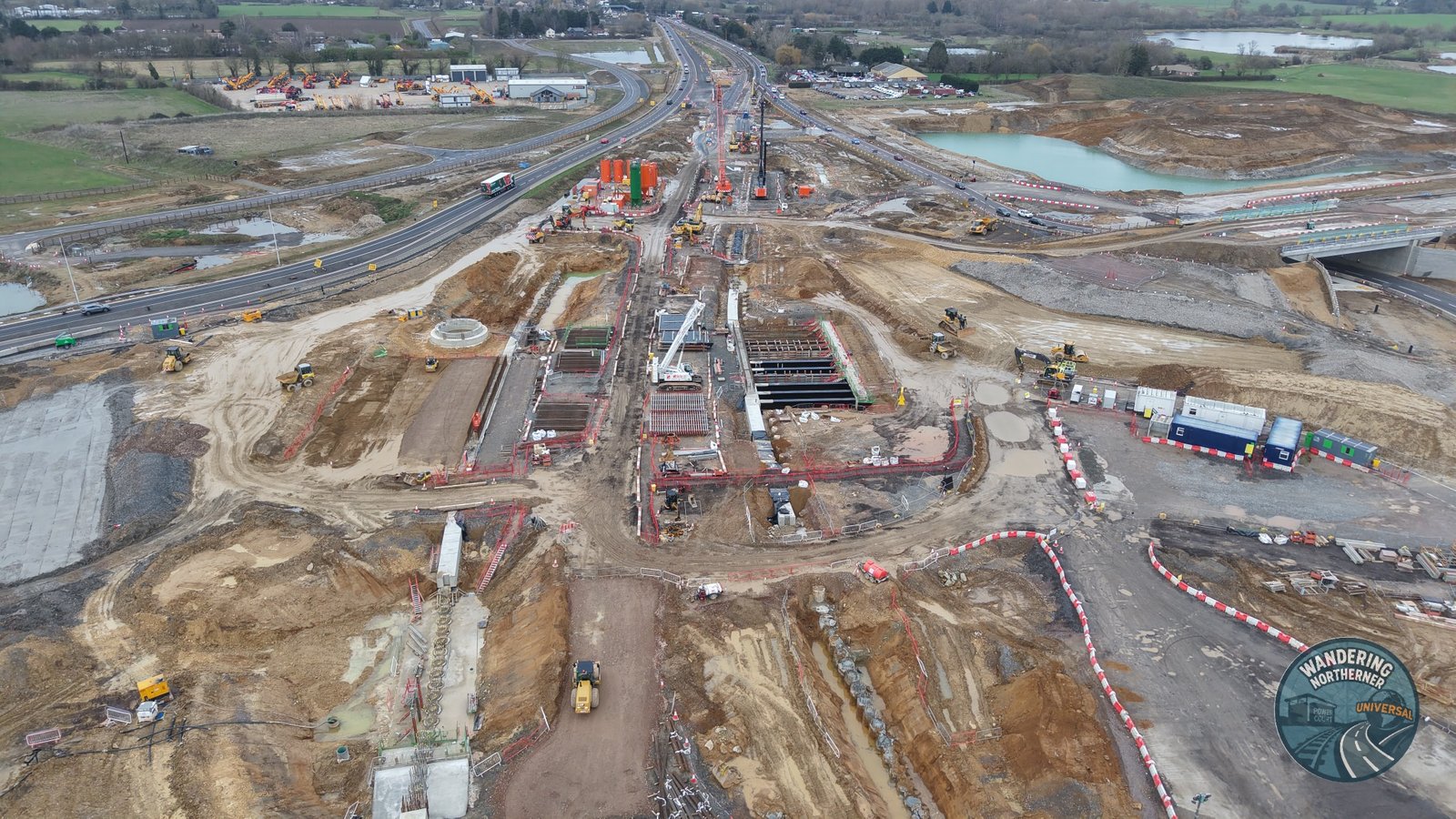
Looking along the future A421 alignment on 8 February 2026, with the separate bridge-support zones beginning to line up.
During February, more of the future junction became recognisable. The bridge supports extended through the centre while work continued on the approach structures at each side.
1 March 2026 – several flyover sections are visible
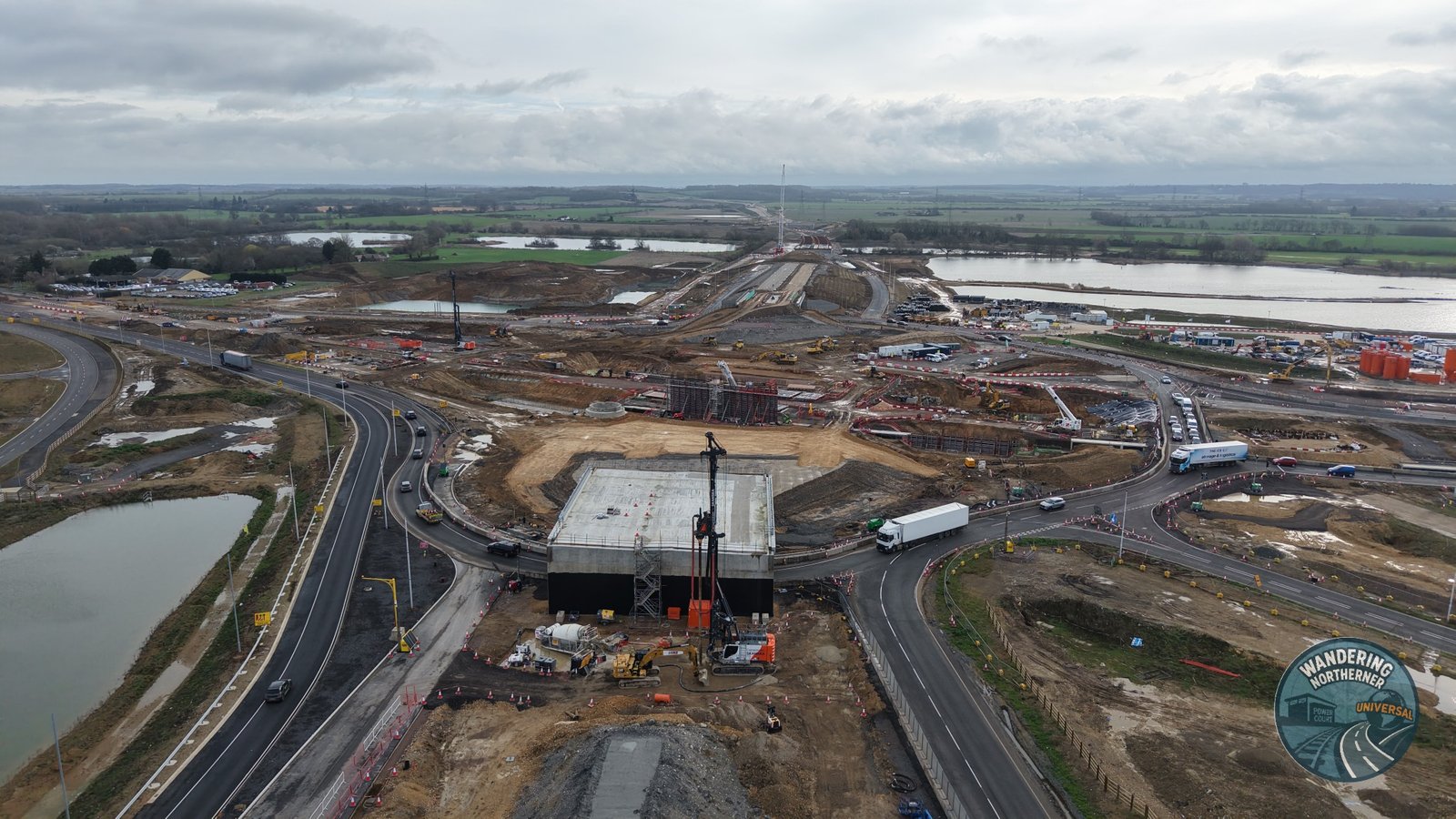
Multiple bridge and retaining-wall sections under construction on 1 March 2026.
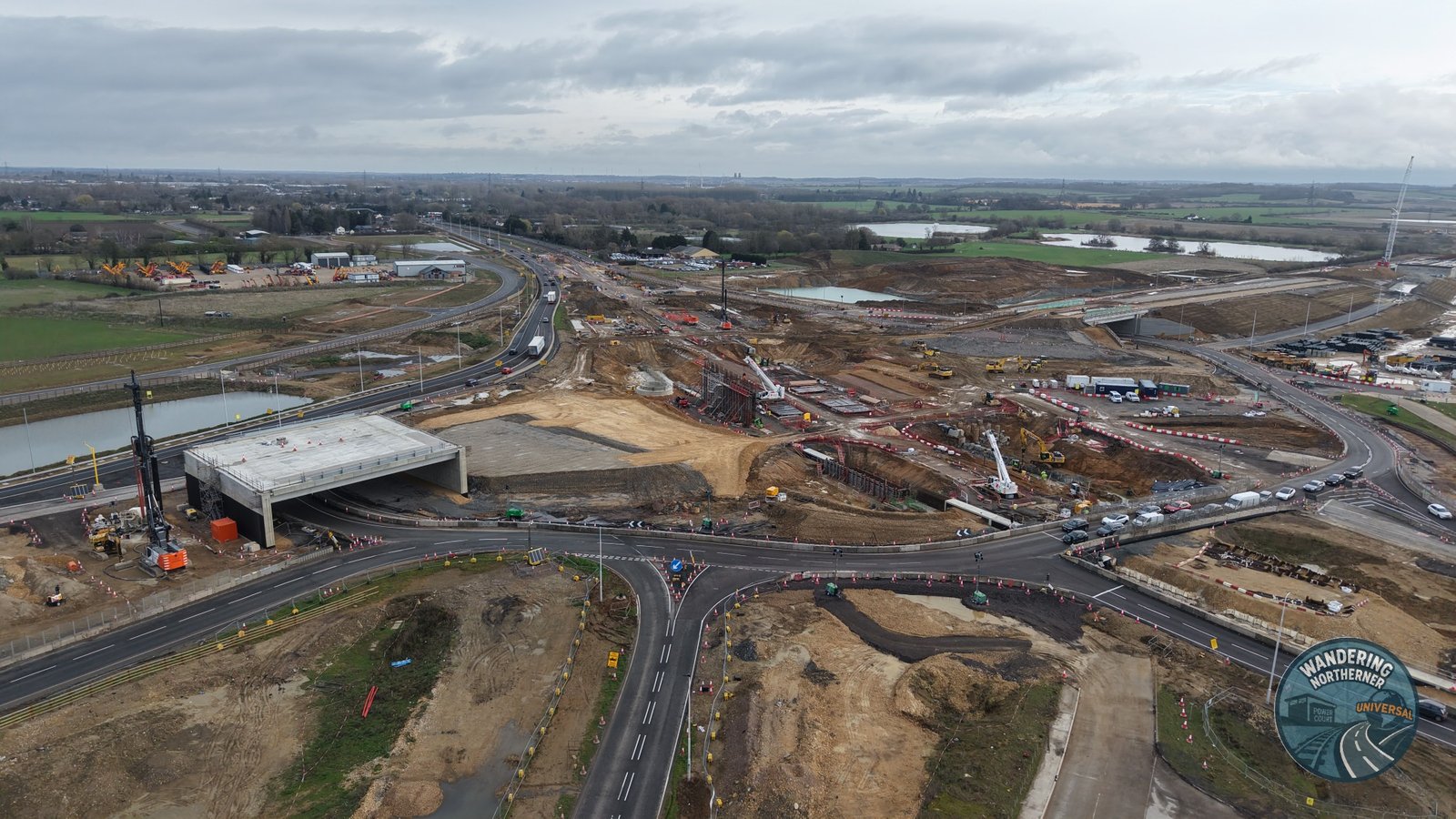
A wider view on 1 March 2026 showing the flyover foundations within the complete Black Cat construction site.
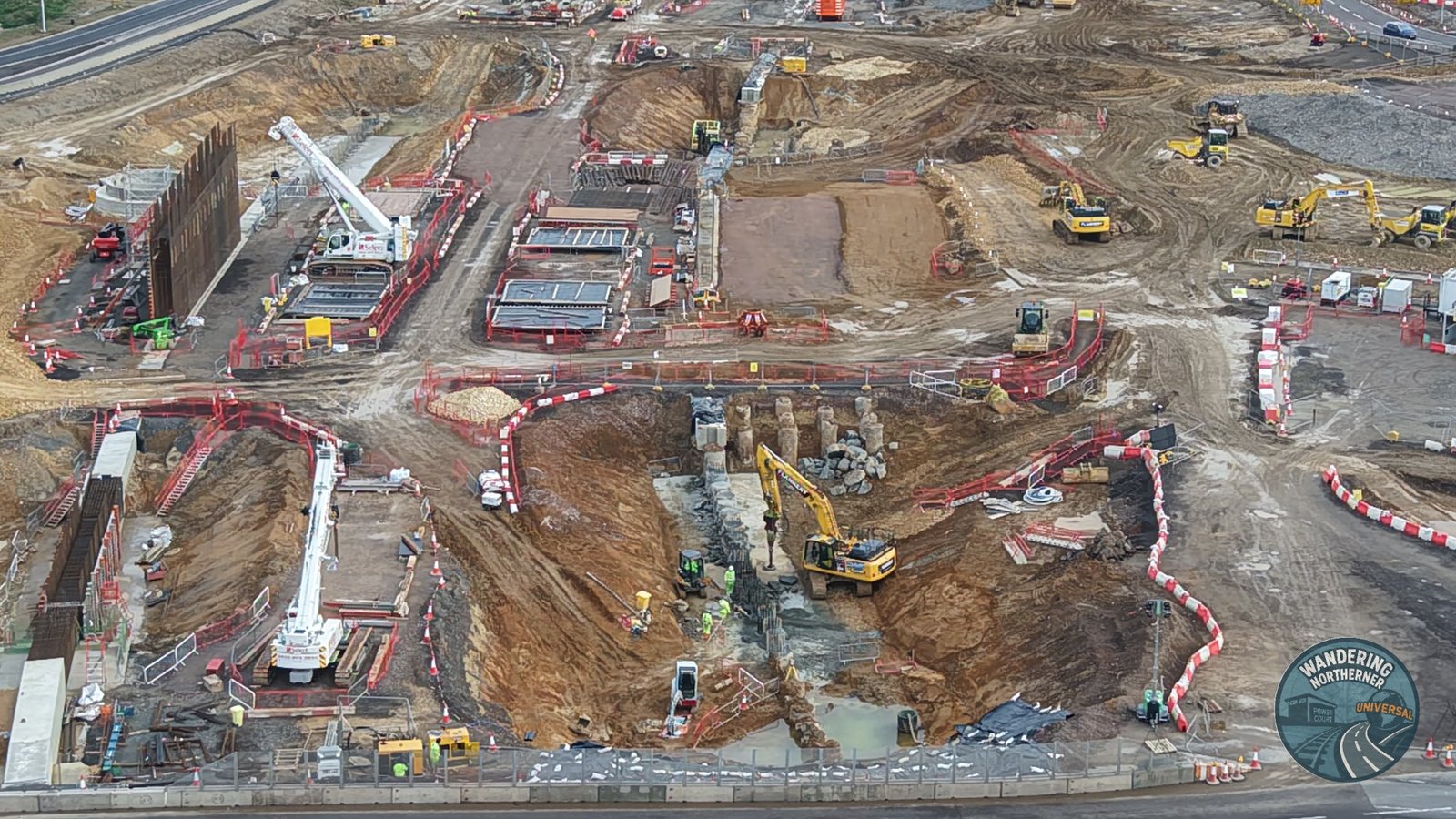
A closer look at the central bridge supports and deep retaining-wall excavations on 1 March 2026.
The individual construction zones were beginning to align. From above, it was possible to trace the future path of the A421 across the junction, even though large gaps remained between the supporting structures.
21 March 2026 – the three central bridge areas are defined
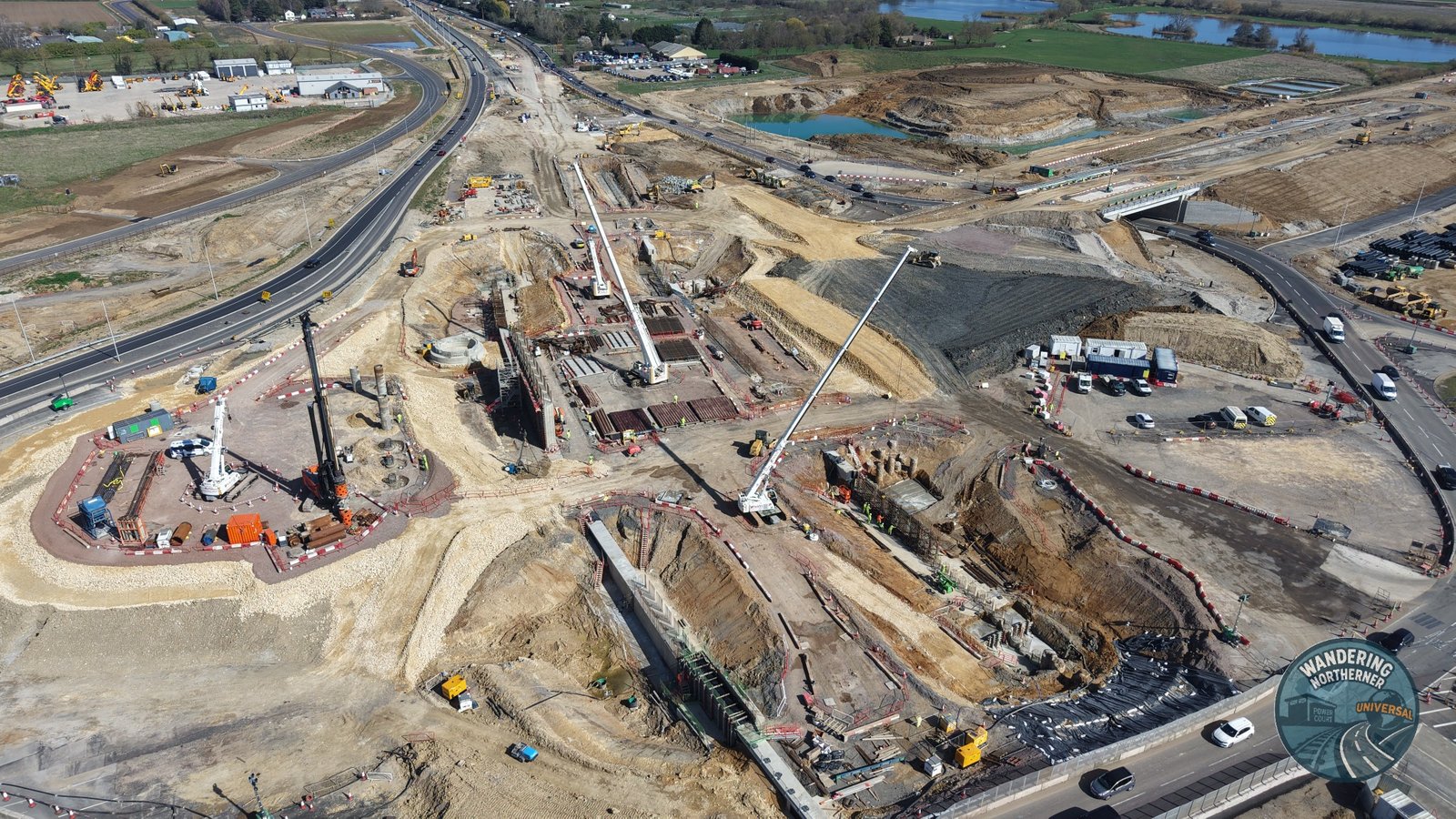
The emerging central flyover structures photographed on 21 March 2026.
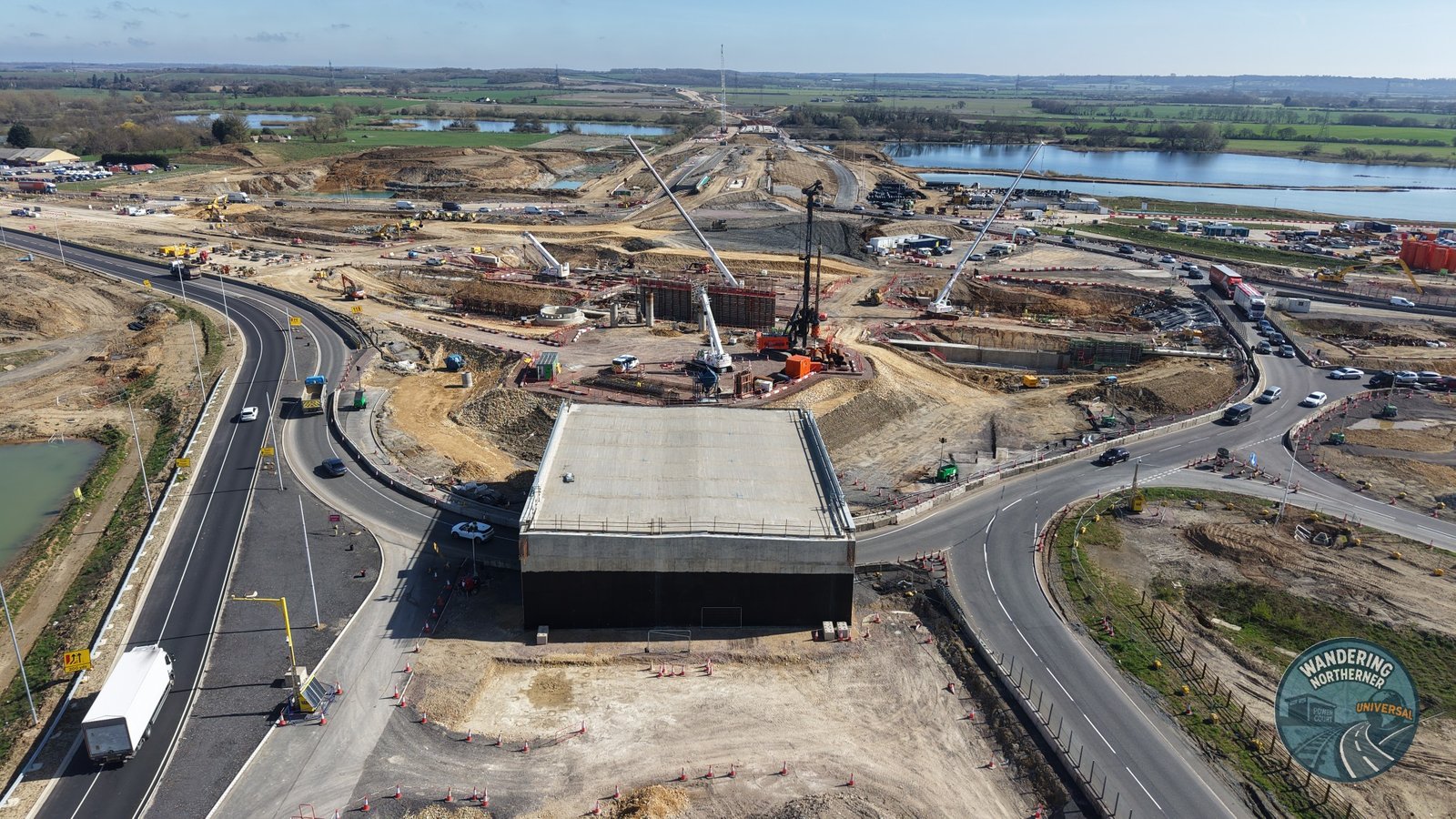
The wider junction on 21 March 2026, showing the new roads and bridge structures surrounding the central work area.
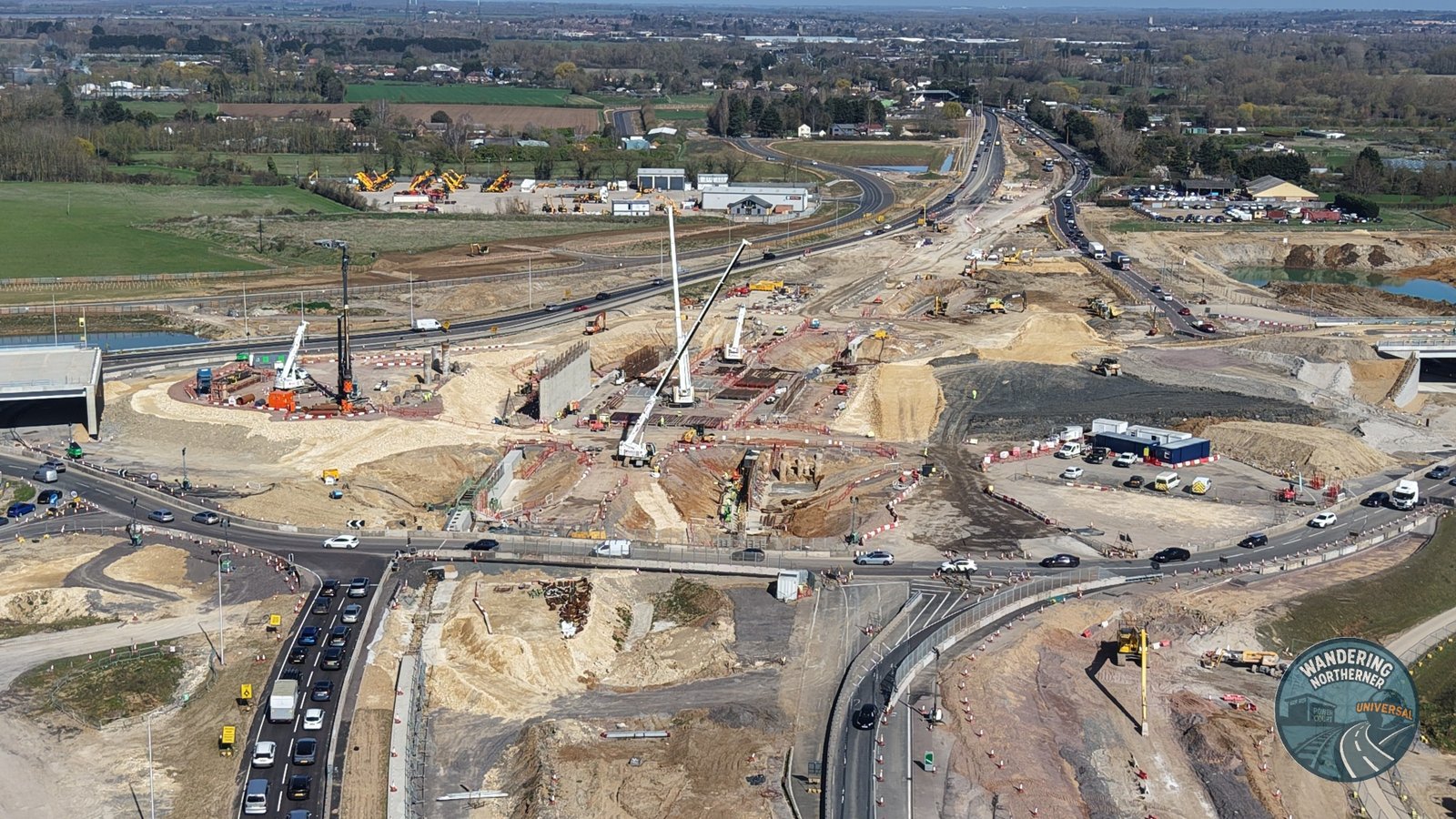
A closer view along the flyover alignment, with cranes working between the growing supports on 21 March 2026.
By late March, the bridge abutments and intermediate supports had reached a more substantial height. Earthworks around them were also forming the approaches that will carry the new road onto the flyover.
4 April 2026 – bridge decks begin to dominate the site
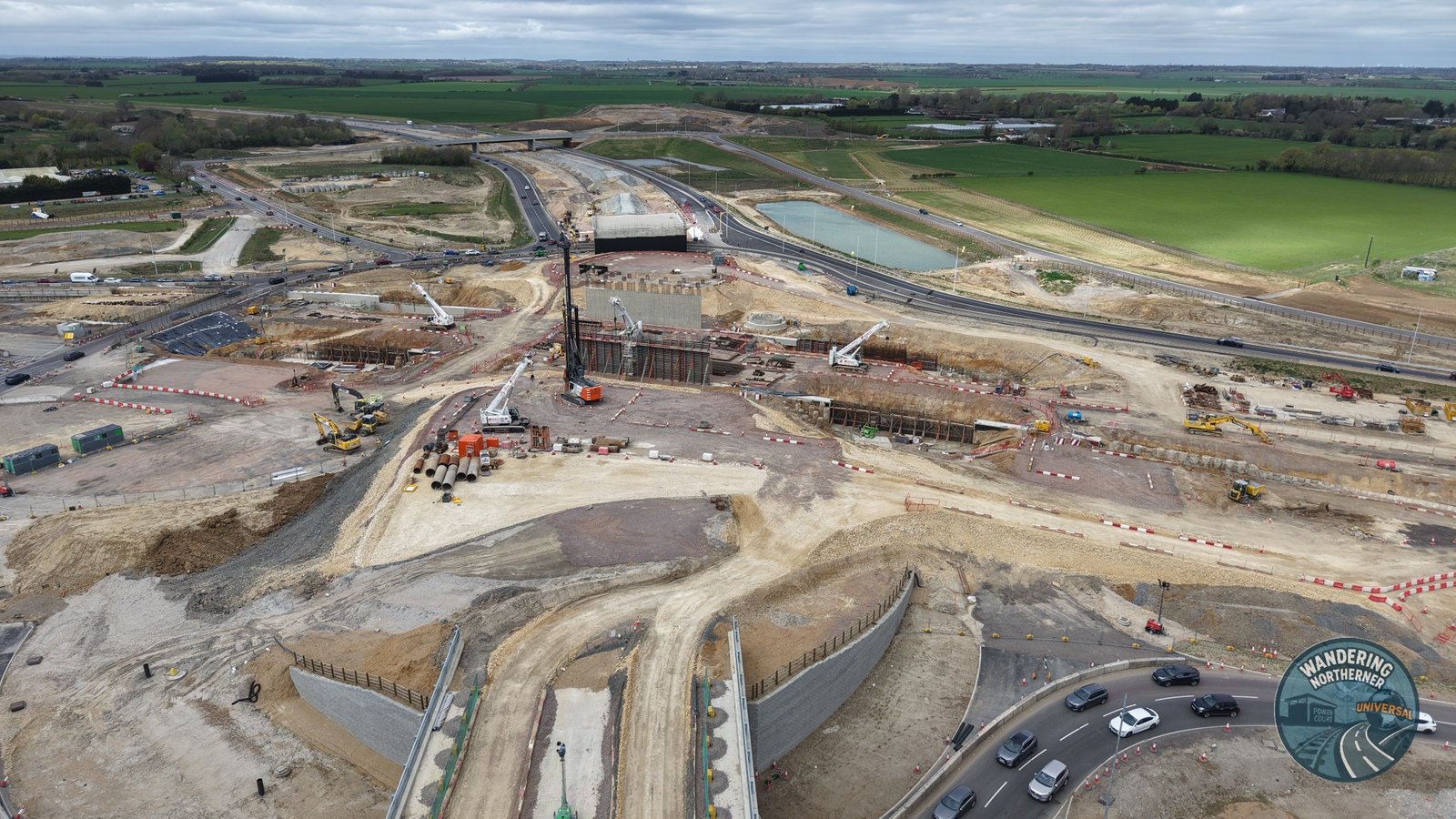
Black Cat junction on 4 April 2026, with the bridge structures extending further across the site.
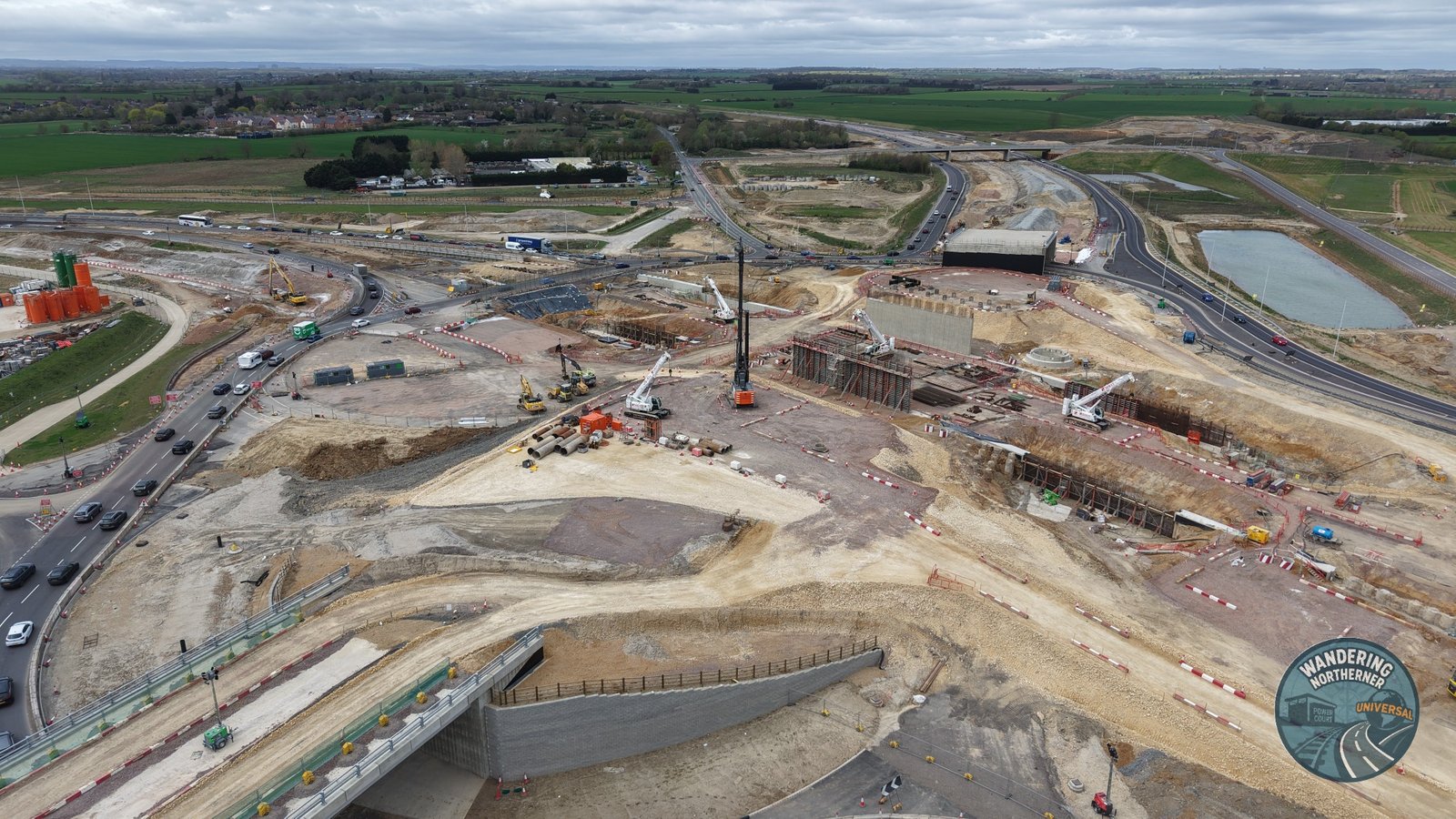
An overall view on 4 April 2026 showing the future A421 route approaching the centre of the junction.
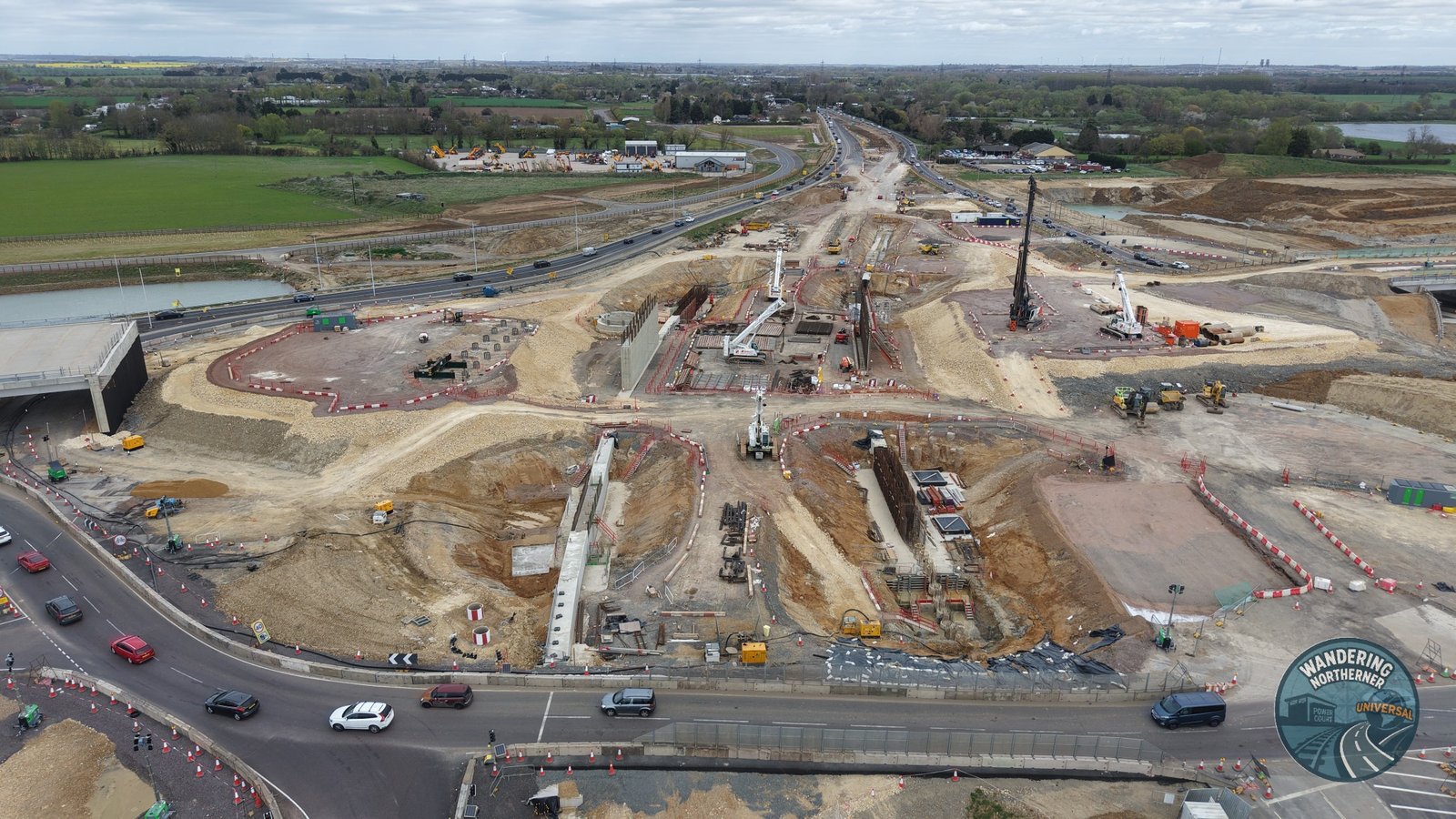
A closer view of the central bridge supports and adjoining approach structures on 4 April 2026.
The April view captures the transition from foundations and isolated supports to recognisable bridge construction. The completed outer structures provide the fixed points that the central flyover must eventually connect.
3 May 2026 – bridge construction spreads across the junction
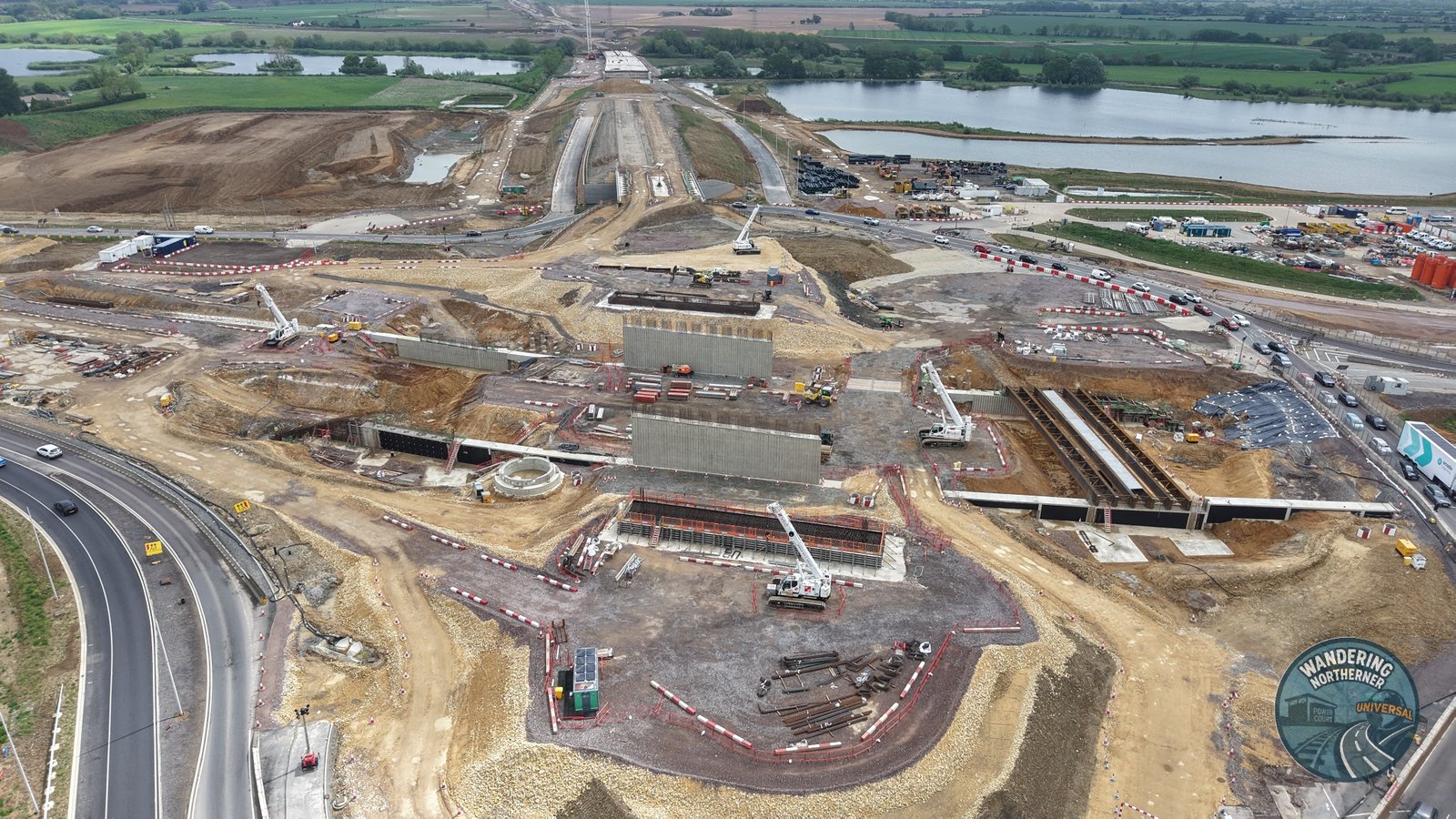
Looking directly along the developing flyover on 3 May 2026.
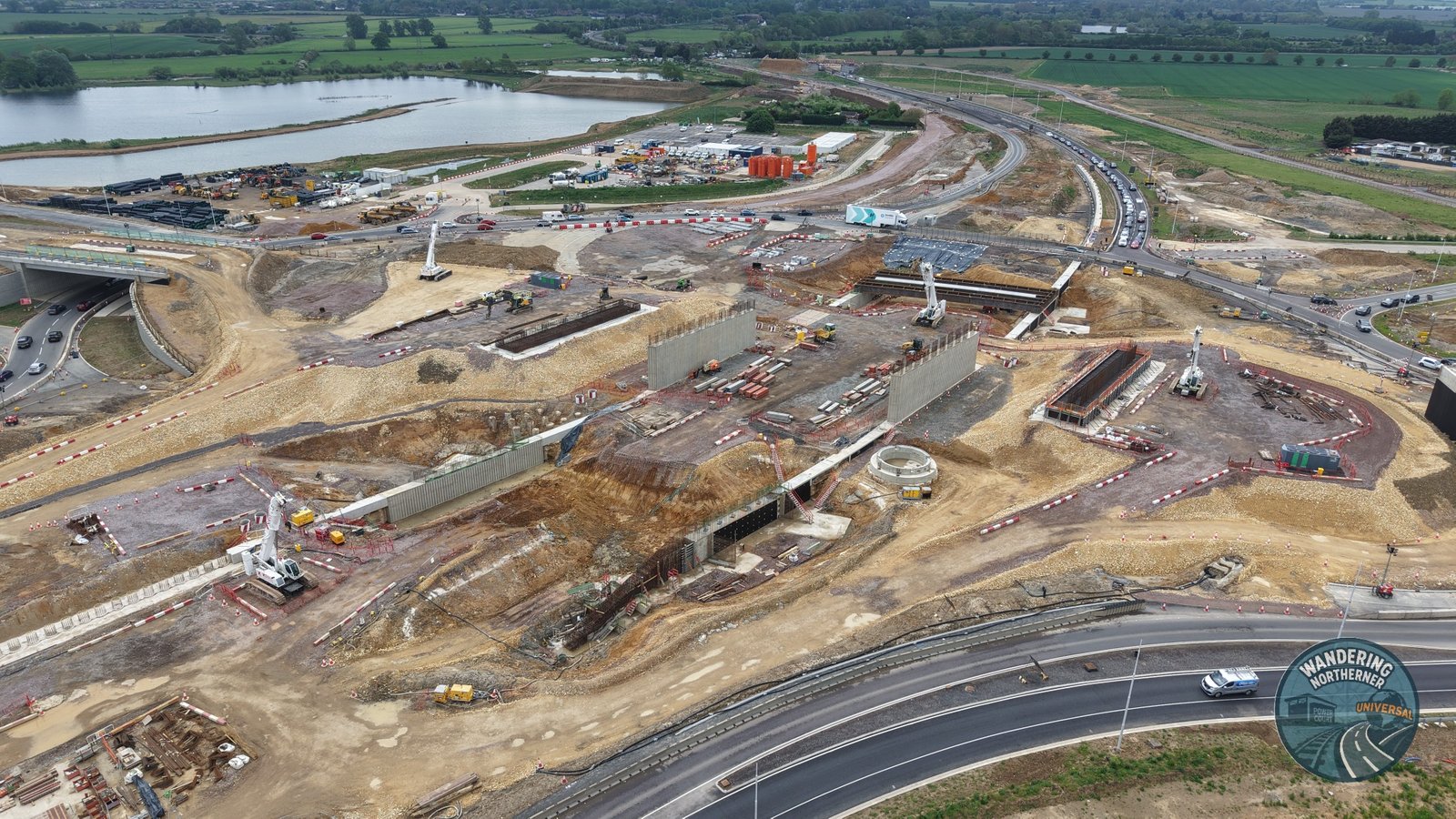
An oblique view from 3 May 2026 showing the separate bridge sections, central supports and surrounding road network.
The two angles show how the central structures were beginning to align with the bridge decks on either side. Cranes could work within the closed construction area while traffic continued to use the surrounding roads.
9 May 2026 – the flyover approaches rise
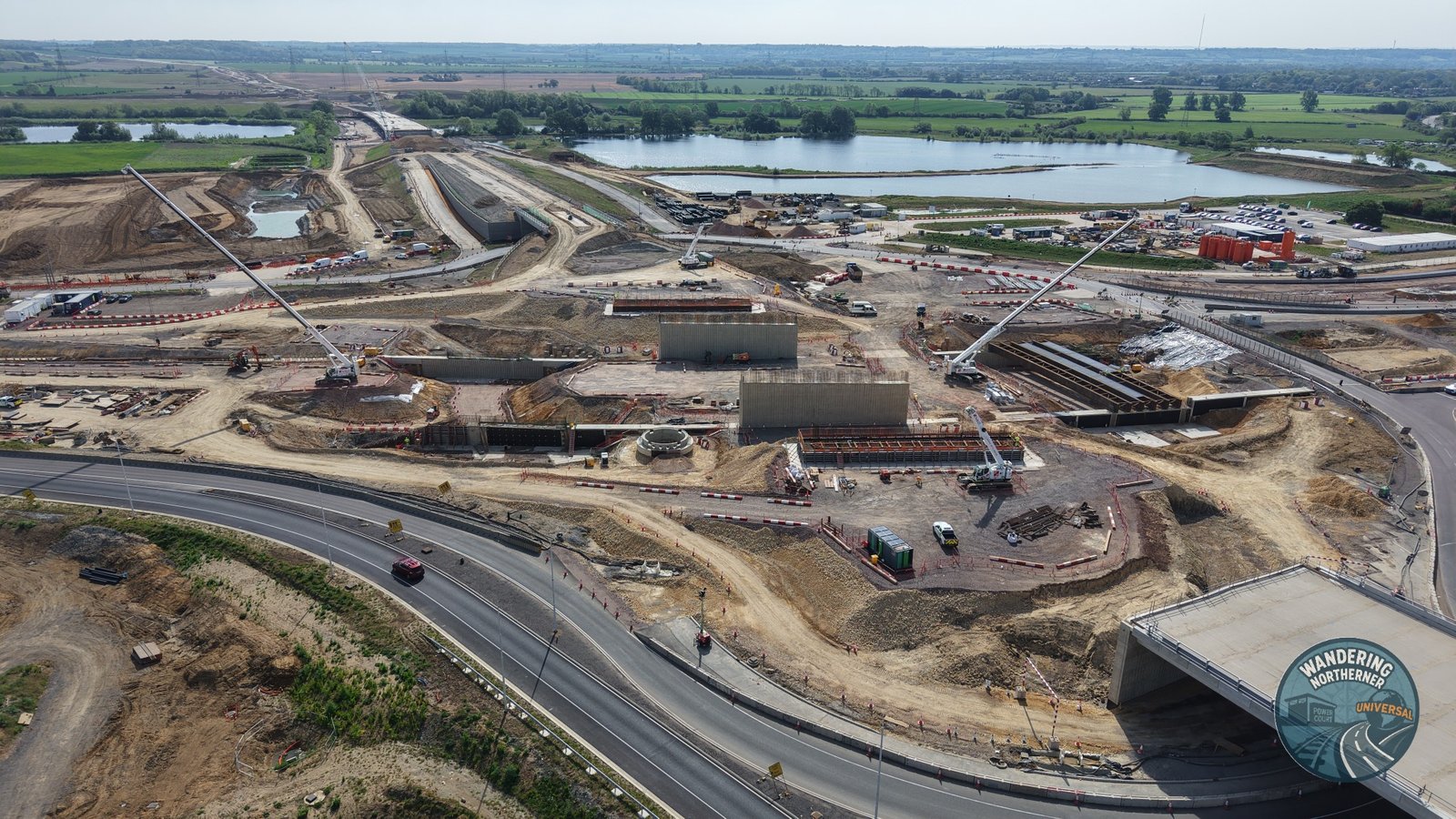
Approach structures, bridge decks and support walls advancing on 9 May 2026.
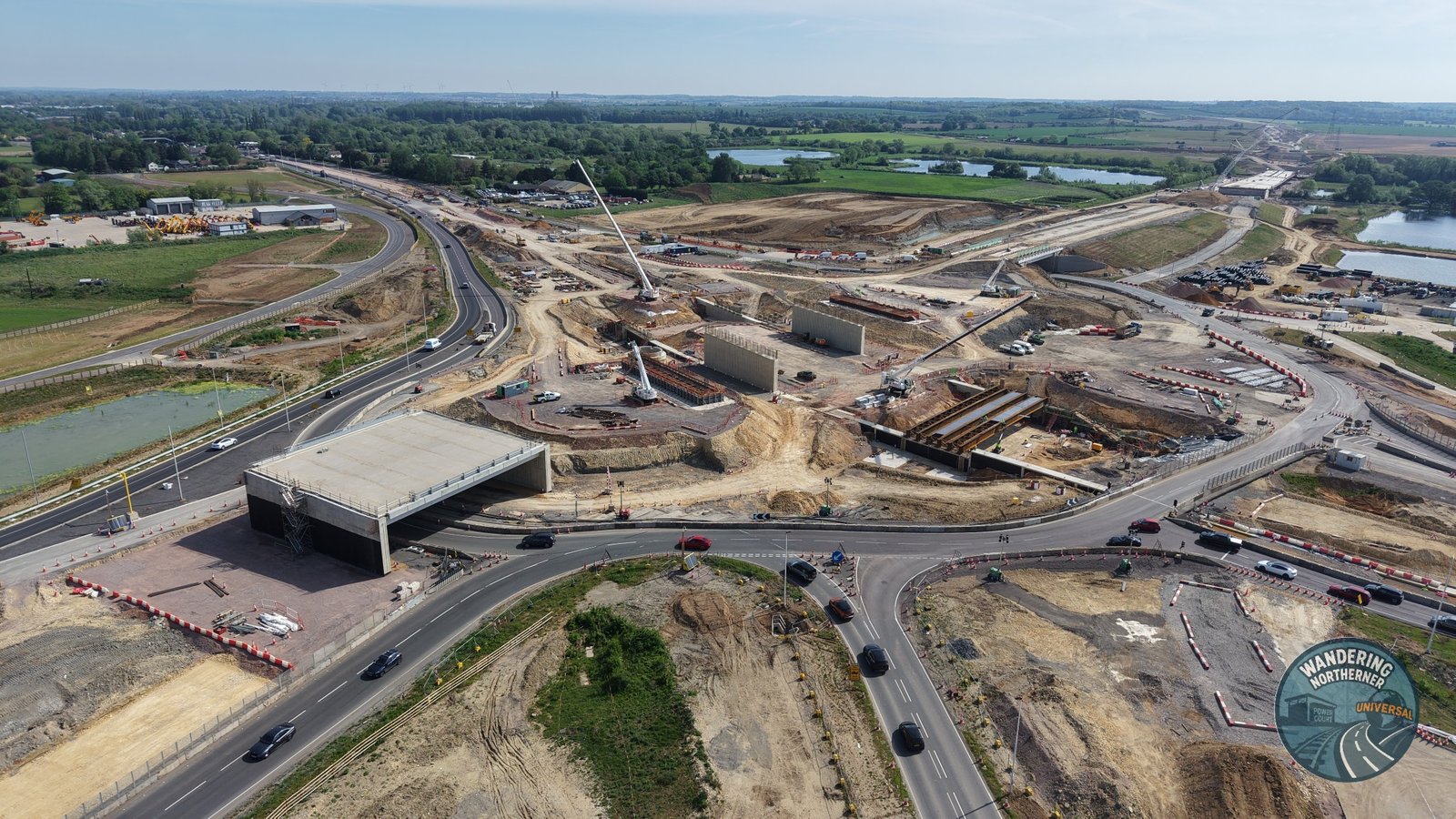
A second angle on 9 May 2026 showing the flyover works between the two outer bridge structures.
The new junction continued to build upwards during May. Large cranes worked between the bridge sections while approach embankments and retaining walls rose around the live roads.
5 June 2026 – the central spans prepare for major lifts
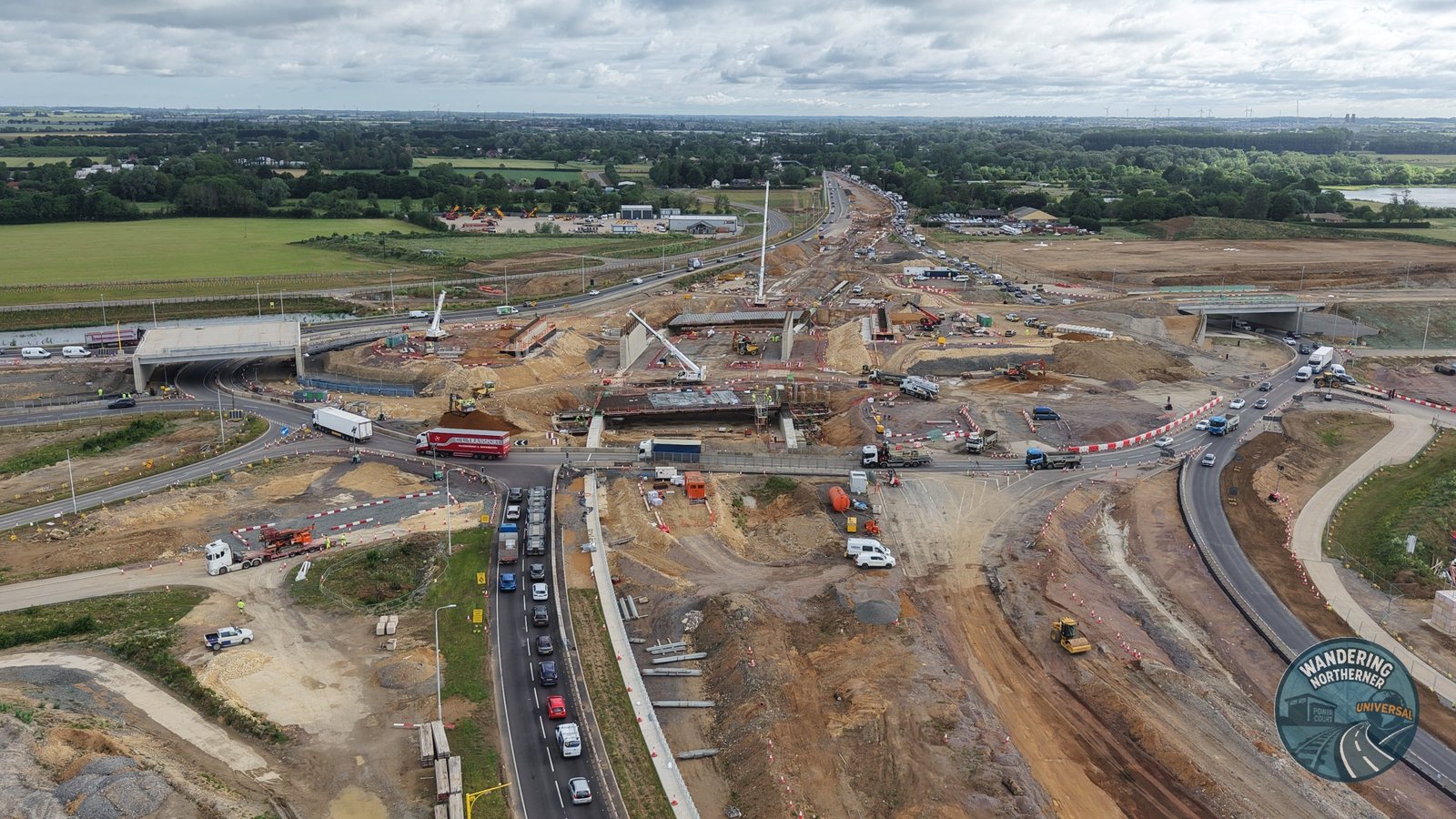
The developing A421 flyover alignment on 5 June 2026.
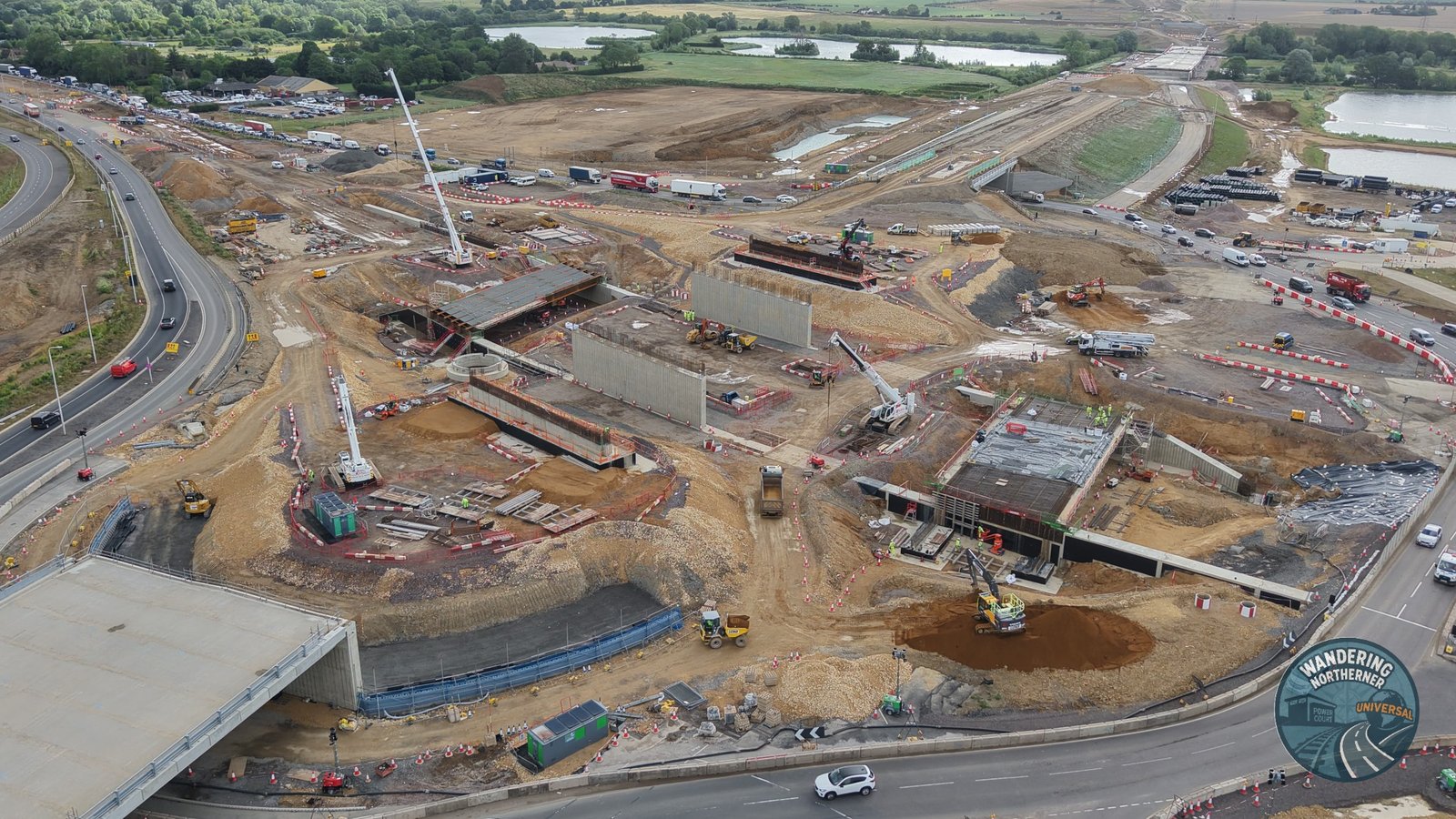
An oblique aerial view on 5 June 2026 showing cranes positioned around the central bridge supports.
By early June, the central abutments and piers were ready for the next major visual milestone: installing the long beams that would connect the separate support structures.
20 June 2026 – flyover supports near beam-lift stage
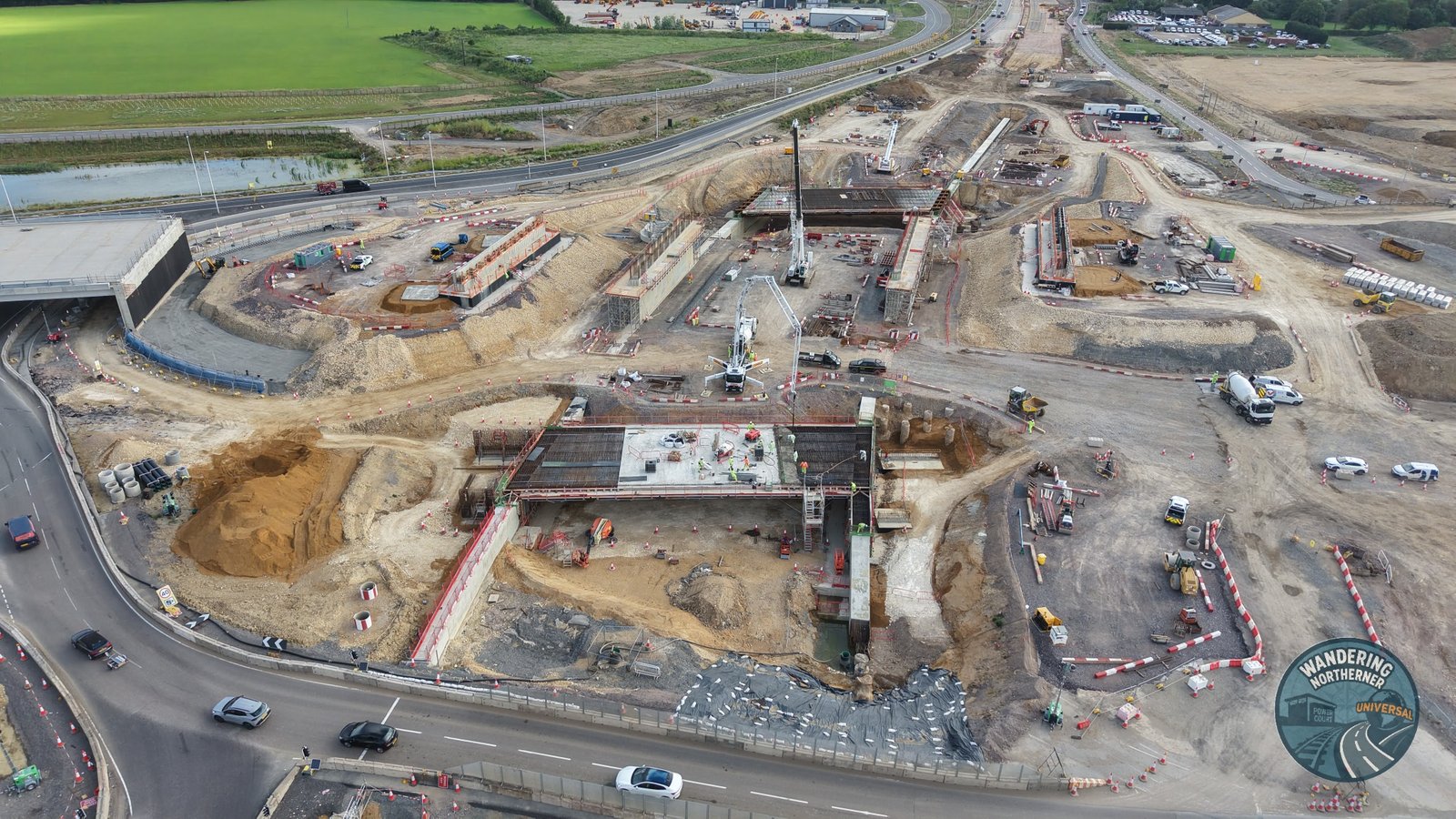
The central bridge supports and surrounding road formations on 20 June 2026.
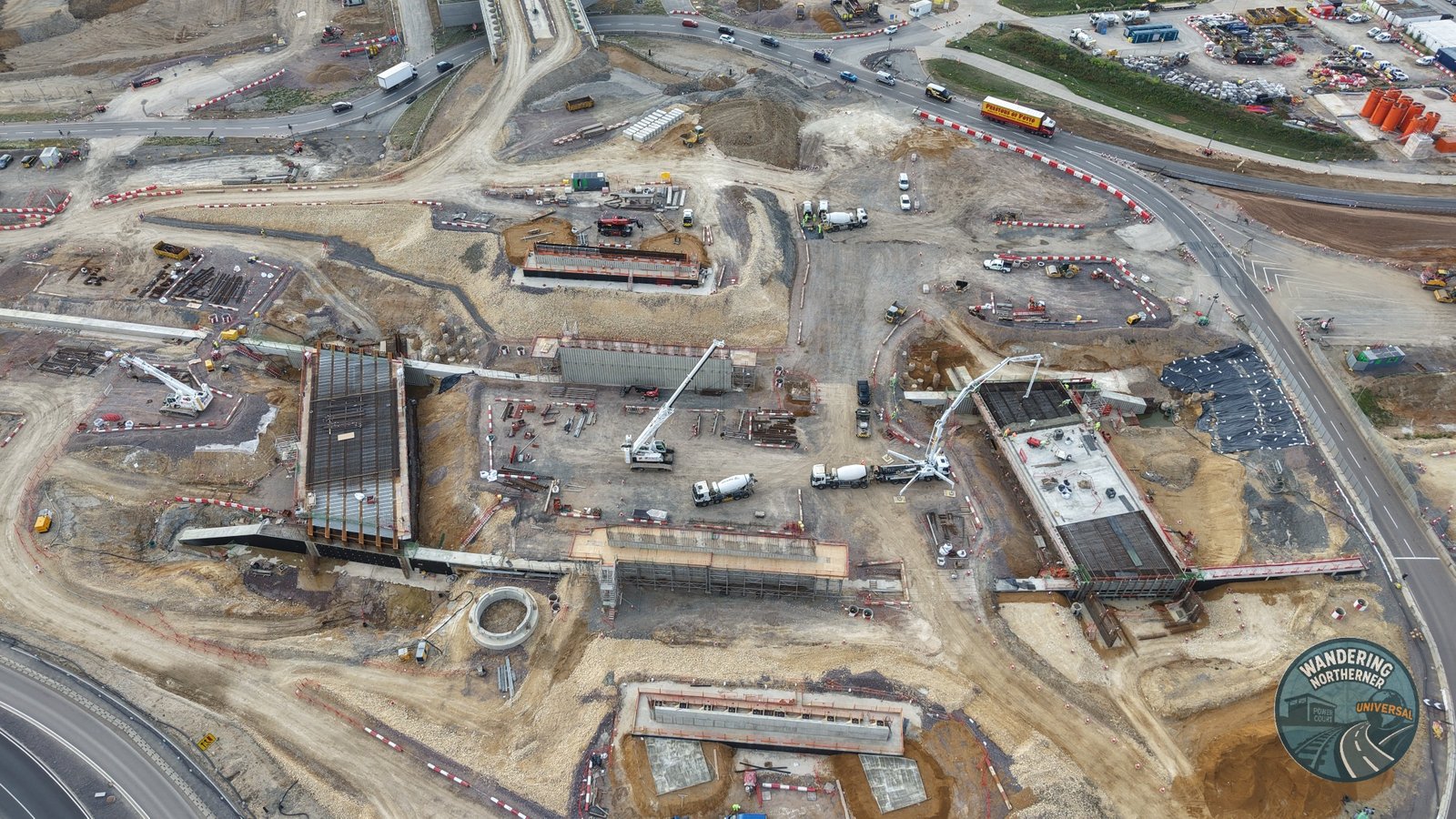
A closer overhead view of the bridge decks, support walls and prepared beam positions on 20 June 2026.
The route of the flyover was now unmistakable. The support walls and bridge bases had reached the level needed for the first long spans, while preparations continued around the central working area.
4 July 2026 – the first three main beams are in place
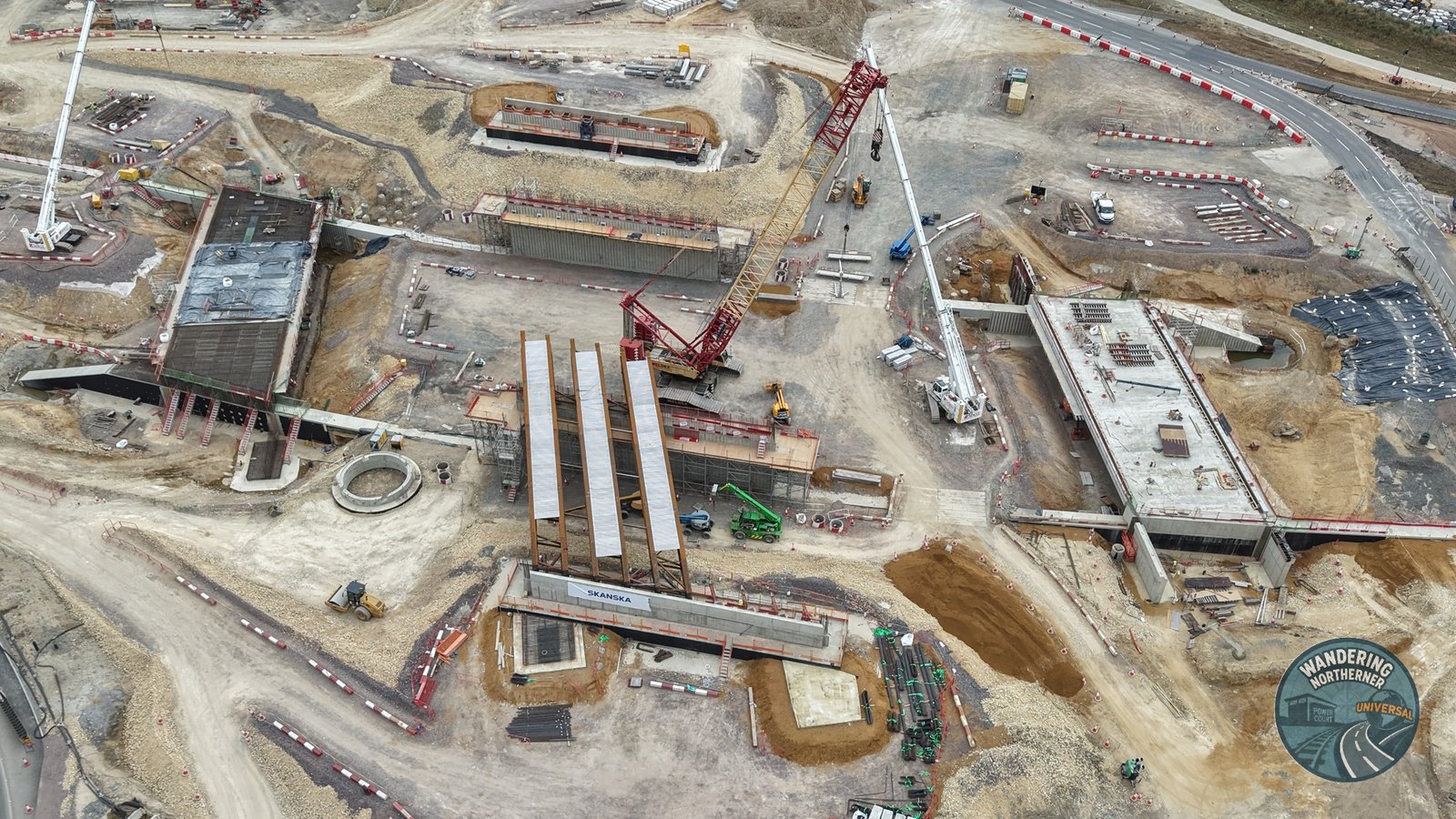
The first three long beams spanning between the central flyover supports on 4 July 2026.
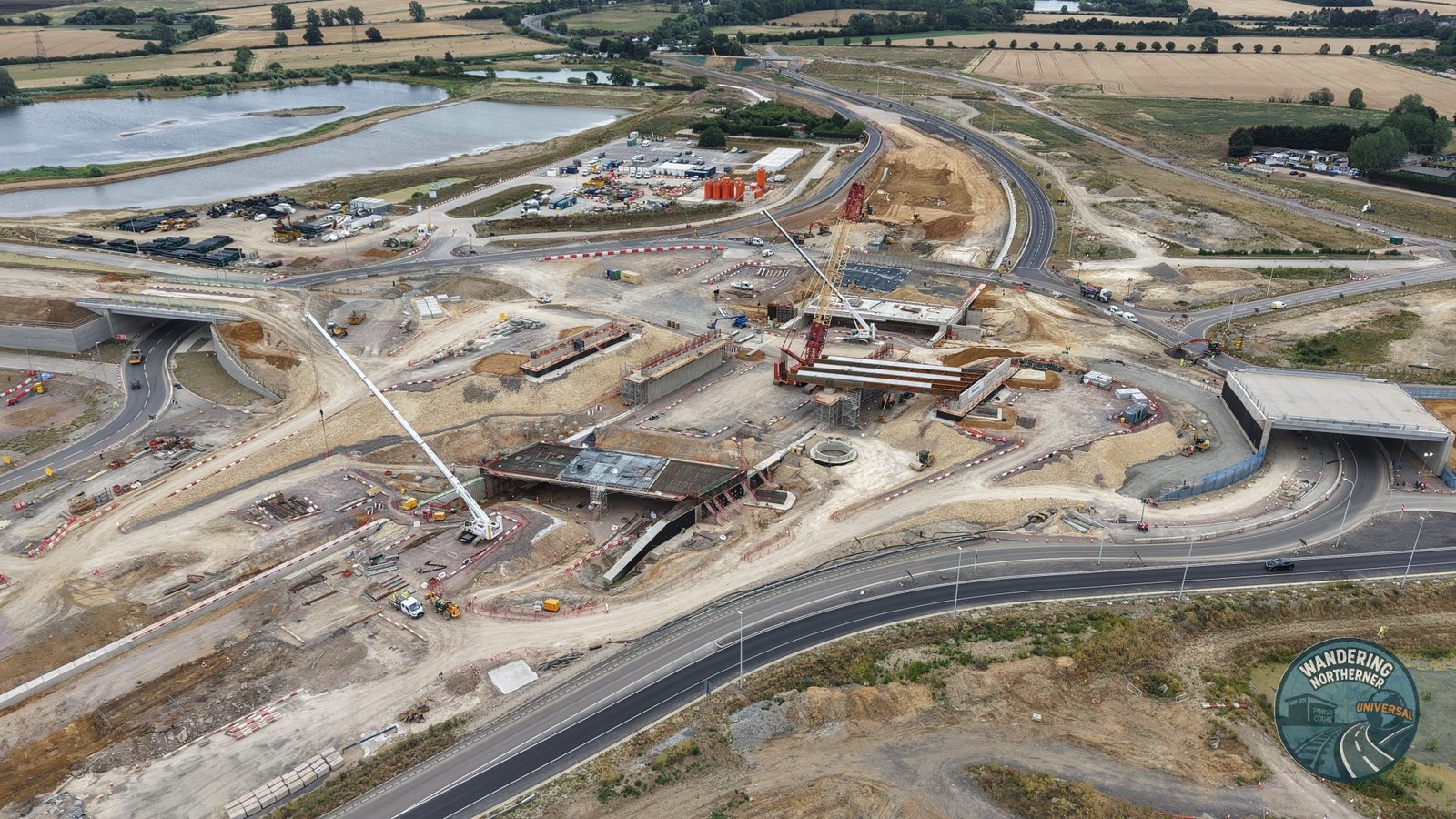
The wider Black Cat junction on 4 July 2026, showing the first beams in relation to the completed outer structures and current road alignments.
The first main beams immediately changed the appearance of the junction. For the first time, a continuous elevated route began to bridge the gap between the previously separate structures.
17 July 2026 – additional beams extend the new bridge
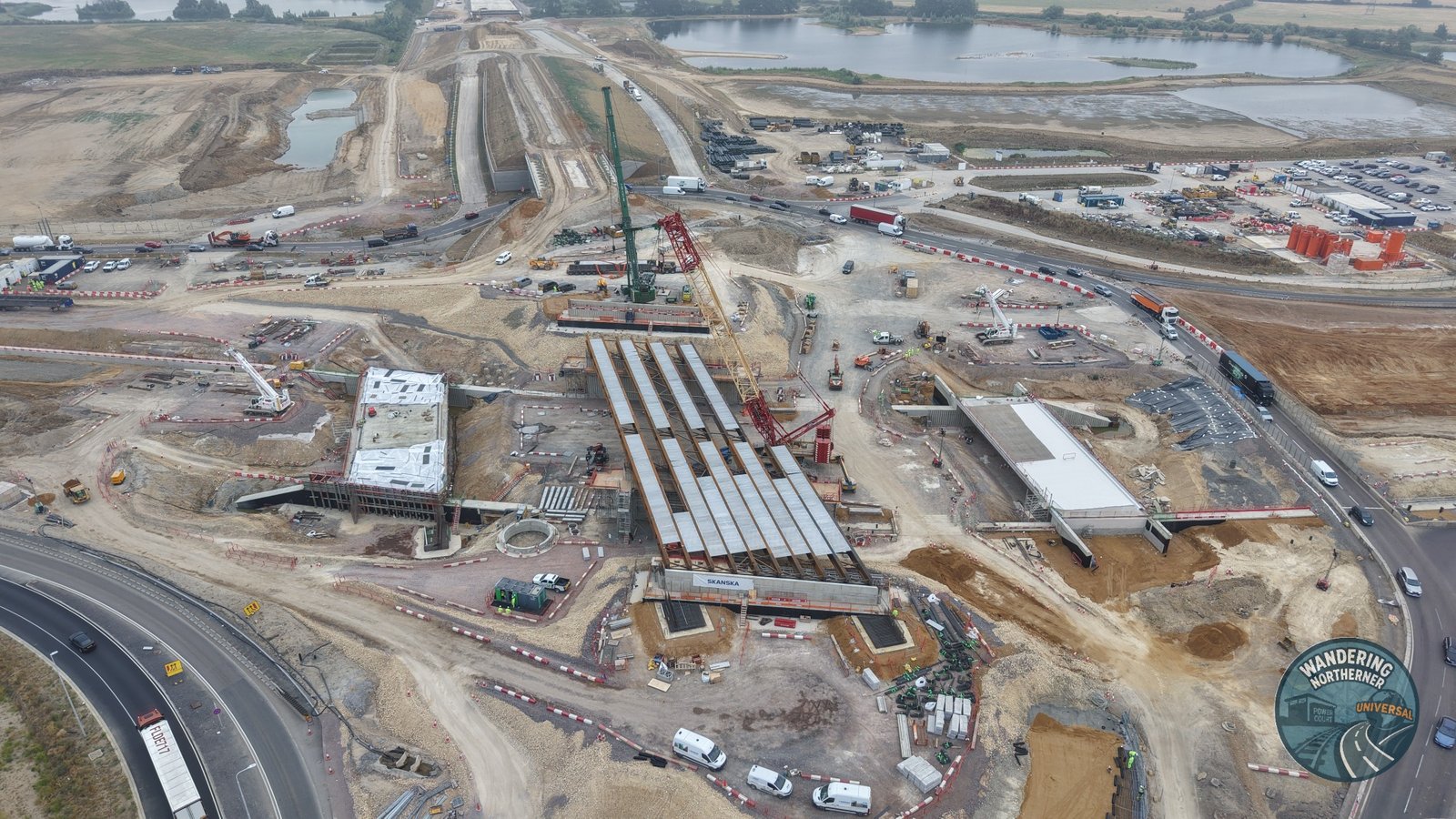
More beams and deck panels extending the central A421 flyover on 17 July 2026.
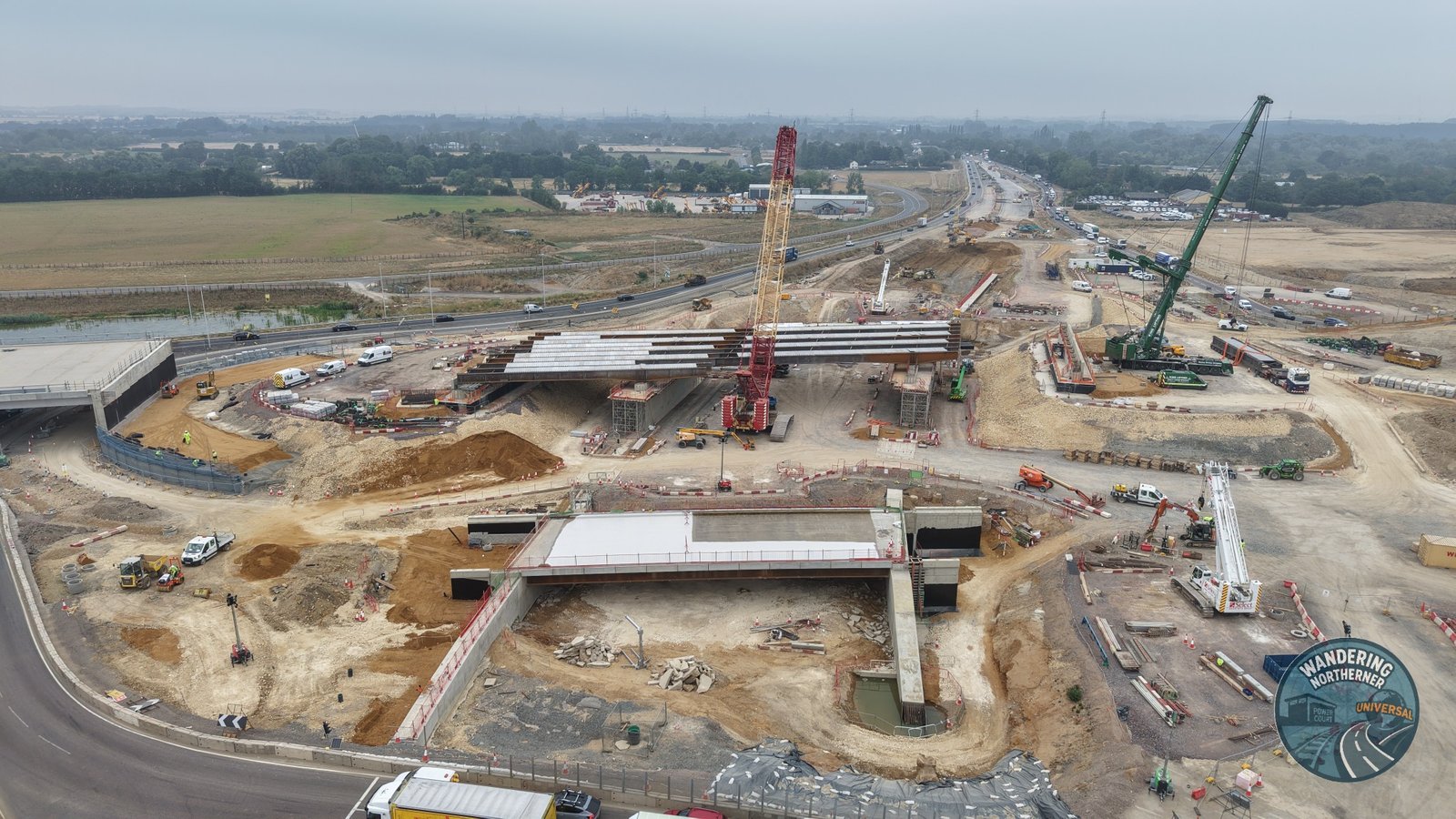
A wider angle from 17 July 2026 showing the expanding central span of the A421 flyover across the junction.
Less than two weeks later, several additional beams had been installed. Deck panels were also being fitted between them, creating the working surface from which the permanent bridge deck could be completed.
25 July 2026 – the central span widens
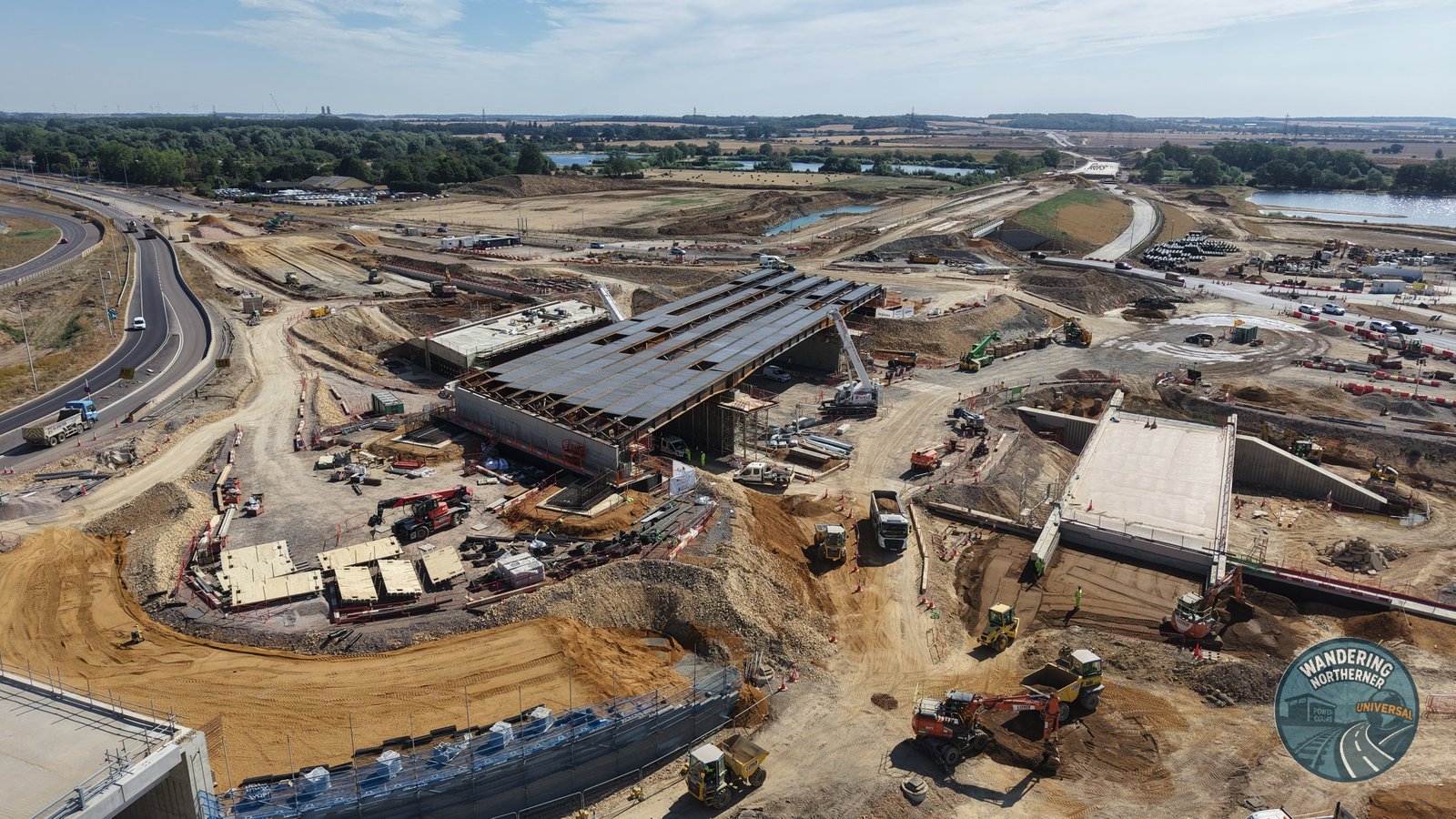
The widening central bridge span on 25 July 2026.
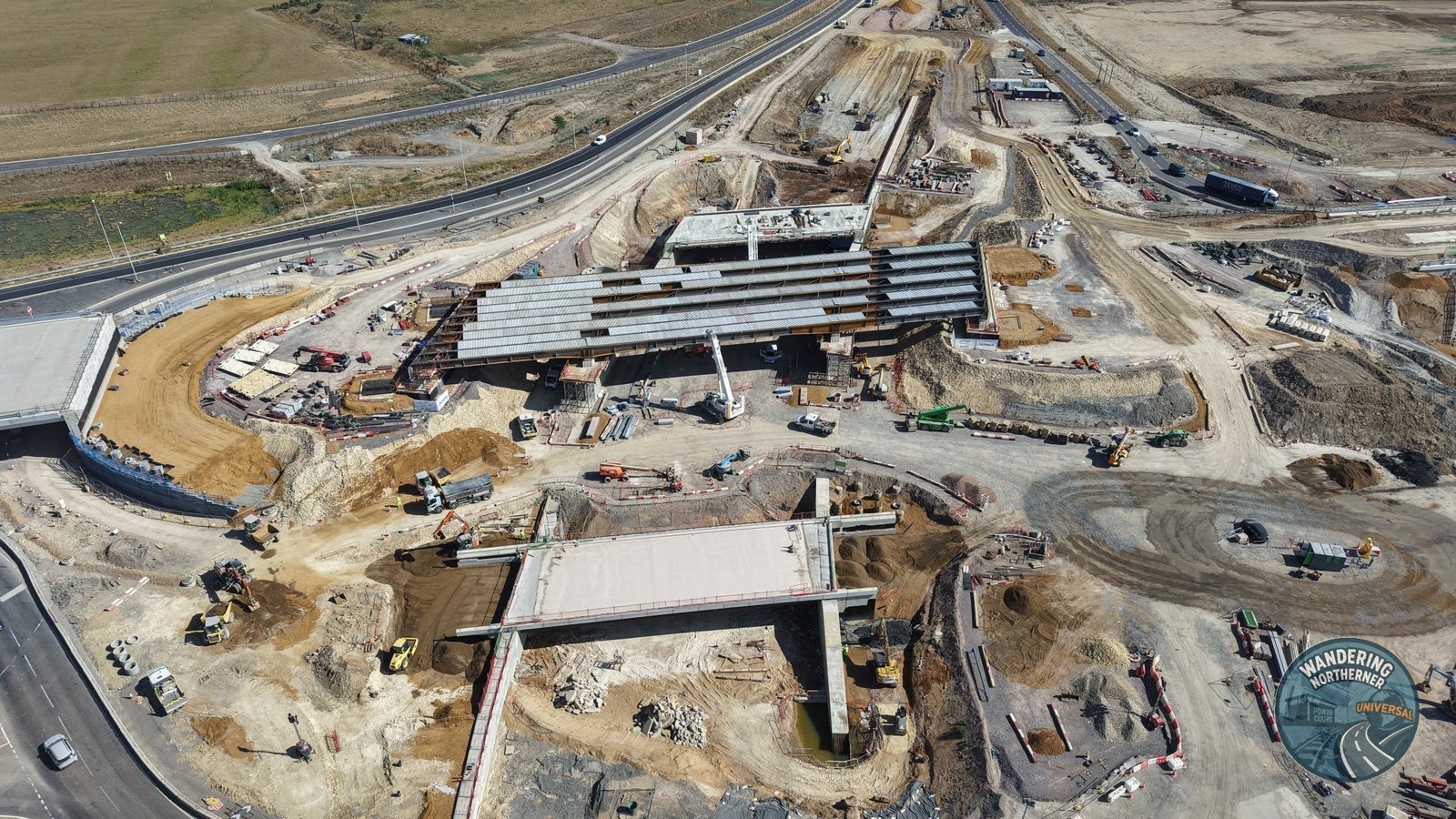
A closer overhead view on 25 July 2026 showing the parallel beams and deck units across the central structure.
The flyover grew rapidly during the second half of July. More parallel beams and deck units were added, while work continued simultaneously on the adjoining concrete bridge sections.
1 August 2026 – the flyover begins to look continuous
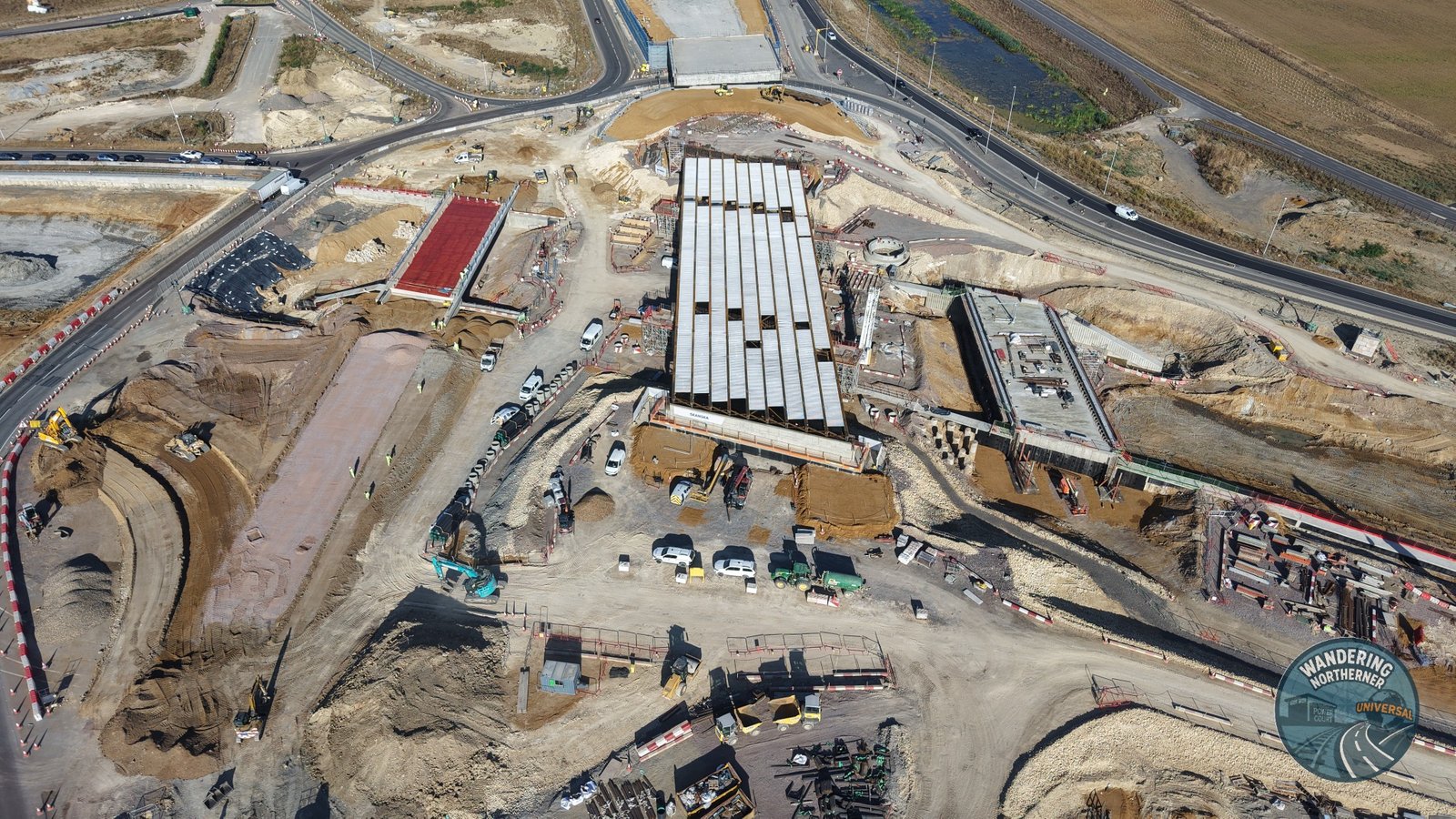
The developing bridge deck viewed along the future A421 alignment on 1 August 2026.
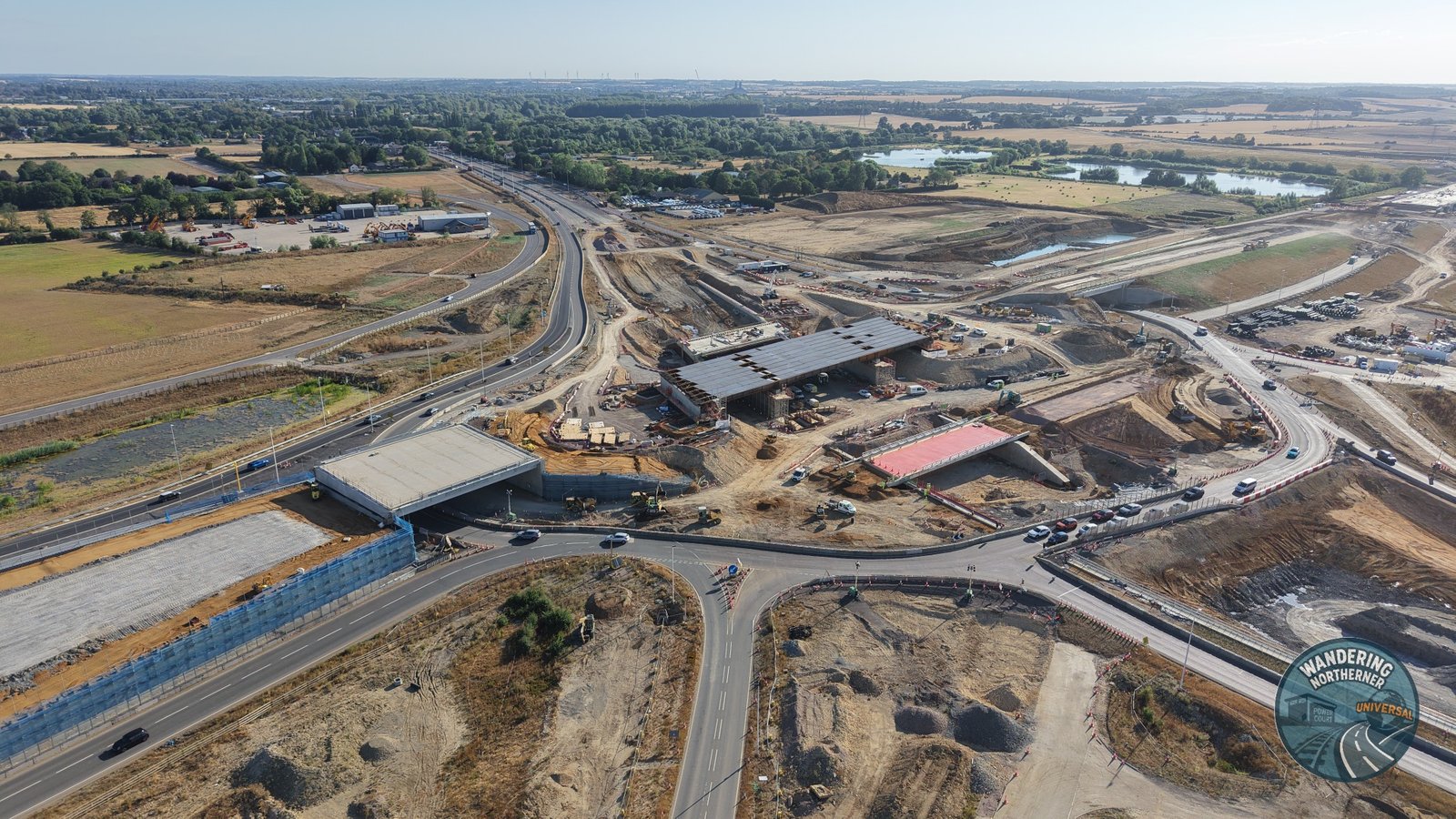
A wider view on 1 August 2026 showing the flyover deck becoming the dominant feature of the new junction.
By the start of August, the central span had become the dominant feature at Black Cat. Most of its width was covered by beams and metal deck panels, visually linking the bridge structures on either side.
8 August 2026 – an almost complete central deck
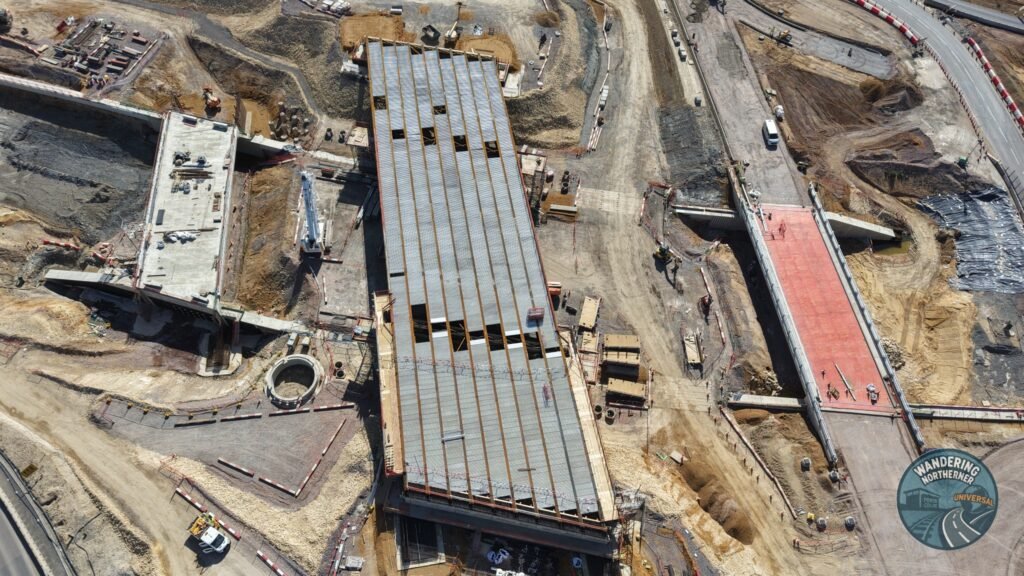
A close overhead view on 8 August 2026 showing the central metal decking and the adjoining concrete bridge decks.
The close view above and the overall photograph at the top of this page show an almost continuous deck across the centre of the site. The long flyover structure now makes the upper level of the future three-tier junction easy to understand, while traffic continues to use the temporary ground-level arrangements around it.
What happens next at Black Cat Roundabout?
The next stage should see the remaining flyover deck completed, followed by waterproofing, concrete work, drainage, surfacing, barriers and construction of the approach roads.
Once the central bridges are sufficiently complete, the focus will shift below them. National Highways plans to excavate the new A1 cutting and construct the underpass that will carry north-south traffic beneath the junction.
The majority of the A428 Black Cat to Caxton Gibbet scheme is due to open in spring 2027. This includes the new 10-mile A421 dual carriageway, the A421 flyover at Black Cat and the upgraded Caxton Gibbet junction. The final phase is currently planned for mid-summer 2027, when the new A1 underpass at Black Cat is expected to open.
Until then, A1 traffic will continue to pass through the Black Cat Roundabout using changing temporary road layouts.
Follow the Black Cat construction
I photograph and film the Black Cat junction regularly, documenting the bridge construction, road realignments and excavation work from the air and from public viewpoints.
Follow Wandering Northerner on YouTube and Facebook for the latest Black Cat Roundabout construction videos, photographs and weekly comparisons.
You can also read my complete guide to the A428 Black Cat to Caxton Gibbet scheme, including the full route, junction designs, construction milestones and latest updates.