
Universal Studios UK: From Bedfordshire Brickworks to Universal United Kingdom Resort
For more than a century, the land south of Bedford has been shaped by heavy industry, clay extraction and brickmaking. It helped build homes across Britain, provided work for generations of local families and transformed the villages of Kempston Hardwick and Stewartby. Now, the same area is being transformed again. The former Kempston Hardwick brickworks and surrounding land will become Universal United Kingdom Resort – Universal’s first branded theme park and resort destination in the United Kingdom and Europe.
It is a remarkable change of direction for a site once dominated by kilns, railway sidings, clay pits and brick chimneys. Instead of producing building materials, the land is being prepared for themed attractions, hotels, entertainment, new roads, railway infrastructure and millions of visitors. This is the story of how Bedfordshire’s industrial landscape became the home of what most people first came to know as Universal Studios UK.
Before Universal: Bedfordshire’s brickmaking landscape
Long before anybody imagined roller coasters rising above the Bedfordshire countryside, the Marston Vale was one of Britain’s most important brickmaking areas. The industry developed because of the vast deposits of Oxford Clay beneath the landscape. This clay contained organic material that helped it burn during firing, making it particularly suitable for the mass production of Fletton bricks.
The London Brick Company had its origins in Fletton, near Peterborough, during the late nineteenth century. It began acquiring land in Bedfordshire around the turn of the twentieth century, including hundreds of acres at Wootton Broadmead and Wootton Pillinge.
B.J.H. Forder & Company had also established brickmaking operations at Elstow in 1897 before expanding into Wootton Pillinge. The businesses eventually merged in 1923 to form the London Brick Company and Forders, later shortened to the London Brick Company. (Bedfordshire Archives)
The rise of Stewartby
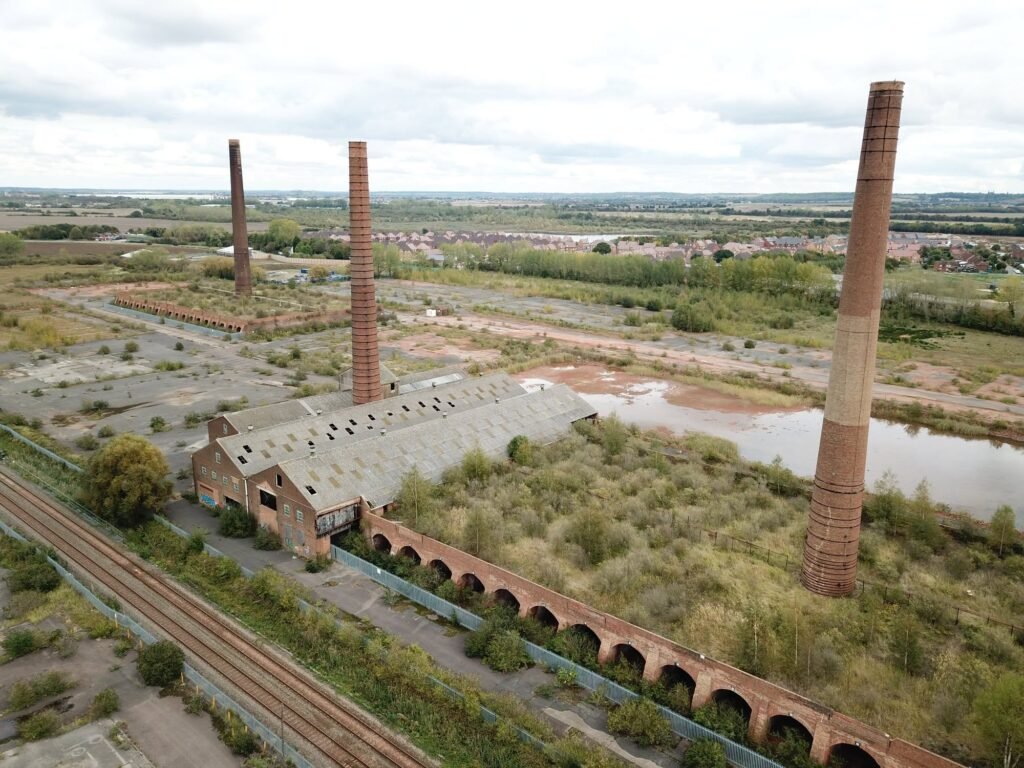
The brick industry did not just create factories. It created an entire community. Beginning in 1926, the London Brick Company developed a garden village at Wootton Pillinge for its employees. The houses were unusually modern for the period, with electricity, drainage and running water. The settlement eventually became Stewartby, named in recognition of the Stewart family, who had played a major role in the growth of the brickmaking business.
By the middle of the 1930s, Stewartby had become recognised as the largest brickworks in the world. Around 2,000 people were employed there, producing approximately 500 million bricks every year. The village, its streets, community facilities and surrounding landscape were all closely connected to the London Brick Company. (Bedfordshire Archives)
Kempston Hardwick brickworks
The future Universal site is more accurately associated with the former Kempston Hardwick brickworks, although it formed part of the much wider Marston Vale brickmaking landscape centred on Stewartby. During the twentieth century, the London Brick Company acquired competing brick businesses and works across the area. It took control of the Kempston Hardwick works as the company consolidated much of Britain’s Fletton-brick production.
The landscape was steadily altered by clay extraction. Railways and industrial tracks crossed the site, pits were excavated and enormous quantities of clay were removed. Across the wider Marston Vale, some exhausted clay pits were eventually converted into lakes, while others were used for landfill or land restoration. (Bedfordshire Archives)
Production at Kempston Hardwick eventually came to an end. Hanson Brick announced the closure of the works in February 1999. Brickmaking continued at Stewartby for several more years before finally ending in 2008, bringing more than a century of large-scale brick production in Bedfordshire to a close. (Bedfordshire Archives)
The former industrial land remained, carrying with it a complicated legacy of clay extraction, demolished structures, capped ground, old foundations and areas requiring restoration.
Those conditions would later become a major part of the preparation needed before Universal could build its resort.
December 2023: the Universal rumours begin
The Universal story began publicly in December 2023.
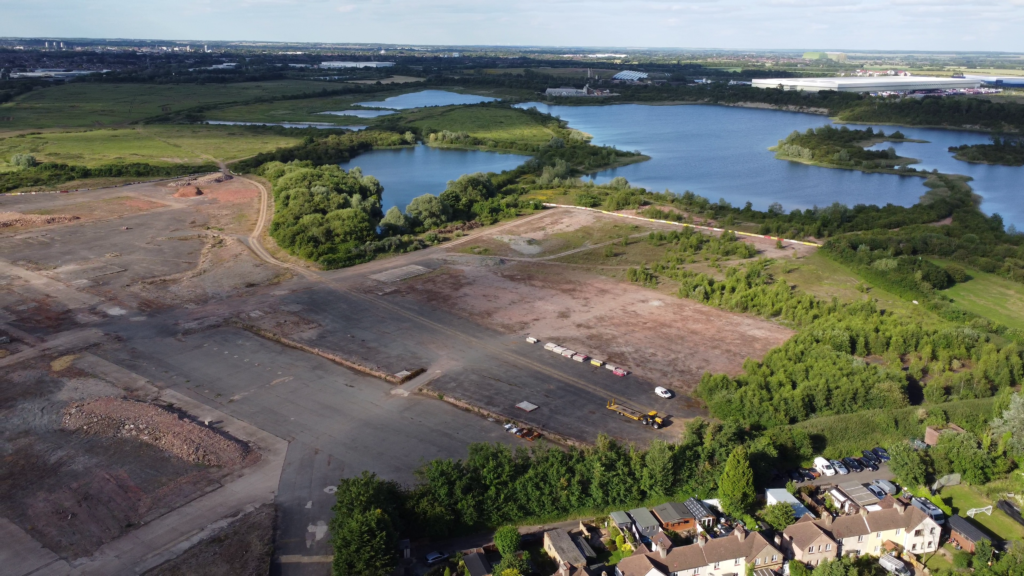
Theme-park enthusiasts examining company records and land transactions discovered links between Comcast—the parent company of NBCUniversal—and a large area of land near Kempston Hardwick. The rumours quickly spread. Could Universal really be planning its first full theme park in Britain? On 19 December 2023, Universal Destinations & Experiences confirmed that it had acquired land in Bedford Borough and was carrying out feasibility work for a possible theme park and resort.
At that stage, nothing was guaranteed. Universal stressed that it was still exploring the location and that a final decision remained many months away. Nevertheless, the confirmation was extraordinary. The company behind Universal Orlando Resort, Universal Studios Hollywood, Universal Studios Japan and Universal Beijing Resort was seriously considering Bedfordshire for its first major European destination. (Bedford Independent)
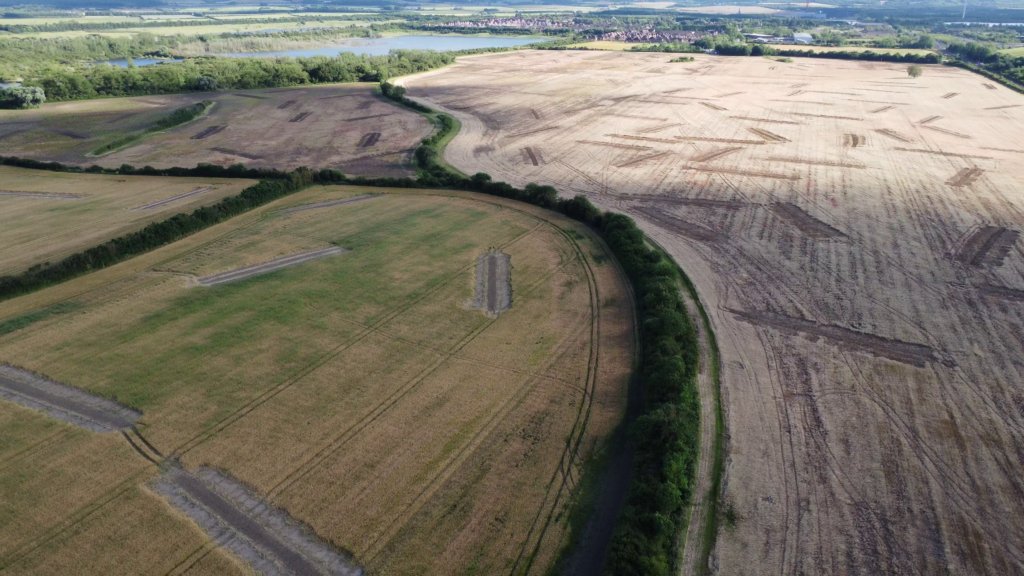
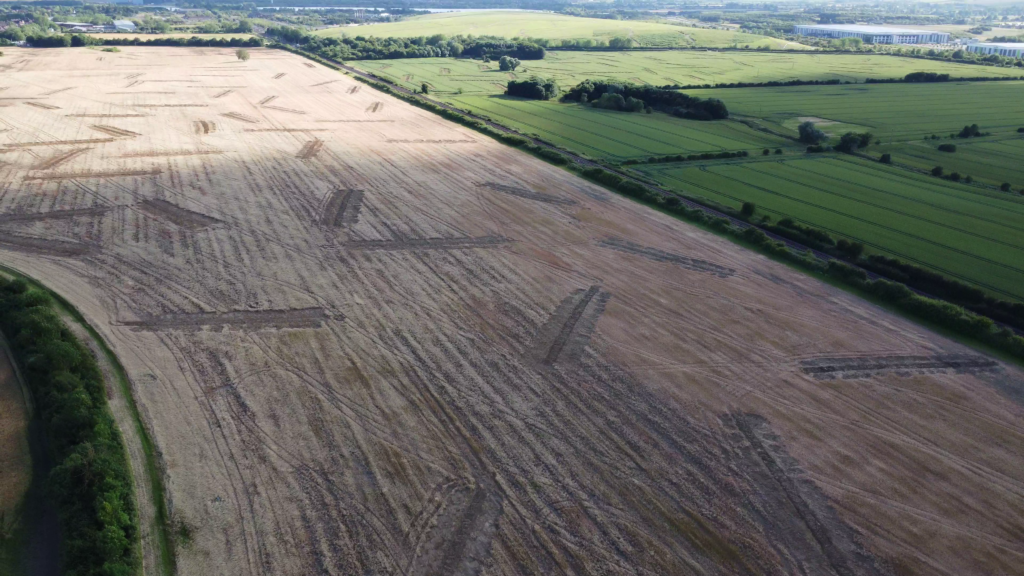
The original acquisition covered approximately 476 acres, although Universal’s early consultation material showed a potential project area of around 700 acres when adjoining land and transport connections were included. (Universal UK Project)
Why did Universal choose Bedford?
At first, Bedfordshire may have seemed an unexpected location for one of the world’s largest entertainment companies.
In reality, the site offered several major advantages:
- A very large area of relatively open land under consolidated ownership.
- A location close to the A421 and within reach of the M1.
- Railway connections through the Marston Vale Line.
- Proximity to London, Milton Keynes, Cambridge and Luton Airport.
- Space for a theme park, hotel, visitor facilities and future expansion.
- Access to a large population within a relatively short travelling distance.
The former industrial use also meant that the proposal would partly regenerate previously developed land rather than placing the entire resort on an untouched greenfield site.
However, the location also presented challenges. These included transport capacity, flood risk, ground conditions, archaeology, ecology, nearby homes and the scale of the infrastructure required to move millions of visitors.
April 2024: Universal reveals its early plans
Universal opened its first major public engagement exercise on 5 April 2024. For the first time, local residents were shown the possible scale of the project. The early proposals included:
- A world-class theme park containing several themed lands.
- A 500-room hotel.
- A retail, dining and entertainment destination.
- New landscaping and ecological areas.
- Improved roads and public transport.
- A possible direct connection to the A421.
- Improvements around the railway and a future expanded station.
The material remained deliberately flexible. Universal had not announced individual attractions, intellectual properties or themed lands, and it made clear that the project was still undergoing feasibility and due-diligence work.
The consultation ran for 28 days, from 5 April until 3 May 2024. Nearly 1,500 people attended the public events, more than 6,000 survey responses were received and Universal reported that just over 92% of respondents supported the potential resort. (Universal UK Project)
The excitement was considerable, but questions remained over road congestion, railway capacity, construction traffic, noise, the environment and exactly how a development of this size could be delivered.
2024: feasibility work continues
Following the public engagement, Universal continued discussions with Bedford Borough Council, Central Bedfordshire Council, the government, National Highways, Network Rail and other organisations. This was the quieter part of the project’s history, but arguably one of the most important. Behind the scenes, teams were examining:
- The condition and stability of the former industrial land.
- Road and rail capacity.
- Flooding and drainage.
- Protected species and existing habitats.
- Archaeological remains.
- Utilities and power supplies.
- Construction access routes.
- The effect on nearby communities.
- The economic case for government support.
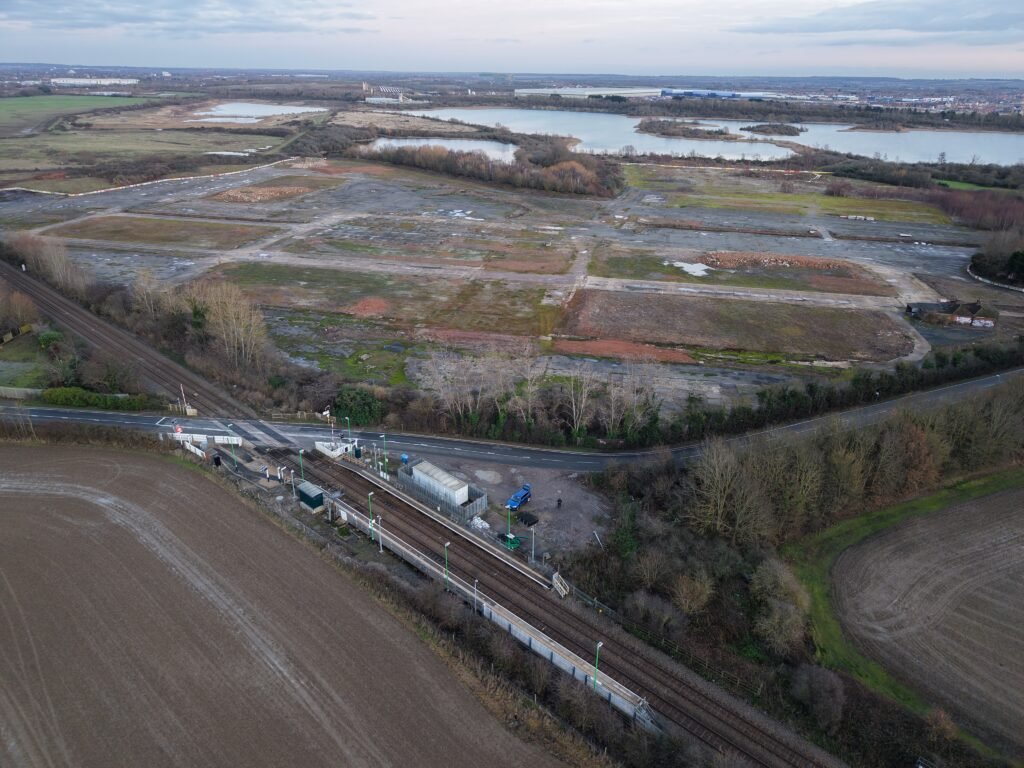
The question was no longer simply whether there was enough room to build a theme park. Universal had to demonstrate that one of Europe’s largest visitor attractions could be constructed and operated without overwhelming the surrounding transport network and environment.
April 2025: the project is confirmed
The uncertainty ended on 9 April 2025. The UK Government, Universal and Bedford Borough Council announced that an agreement had been reached to deliver the new resort. The project was described as a multi-billion-pound investment and the first Universal-branded theme park and resort destination in Europe. It was expected to open in 2031, subject at that time to obtaining planning permission. Initial plans confirmed several themed lands, a 500-room hotel and a retail, dining and entertainment complex. The government forecast nearly 20,000 jobs during construction and 8,000 jobs when the resort opened.
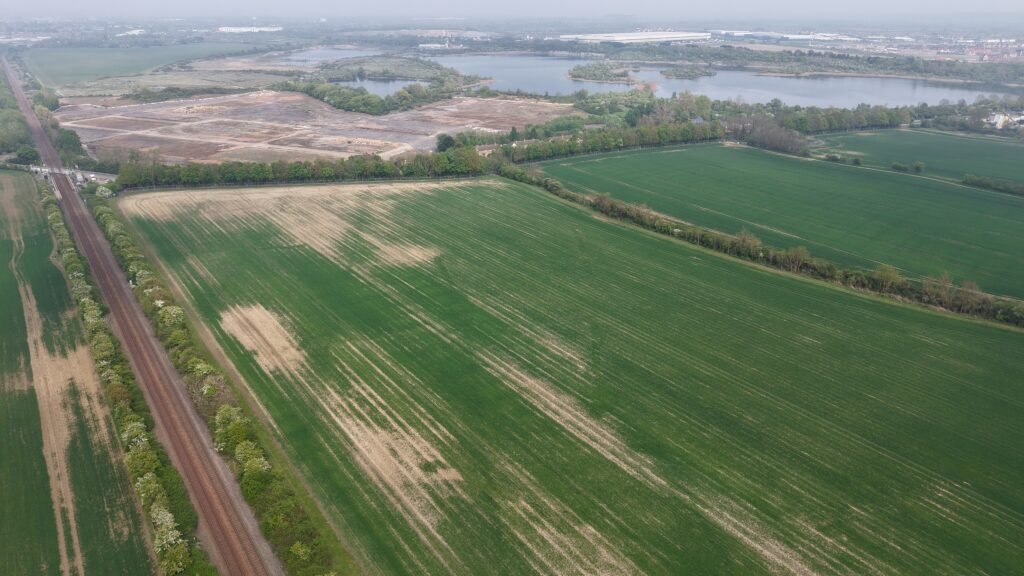
Universal also estimated that the development could generate nearly £50 billion of economic benefit by 2055 and attract approximately 8.5 million visitors during its first year of operation. (GOV.UK) For Bedfordshire, it was one of the biggest development announcements in living memory. But Universal still needed formal planning permission.
Why was a Special Development Order used?
A conventional project would normally be submitted as a planning application to the relevant local planning authority. Universal’s proposal followed a different route. Because of its national economic importance, scale and connection with major government-funded transport improvements, Universal asked the Secretary of State to grant planning permission through a Special Development Order, commonly shortened to SDO. An SDO is a statutory instrument made by the government. In this case, it could grant planning permission for defined classes of development across the resort site, subject to detailed limits, conditions and later approvals.
This did not mean Universal could build whatever it wanted. The proposal was supported by thousands of pages covering transport, noise, ecology, archaeology, flooding, landscaping, construction, utilities, air quality and numerous other subjects.
July 2025: the planning documents are published
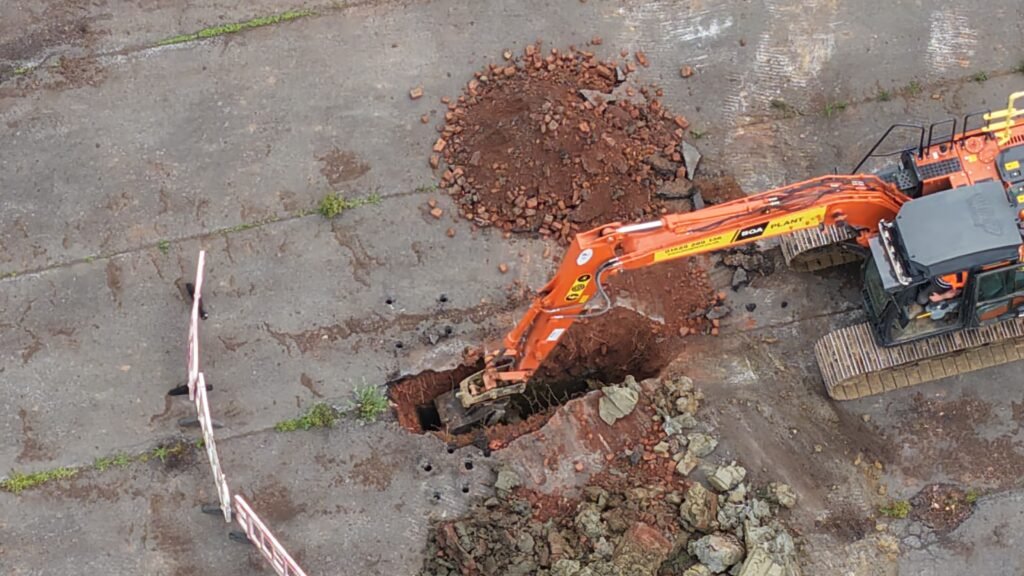
On 3 July 2025, the Ministry of Housing, Communities and Local Government published Universal’s formal request for planning permission. The public consultation ran until 31 August 2025 and covered the Environmental Statement, parameter plans, design standards and supporting documents. Instead of fixing every ride and building in a precise location, the application divided the development into a series of zones. These established the types of development permitted in each area, together with maximum heights, access arrangements and environmental controls. (GOV.UK)
The principal areas included:
- Core Zone: the principal theme park and resort development.
- Lake Zone: water management, landscape, ecology and associated development.
- Transport Hub and West Gateway: rail, coach and visitor-arrival infrastructure.
- East Gateway: connections associated with Wixams station.
- Northern Ecology Zone: habitat creation and environmental mitigation.
- Infrastructure corridors: roads, utilities, drainage and access.
The planning documents revealed just how much work would be required before the first attraction could be assembled. The development would involve archaeology, watercourse alterations, extensive earthworks, soil movement, new drainage, roads, rail infrastructure and large areas of habitat creation.
December 2025: planning permission is granted
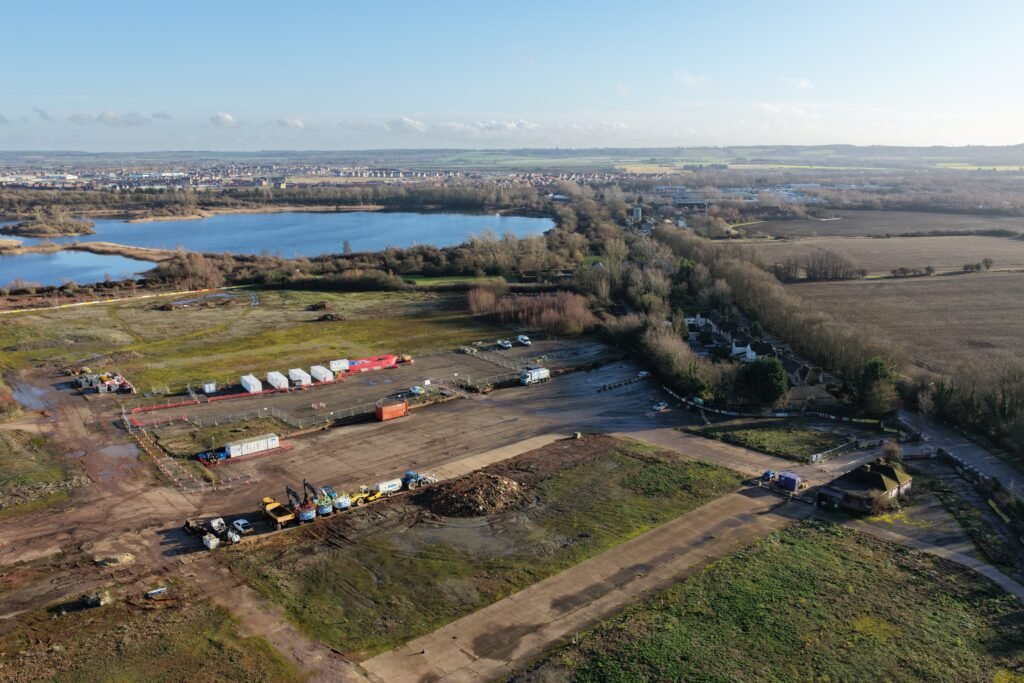
On 15 December 2025, the Secretary of State made the Special Development Order granting planning permission for the entertainment resort complex. The Order was laid before Parliament the following day and came into force on 12 January 2026. (GOV.UK) This was the moment the project moved from an ambitious proposal to an approved development.
The permission included extensive conditions governing matters such as:
- Construction environmental management.
- Traffic and delivery routes.
- Building and attraction heights.
- Noise and lighting.
- Ecology and landscape management.
- Archaeology.
- Soil and waste management.
- Flooding and drainage.
- Fireworks and drone displays.
- Delivery of transport infrastructure before opening.
The government’s decision acknowledged the significant effect the resort would have on the local landscape and transport network. It concluded, however, that the project’s economic and wider benefits justified granting permission, subject to the controls contained in the Order. (GOV.UK)
2026: construction and enabling work begin
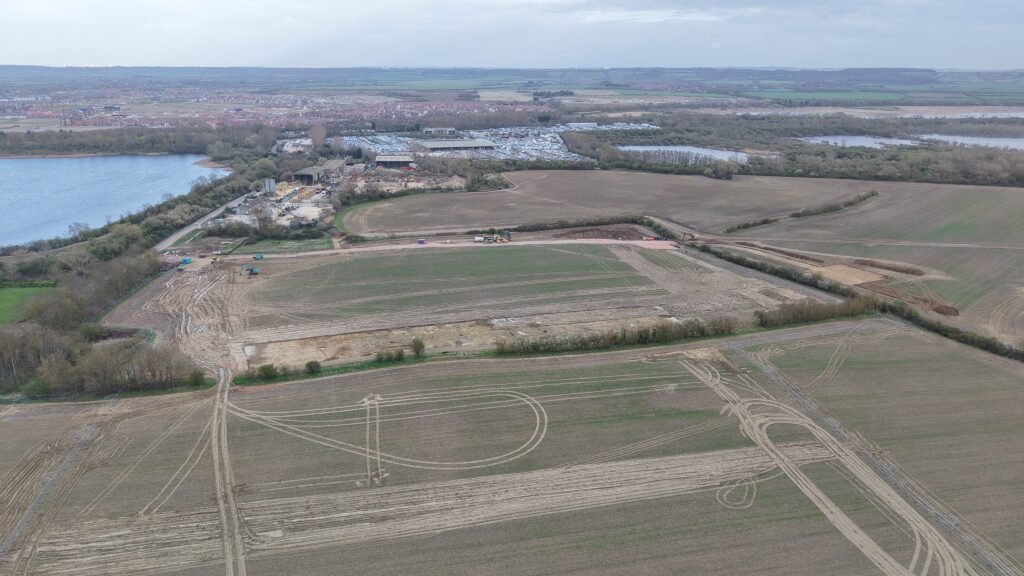
The first stages of work did not involve roller coasters or themed buildings. Before the main resort could rise, Universal had to prepare an enormous and historically complicated site.
During the opening months of 2026, activity included:
- Archaeological excavations.
- Ecological mitigation and habitat work.
- Vegetation clearance.
- Construction compounds and welfare facilities.
- New and improved site entrances.
- Temporary haul roads.
- Utility preparation.
- Soil stripping and ground investigation.
- Water-management work.
- Road closures and traffic-control measures.
The former brickworks landscape remained visible beneath the project. Concrete slabs, historic foundations, former extraction areas and altered ground conditions all influenced how the enabling programme progressed.
This stage marked the transition between the site’s industrial past and its entertainment future.
June 2026: Universal United Kingdom Resort is unveiled
On 3 June 2026, the official name and logo were unveiled at 11 Downing Street.
Universal United Kingdom Resort
The announcement confirmed that Comcast NBCUniversal would invest more than £5 billion during approximately five years of construction, followed by a further £1 billion during the first ten years of operation. The government announced £1.3 billion of support for regional and community infrastructure, while approximately £474 million was identified for strategic road and rail improvements, including work connected with the A421 and Wixams station. (GOV.UK)
The resort is expected to contain:
- A world-class Universal theme park.
- Several immersive themed lands.
- Major rides and attractions.
- A 500-room hotel.
- Retail, dining and entertainment.
- Landscaped public and resort areas.
- New road, rail and active-travel connections.
Specific attractions and themed franchises have not yet been officially announced. That distinction is important. Images and suggestions circulating online may be interesting, but they should not be treated as confirmed until Universal makes a formal announcement.
Site preparation gathers pace
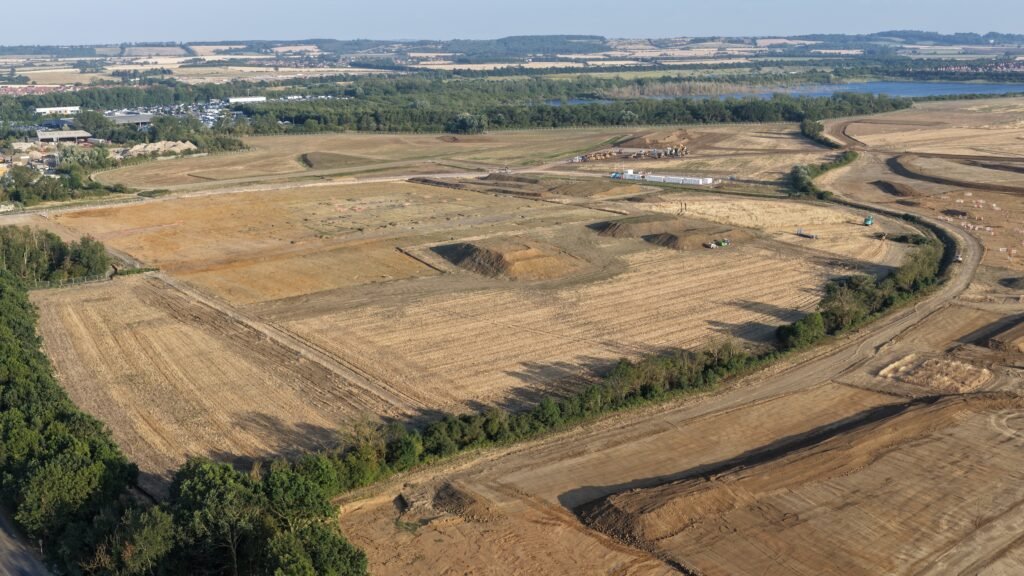
By summer 2026, the scale of the enabling works was becoming increasingly visible.
Large areas of the Core Zone and Lake Zone were being stripped and prepared. Archaeological excavation areas expanded, construction routes reached deeper into the site and soil began to be moved as part of the ground-stabilisation and flood-management strategy.
Broadmead Road and Manor Road became important early access routes. Manor Road was scheduled to close from 27 July until 5 October 2026 for ongoing site stabilisation and enabling works, while preliminary activity also began around the future Wixams station and East Gateway. (Universal UK Project)
These works might not resemble a theme park yet, but they are the foundations upon which everything else depends.
Before themed lands can appear, Universal must effectively reshape parts of the landscape, create stable construction platforms, manage water, install utilities and establish the transport network required to support one of Britain’s busiest visitor attractions.
From bricks to blockbusters
The transformation of Kempston Hardwick is bigger than the arrival of a new theme park. It is another chapter in the history of a landscape that has repeatedly changed to meet the needs of the country.
Oxford Clay beneath the Marston Vale helped produce hundreds of millions of bricks. Those bricks built homes, factories and communities across Britain. The industry brought workers to Bedfordshire from across the United Kingdom and overseas and created a distinctive local identity that remains visible today.
Now, the same land is being prepared for an entirely different industry—tourism, entertainment and immersive storytelling. The chimneys, kilns and brick presses have gone. In their place will come attractions, hotels, lakes, landscaped areas and new transport connections.
It is difficult to think of a more dramatic transformation from one of the world’s most important brickmaking landscapes to Europe’s first Universal resort.
Following Universal’s construction with Wandering Northerner
Wandering Northerner has followed the Universal UK project from its early feasibility period through planning approval and into construction.
The aim is not simply to photograph machinery or count excavators. It is to explain what is changing, why the work is taking place and how each new road, excavation, watercourse or construction compound fits into the wider resort. As Universal United Kingdom Resort moves towards its planned 2031 opening, this page will continue to be updated with the major moments in the project’s history.
Follow Wandering Northerner for:
- Regular Universal United Kingdom Resort construction updates.
- Drone and ground-level footage.
- Explanations of planning documents and construction phases.
- Archaeology, ecology and infrastructure news.
- Updates on Wixams station, the A421 and local road improvements.
- Comparisons showing how the site changes over time.
Universal Studios UK history timeline
1889–1905
The London Brick Company is established and begins acquiring large areas of Oxford Clay land in Bedfordshire.
1897
B.J.H. Forder opens brickmaking operations at Elstow.
1923
The London Brick Company and B.J.H. Forder merge.
1926
Construction begins on the garden village that becomes Stewartby.
Mid-1930s
Stewartby is recognised as the world’s largest brickworks, employing around 2,000 people and producing approximately 500 million bricks annually.
1999
The closure of the Kempston Hardwick brickworks is announced.
2008
Brick production ends at Stewartby.
December 2023
Universal confirms that it has purchased land near Bedford and is considering it for a theme park and resort.
April–May 2024
Universal holds its first public engagement exercise. More than 6,000 survey responses are received, with Universal reporting support of more than 92%.
9 April 2025
Universal, the UK Government and Bedford Borough Council confirm an agreement to deliver the resort, subject to planning permission.
3 July 2025
The formal planning documents and Environmental Statement are published for consultation.
15 December 2025
The Secretary of State makes the Special Development Order granting planning permission.
12 January 2026
The Special Development Order comes into force.
Early 2026
Archaeology, ecology, access, utilities and site-enabling works gather pace.
3 June 2026
The name Universal United Kingdom Resort is officially unveiled.
Summer 2026
Major soil stripping, site stabilisation, road works and construction preparation continue across the resort site.
2031
Universal United Kingdom Resort is scheduled to open.
Frequently asked questions
Is Universal Studios UK definitely being built?
Yes. Planning permission was granted through a Special Development Order that came into force on 12 January 2026. Enabling and site-preparation works are underway.
What is the official name of Universal Studios UK?
The official name is Universal United Kingdom Resort. “Universal Studios UK” is an unofficial name that became widely used while the project was being developed.
Where is Universal United Kingdom Resort?
The resort is being built on the former Kempston Hardwick brickworks and adjoining land south of Bedford, close to Stewartby, Wixams and the A421.
When will Universal Studios UK open?
The announced opening year is 2031.
What attractions will it have?
Universal has confirmed several themed lands containing immersive attractions, rides and entertainment. The individual lands, franchises and rides have not yet been officially announced.
Will there be a hotel?
Yes. The initial resort will include a 500-room hotel.
What was previously on the Universal site?
The main development site includes the former Kempston Hardwick brickworks and surrounding land shaped by brickmaking, clay extraction, agriculture and later restoration activity.
Is this the first Universal theme park in Europe?
It will be the first Universal-branded theme park and resort destination in both the United Kingdom and Europe.